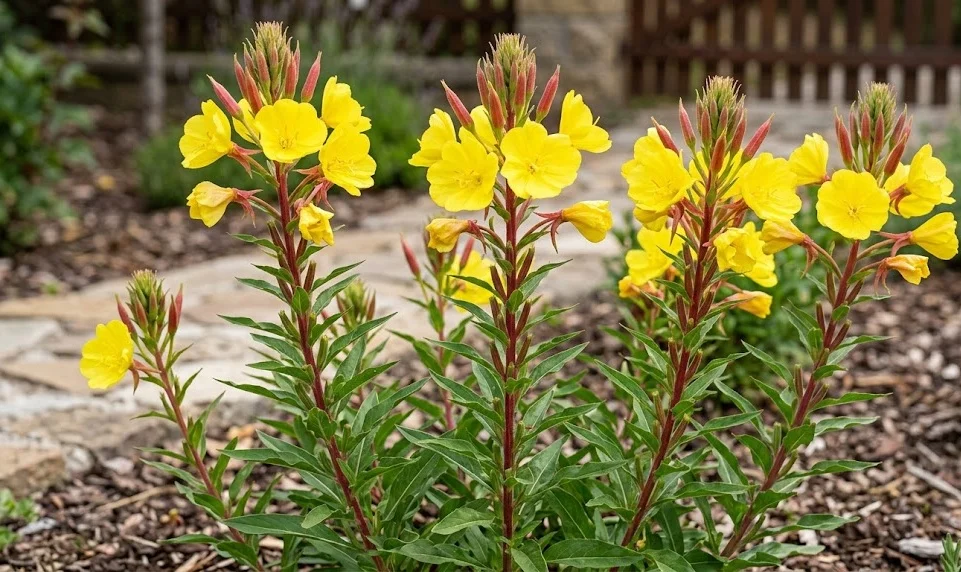

Red-sepal evening primrose is a striking biennial or short-lived perennial valued for its tall flowering stems, generous yellow blooms, and relaxed natural appearance. It performs particularly well in sunny borders, wildlife gardens, cottage-style plantings, and less formal areas where it can develop without excessive intervention. Although the plant is generally undemanding, thoughtful positioning and balanced care make a noticeable difference to its strength, flowering period, and overall garden value. Understanding its natural growth cycle is the best starting point for keeping it attractive from germination to seed production.
Understanding its natural growth habit
Red-sepal evening primrose usually forms a low rosette of leaves during its first growing season. This rosette gathers energy and establishes the root system before flowering begins in the following year. Under favourable conditions, the plant then produces a tall, upright stem carrying numerous flower buds. Individual plants may behave as biennials or persist slightly longer, depending on soil, climate, and stress levels.
The foliage is generally elongated, softly textured, and arranged around the base or along the flowering stem. Young growth often appears fresh green, while older stems may develop reddish tones that contribute to the plant’s common name. The mature flowering structure can become substantial, especially in fertile ground. Providing enough space prevents neighbouring plants from being shaded or crowded.
Flowers usually open from late afternoon into the evening, although some may remain attractive during daylight hours. Their pale to bright yellow petals are conspicuous to moths and other evening-active pollinators. A single flower does not last long, but fresh buds open in succession over an extended period. This continuous replacement creates the impression of a long and generous flowering display.
Once pollinated, the flowers develop into elongated seed capsules filled with numerous small seeds. These capsules eventually dry and split, allowing the plant to reproduce freely. Self-seeding is often an important part of maintaining the species in a garden because individual plants may be relatively short-lived. Gardeners should therefore manage seedlings rather than expecting every mature specimen to survive indefinitely.
More articles on this topic
Choosing a suitable position
A sunny, open position gives red-sepal evening primrose the conditions it needs for strong, upright growth. At least six hours of direct sunlight is preferable, particularly in regions with mild or cloudy summers. Plants grown in insufficient light often become tall, weak, and inclined to lean toward brighter areas. Flowering may also be reduced when sunlight is limited.
Good air movement around the stems helps leaves dry quickly after rain or irrigation. This reduces the likelihood of fungal problems and prevents the dense basal foliage from remaining damp for long periods. An open border, gravel garden, meadow edge, or sunny bank can therefore be highly suitable. Very enclosed corners are less successful unless the soil is exceptionally free-draining.
The plant combines naturally with ornamental grasses, hardy geraniums, salvias, achilleas, and other sun-loving perennials. It can also be used behind shorter plants because its flowering stems rise well above the ground-level rosette. The informal structure works best where a slightly wild appearance is welcome. In highly formal beds, seedlings and irregular stem heights may require more active control.
Exposure to strong wind deserves consideration because mature stems can become tall and top-heavy. A position with some protection from persistent gusts is useful, but dense shade from walls or shrubs should be avoided. In exposed gardens, discreet supports can be installed before the stems reach full height. Early support is less intrusive and reduces the risk of damaged roots later.
More articles on this topic
Providing the right soil conditions
Red-sepal evening primrose adapts to many ordinary garden soils, provided they do not remain waterlogged. Sandy loam, gravelly soil, and moderately fertile free-draining ground are particularly suitable. Heavy clay can support the plant when drainage is improved with organic matter and careful soil preparation. Persistent winter wet is generally more damaging than modest summer dryness.
The soil does not need to be excessively rich. In fact, highly fertile ground may encourage lush foliage and very tall stems that are more likely to collapse. A moderate supply of nutrients promotes balanced development and better structural strength. Avoid repeatedly applying high-nitrogen fertilisers around established plants.
A neutral to slightly acidic or slightly alkaline soil reaction is normally acceptable. The species is not usually demanding about pH when drainage and light levels are suitable. Extremely acidic or compacted soils may limit nutrient availability and root development. Improving the soil gradually is safer than attempting dramatic chemical changes.
Before planting, loosen the ground deeply enough to remove compaction around the future root zone. Incorporate well-rotted compost sparingly if the soil is poor, but do not create a moisture-retentive planting pocket in otherwise heavy ground. Firm the soil gently after planting so roots make good contact without being crushed. A thin mineral mulch can help maintain a dry crown and suppress competing weeds.
Maintaining moisture without overwatering
Newly planted or recently germinated evening primroses need consistent moisture while their roots become established. Water should penetrate below the surface rather than merely dampening the upper centimetre of soil. Deep watering encourages roots to grow downward and improves later drought tolerance. The soil surface can then be allowed to dry slightly before the next irrigation.
Established plants usually tolerate short dry periods well, particularly in deep or moderately moisture-retentive soil. Their performance is often better with occasional thorough watering than with frequent shallow applications. Constantly wet soil can weaken roots and encourage crown decay. Irrigation should therefore respond to actual soil conditions rather than a rigid timetable.
During prolonged heat, drooping leaves in the afternoon do not always indicate severe drought. Check the soil several centimetres below the surface before adding water. If it remains cool and slightly moist, the plant may recover naturally as temperatures fall. Watering unnecessarily in this situation can create more problems than temporary wilting.
Container-grown plants require closer attention because their compost dries faster than garden soil. Use a pot with generous drainage holes and never leave the base standing in water for extended periods. A deep container supports the root system better than a shallow decorative pot. Even in containers, the aim is evenly moist but well-aerated compost rather than constant saturation.
Supporting flowering and healthy development
Flowering is strongest when plants receive adequate sunlight, moderate fertility, and enough moisture during bud formation. Severe drought at this stage can shorten stems, reduce bud numbers, or cause premature flower loss. A light application of balanced fertiliser may benefit plants in very poor soil. Rich ground usually requires no additional feeding.
Removing nearby weeds is especially important while the plant is still in its rosette stage. Strong weeds can shade young foliage and compete for moisture before the evening primrose becomes tall enough to dominate its immediate space. Hand weeding is preferable near the crown because deep cultivation may damage roots. A light mulch can reduce repeated disturbance.
Tall flowering stems may need support if they grow in fertile soil or exposed positions. Several stems can be loosely tied to slender canes, or a discreet ring support can be placed around the plant early in the season. Ties should remain flexible and should not cut into expanding stems. Supporting the plant before it begins leaning produces the most natural result.
Deadheading can prolong tidiness and limit unwanted self-seeding, but it also removes developing seed capsules. Gardeners who want the plant to return naturally should allow at least some stems to mature fully. A practical compromise is to remove spent flowers from the front of a border while leaving several capsules elsewhere. This preserves both appearance and future generations.
Managing self-seeding and garden spread
Red-sepal evening primrose can produce large quantities of seed in suitable conditions. Seedlings often appear in disturbed soil, gravel, cracks, and open spaces between established plants. This behaviour is valuable in naturalistic gardens but may become inconvenient in tightly controlled borders. Regular observation makes management simple before seedlings become deeply rooted.
Young seedlings are easiest to identify when they form small rosettes of elongated leaves. Unwanted plants can be lifted after rain, when the soil is soft and roots release more easily. Selected seedlings may be transplanted while still small, although root disturbance should be kept to a minimum. Older plants are less tolerant of relocation.
Preventing excessive spread involves cutting most seed capsules before they open. This should be done only after deciding how many replacement plants are needed for the following season. Since mature specimens may not persist for many years, eliminating every seed can gradually remove the plant from the garden. Controlled renewal is usually more effective than complete suppression.
Self-seeded plants sometimes appear in better positions than deliberately planted specimens. Their roots develop without transplant shock, and they naturally select sites with suitable drainage and light. Gardeners can keep the strongest individuals and remove those growing too close together. This selective approach creates a healthy, informal colony without allowing uncontrolled congestion.
Seasonal care and long-term garden value
Spring care begins with identifying established rosettes and removing weeds or winter debris around them. Damaged leaves can be trimmed away, but healthy foliage should remain because it supports early growth. Apply only a modest amount of compost if the soil appears depleted. Excessive spring feeding may result in soft, unstable stems.
During summer, monitor moisture, stem stability, and the progress of flower buds. Remove damaged or diseased leaves promptly and avoid wetting the foliage repeatedly during evening irrigation. Flowers can be enjoyed both in daylight and after dusk, when their pollinator activity becomes especially noticeable. Their fragrance and luminous colour give the plant unusual evening appeal.
In autumn, decide whether seed production or strict tidiness is the priority. Leave selected stems standing until capsules dry if natural regeneration is desired. Other stems may be cut down once flowering finishes and seeds are no longer needed. The remaining basal growth should not be buried under thick, wet mulch.
Over time, red-sepal evening primrose can become a dependable feature in gardens designed for biodiversity and seasonal movement. It offers height without dense, permanent bulk and fills temporary gaps among slower-growing perennials. Its willingness to self-seed makes it resilient when individual plants disappear. With modest guidance, it creates a changing but coherent display from year to year.