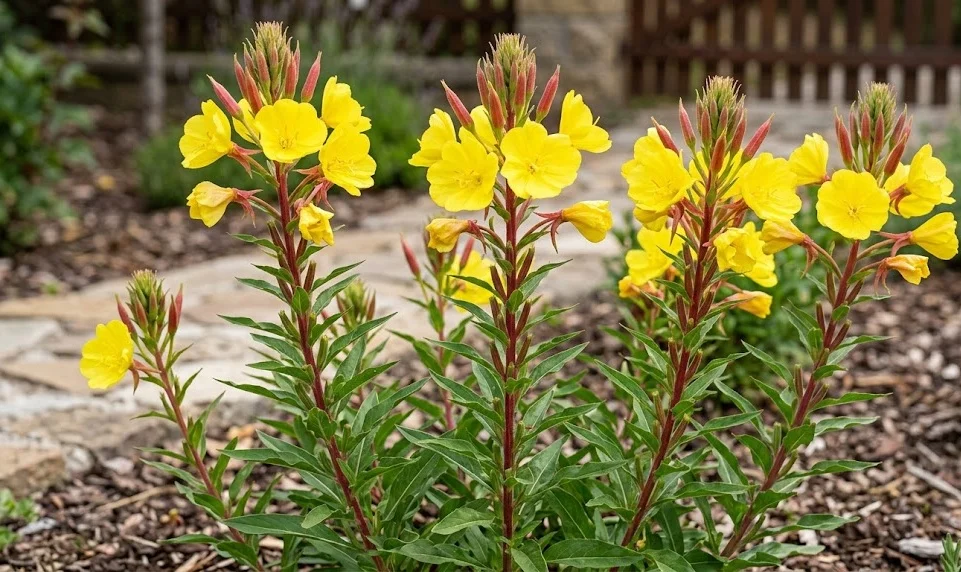

Red-sepal evening primrose grows best when moisture and nutrients are supplied in moderation rather than excess. Its roots appreciate deep, occasional watering, while its stems remain stronger in soil that is not overloaded with nitrogen. Young plants require more attentive irrigation than mature specimens, but even established plants flower better when prolonged drought is avoided during stem and bud development. A restrained feeding programme supports healthy growth without turning naturally upright stems into soft, unstable shoots.
Watering during establishment
Newly planted evening primroses need dependable moisture while their roots extend into the surrounding soil. Water thoroughly immediately after planting, then check the soil regularly during the first few weeks. The root zone should remain lightly moist but never saturated. Surface dryness alone is not always a reliable indication of deeper conditions.
Apply water slowly so it penetrates rather than running away across the soil surface. A gentle watering can or low-pressure hose allows moisture to soak around the roots. Several small passes may be more effective than one forceful application on compacted ground. This method reduces erosion and keeps the crown stable.
The frequency of watering depends on temperature, wind, soil texture, and rainfall. Sandy soils may need attention more often because they drain quickly. Clay soils retain water longer and should be checked before additional irrigation. A fixed daily schedule is rarely suitable for every situation.
Signs of establishment include fresh leaf development and improved resistance to brief dry periods. Once the plant is actively growing, gradually increase the interval between waterings. This encourages deeper rooting and greater resilience. Continuing frequent shallow irrigation can leave roots concentrated near the surface.
More articles on this topic
Watering established plants
Mature plants are moderately drought tolerant once their roots are well developed. Nevertheless, extended dryness during rapid stem growth can reduce final height and flower production. Water deeply when the soil becomes dry several centimetres below the surface. Allow the upper layer to dry again before repeating the process.
Early morning is generally the best time to irrigate garden-grown specimens. Leaves and stems that become wet can dry quickly as the day warms. Evening watering is acceptable when water is directed only to the soil. Repeatedly wet foliage at night can encourage disease in humid weather.
A broad, slow soak is more valuable than a brief splash directly against the stem. The active root system extends beyond the visible crown as the plant matures. Watering a wider area encourages balanced root development. Concentrating all moisture in one narrow spot can limit root spread.
During cool or rainy periods, additional irrigation may be unnecessary for long intervals. Always consider natural rainfall before watering. Soil that remains wet for many days can deprive roots of oxygen. In such conditions, improving drainage is more important than applying fertiliser or additional water.
More articles on this topic
Adjusting irrigation through the seasons
Spring moisture supports the transition from rosette growth to upright stem development. If rainfall is limited, water before the plant shows severe wilting. Stable moisture at this stage encourages even growth and helps prevent premature stress. Avoid flooding cold soil, especially where drainage is slow.
Summer irrigation becomes most important during bud formation and repeated flowering. A severely dry plant may shed buds, produce smaller flowers, or finish blooming early. Deep watering once or twice during a prolonged dry spell can protect the display. The exact interval should remain responsive to soil conditions.
As flowering declines and seed capsules begin to mature, water demand gradually decreases. Plants intended for seed collection should not be allowed to collapse completely, but they no longer require lush vegetative growth. Excess water late in the season may delay drying and seed ripening. Moderate dryness can help capsules mature normally.
During winter, outdoor plants rarely need irrigation unless they are grown in containers or under rain shelter. Cold, wet soil poses a greater threat than temporary dryness. Check pots occasionally during frost-free periods because wind can dry compost even in winter. Water sparingly and allow all excess moisture to drain away.
Feeding without encouraging weak growth
Red-sepal evening primrose performs well in average garden soil and often needs little supplementary feeding. A small amount of mature compost applied in spring may provide all the nutrients required. Spread it around the root zone without piling it over the crown. This gentle approach supports soil life as well as plant growth.
High-nitrogen fertilisers should be used cautiously. They stimulate large leaves and rapid stem extension but may reduce structural strength. Overfed plants are more likely to lean, split, or need staking. Flowering can also become less balanced when foliage growth dominates.
In poor, sandy soil, a light application of balanced slow-release fertiliser can be useful. Apply it according to the product’s lower recommended rate rather than assuming more will improve results. Water the soil after feeding if rain is not expected. Fertiliser granules should not remain concentrated against the stem.
Container plants exhaust available nutrients more quickly than plants in open ground. A diluted balanced liquid feed can be applied occasionally during active growth. Stop or reduce feeding once flowering begins to decline. Continuous feeding late in the season may produce soft growth that performs poorly in winter.
Diagnosing moisture and nutrient problems
Yellowing leaves can result from several different causes, including waterlogging, drought, natural ageing, or nutrient imbalance. Check soil moisture before assuming fertiliser is required. If the ground is persistently wet, feeding will not correct damaged roots. Improving aeration and drainage should take priority.
Dry, crisp leaf edges usually indicate moisture stress, hot wind, or root restriction. Water deeply and observe whether new growth improves. In containers, verify that the root ball has not become so dry that water runs around it without soaking in. Rehydrating very dry compost may require several slow applications.
Extremely lush, dark green foliage accompanied by weak stems often suggests excessive nitrogen. Stop feeding and increase support if necessary. Do not attempt to counteract the problem with additional fertilisers. Future soil amendments should be reduced to restore more balanced growth.
Poor flowering can be associated with low light, severe drought, overcrowding, or excessive fertility. Evaluate the whole growing environment rather than focusing on one symptom. A sunny site with moderate nutrition and deep periodic watering usually produces the best results. Small adjustments are safer and more informative than sudden, heavy treatments.