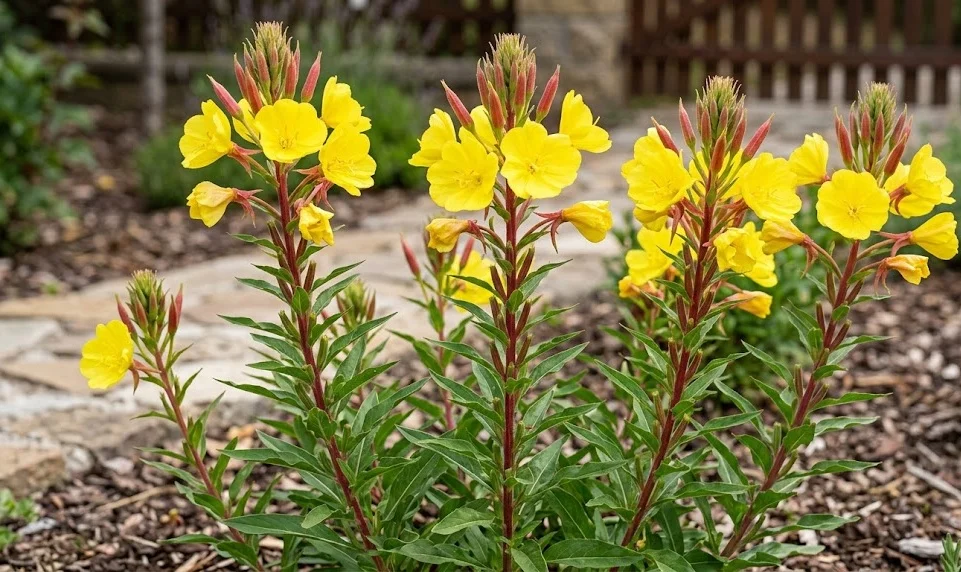

Red-sepal evening primrose is generally robust, but stressed plants can develop fungal diseases or attract sap-feeding and leaf-chewing pests. Poor airflow, persistent moisture, overcrowding, and overly rich growth are common factors behind recurring problems. Regular inspection makes control easier because early symptoms are usually localised and manageable. Healthy soil, appropriate spacing, and careful watering remain the most effective foundations of prevention.
Recognising common fungal diseases
Powdery mildew may appear as pale, dusty patches on leaves and stems. It is often associated with dry roots combined with humid air and restricted circulation. Mild infections are usually cosmetic, but severe cases can weaken foliage and reduce seed development. Improving spacing and maintaining steady soil moisture can limit recurrence.
Leaf spot diseases create brown, grey, or dark lesions that may enlarge over time. Affected tissue sometimes dries and falls away, leaving irregular holes. Remove heavily damaged leaves and collect fallen debris from around the plant. Avoid placing diseased material in a poorly managed home compost heap.
Rust can produce orange, yellow, or brown pustules, especially on the undersides of leaves. Infected foliage may yellow prematurely and decline. Remove affected leaves carefully without shaking spores across neighbouring plants. Repeated rust problems suggest that airflow or plant density needs improvement.
Crown and root rots are more serious because they affect the plant’s base and underground tissues. Symptoms include sudden wilting, soft darkened stems, and collapse despite moist soil. Waterlogged conditions are a frequent cause. Severely affected plants should be removed, and the site should be improved before replanting.
More articles on this topic
Preventing disease through cultivation
Spacing plants correctly allows air to move between leaves and stems. Crowded self-sown seedlings should be thinned early rather than allowed to form a dense mass. Better airflow shortens the time foliage remains wet after rain. It also makes inspection and selective removal easier.
Watering at soil level reduces unnecessary leaf wetness. Overhead sprinklers are less suitable when used late in the day or in humid weather. If overhead irrigation cannot be avoided, use it early enough for foliage to dry before evening. Deep, less frequent watering also supports stronger root systems.
Avoid excessive nitrogen because soft, lush growth is often more vulnerable to disease. Balanced plants with firm stems and moderate leaf density dry more quickly and resist damage better. Compost and fertiliser should be used according to actual soil need. Rich feeding is not a substitute for good growing conditions.
Seasonal hygiene helps interrupt disease cycles. Remove collapsed stems, badly affected leaves, and rotting debris before winter. Keep the crown open rather than covering it with a thick layer of wet organic mulch. Clean cutting tools after working on visibly diseased plants.
More articles on this topic
Managing sap-feeding pests
Aphids may gather on tender shoots, flower buds, and the undersides of young leaves. Their feeding can distort growth and leave sticky honeydew on the plant. Small colonies are often controlled naturally by ladybirds, hoverfly larvae, lacewings, and birds. Avoid broad-spectrum insecticides that remove these useful predators.
A strong but controlled jet of water can dislodge aphids from sturdy stems. Repeat treatment may be necessary because some insects will remain hidden among buds. Inspect nearby plants because aphids can move between hosts. Heavily infested tips may be removed if doing so will not spoil the whole flowering display.
Spider mites can become troublesome in hot, dry, sheltered conditions. Their feeding creates fine pale speckling, and delicate webbing may appear around leaves or stems. Improve plant hydration and reduce dusty conditions around susceptible specimens. Severely damaged foliage should be removed and disposed of.
Sap-feeding pests are more likely to multiply rapidly on overfed, soft growth. Reducing unnecessary nitrogen can therefore form part of long-term control. Encourage diverse planting that supports predatory insects throughout the season. A stable garden ecosystem usually keeps minor infestations below damaging levels.
Controlling slugs and leaf-chewing pests
Slugs and snails may damage young rosettes, particularly during wet spring weather. Ragged holes and scraped leaf surfaces are typical signs. Seedlings are more vulnerable than established flowering plants because they have fewer leaves to spare. Regular evening inspection can reveal the source of damage.
Reduce damp hiding places immediately around the crown. Thick, decaying mulch, boards, and dense weeds provide shelter for slugs during the day. Water in the morning so the soil surface is less inviting by night. Physical barriers can help protect small, valuable plants.
Caterpillars and other chewing larvae may occasionally feed on leaves or buds. Inspect damaged foliage carefully before taking action, as many caterpillars occur only in small numbers. Hand removal is usually sufficient for isolated infestations. Some species may also support local wildlife and do not require control unless damage becomes substantial.
Flea beetles can create numerous small holes in young leaves. Strong plants usually outgrow minor injury, but seedlings may be weakened if attacks are severe. Keep young plants adequately watered so they continue producing foliage. Fine insect mesh can protect a small seedbed where damage is persistent.
Responding to plant decline
When an evening primrose begins to decline, examine the entire plant rather than treating the first visible symptom. Check the crown, roots, leaf undersides, stem bases, and surrounding soil. Similar symptoms can arise from pests, disease, drought, and waterlogging. Accurate diagnosis prevents unnecessary treatment.
A plant that wilts in wet soil may be suffering from root damage rather than thirst. Additional watering will worsen the problem. Gently inspect the soil structure and smell around the root zone for signs of decay. Improving drainage and removing affected tissue may save mildly stressed plants.
Plants that decline after flowering may simply be completing their natural biennial cycle. Browning stems and drying seed capsules are normal at this stage. Do not confuse natural senescence with a spreading disease. Retain seed if future plants are wanted, then remove the exhausted specimen.
Persistent problems across several years indicate that the site may be unsuitable. Consider moving future seedlings to a sunnier, drier, or more open position. Crop rotation within ornamental areas can also reduce accumulated soil-borne problems. Healthy replacement plants are often easier to establish than repeatedly rescuing weakened specimens.