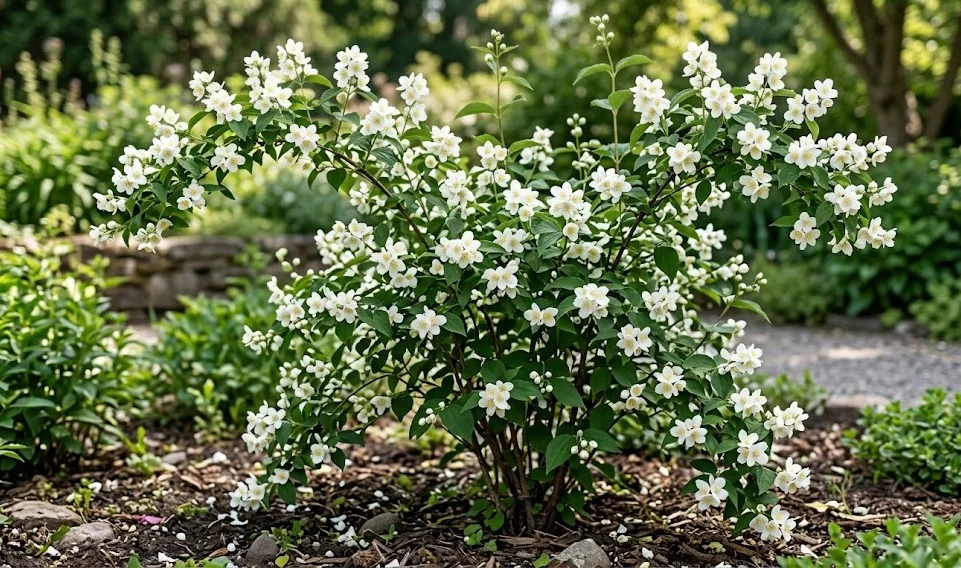

Protecting the mock orange from biological threats is a critical part of maintaining its ornamental value and long-term health. While this shrub is generally considered robust, it can fall victim to several common garden pests and fungal infections. Early identification is the most effective tool in your arsenal, allowing you to intervene before a minor issue becomes a major problem. By understanding the life cycles of these threats, you can implement preventative measures that reduce the need for aggressive treatments.
Fungal infections and preventative measures
Powdery mildew is perhaps the most common fungal issue that affects the foliage of the mock orange. It appears as a white, flour-like dusting on the leaves, usually during periods of high humidity and poor air circulation. While it rarely kills the plant, it can cause the leaves to distort and drop prematurely, weakening the shrub over time. To prevent this, ensure that your plants have plenty of space for air to move through the canopy.
Leaf spot diseases can also occur, manifesting as small brown or black lesions on the foliage during wet springs. These fungi thrive in cool, damp conditions where water remains on the leaves for extended periods. Pruning the interior of the shrub to improve light penetration and airflow is an excellent preventative strategy. You should also avoid overhead watering, which keeps the leaves wet and provides a breeding ground for fungal spores.
Canker can occasionally affect the woody stems of older mock orange shrubs, causing localized dieback. This disease often enters the plant through wounds caused by improper pruning or mechanical damage from garden tools. You will notice sunken, discolored areas on the branches that may eventually girdle and kill the entire stem. Removing affected branches well below the site of infection is the best way to stop the spread of canker.
The best defense against all fungal issues is maintaining the overall vigor of the plant through proper care. A stressed shrub is much more likely to succumb to infections than one that is well-hydrated and properly nourished. Clear away fallen leaves at the end of the season, as these can harbor fungal spores that will over-winter and re-infect the plant in the spring. Good garden hygiene is a simple yet powerful tool for preventing most common diseases.
More articles on this topic
Identifying common insect pests
Aphids are frequently found on the tender new growth and flower buds of the mock orange in early summer. These tiny, soft-bodied insects suck the sap from the plant, often causing the leaves to curl and turn yellow. You may also notice a sticky substance called honeydew on the leaves, which can lead to the growth of black sooty mold. A small number of aphids is usually not a concern, as natural predators will often keep them in check.
Scale insects can sometimes establish themselves on the woody stems, appearing as small, stationary bumps. They are often overlooked because they do not move and can blend in with the bark of the shrub. Like aphids, they feed on the plant’s juices and can cause a general decline in health if the infestation is heavy. You can often scrape them off by hand or use a specialized horticultural oil to suffocate them during the dormant season.
Leaf miners can occasionally target mock oranges, leaving distinctive winding trails inside the leaf tissue. While the damage is mostly cosmetic, a severe infestation can reduce the plant’s ability to photosynthesize effectively. The larvae of these insects are protected inside the leaf, making them difficult to reach with surface treatments. Fortunately, healthy shrubs can usually tolerate a fair amount of leaf miner activity without any significant long-term harm.
Spider mites are a common problem during hot, dry spells when the plant might be suffering from a bit of drought stress. You might notice a fine webbing on the undersides of the leaves and a mottled, dusty appearance on the foliage. These tiny pests thrive in dusty conditions, so keeping the area around your shrubs clean and well-hydrated is a good deterrent. A regular misting of the foliage with plain water can also help discourage mites from taking up residence.
More articles on this topic
Biological and organic treatments
Beneficial insects are your greatest allies in the fight against common garden pests like aphids and mites. Ladybugs, lacewings, and hoverflies all feed on the insects that plague your mock orange. You can encourage these helpful visitors by planting a variety of flowering perennials that provide them with nectar and pollen. Avoiding broad-spectrum pesticides is crucial, as these chemicals often kill the “good bugs” along with the “bad” ones.
Neem oil is a popular organic treatment that works well against a wide range of both pests and fungal issues. It acts as an insect growth regulator and also has antifungal properties that can help manage powdery mildew. Because it is derived from a natural source, it is generally considered safe for use in most garden environments. Always apply neem oil in the early morning or late evening to avoid leaf burn and to minimize contact with bees.
Insecticidal soaps are another effective organic option for dealing with soft-bodied pests like aphids and spider mites. These soaps work by breaking down the outer shell of the insect, leading to dehydration and death. They must come into direct contact with the pest to be effective, so thorough coverage of the leaves is necessary. These treatments have no residual effect, meaning they are safe for beneficial insects once the spray has dried.
Home-made remedies, such as a simple solution of water and a few drops of dish soap, can often be very effective for minor infestations. You can also use a strong stream of water from a garden hose to physically knock pests off the branches. This mechanical method is surprisingly successful and carries zero risk of chemical damage to your garden ecosystem. For many common problems, these low-impact interventions are all that is required to restore balance.
Chemical control strategies
When organic methods fail to control a severe infestation, you may need to consider more targeted chemical interventions. It is important to choose a product that is specifically labeled for the pest or disease you are trying to treat. Always read the entire label and follow the instructions for application rates and safety precautions exactly. Over-applying chemicals can lead to plant damage and can also contribute to pesticide resistance in the pest population.
Systemic insecticides are absorbed by the plant and provide long-lasting protection from the inside out. These are often used for pests that are difficult to reach with surface sprays, such as scale insects or leaf miners. However, because the chemical remains in the plant’s tissues, it can also affect non-target insects that feed on the nectar or pollen. Use these products with extreme caution and only as a last resort when the health of the shrub is at risk.
Fungicides can be used to manage persistent fungal issues like powdery mildew or leaf spot if cultural practices aren’t enough. These are most effective when used as a preventative measure before the infection becomes widespread on the plant. If you know your garden is prone to certain diseases, a regular spray schedule during peak infection times can be helpful. Remember that fungicides cannot “cure” existing leaf damage but can protect new growth from becoming infected.
The timing of any chemical application is critical for both effectiveness and environmental safety. Never spray during windy conditions, as the chemical drift can harm nearby plants and beneficial insects. Avoid treating your mock orange while it is in full bloom to prevent direct harm to bees and other essential pollinators. By being strategic and responsible with chemical use, you can solve specific problems while maintaining the health of your broader garden.
Restoring plant health after damage
Once a pest or disease issue has been brought under control, the focus shifts to helping the plant recover. You should remove any heavily damaged or dead leaves and stems to improve the appearance and hygiene of the shrub. Providing a bit of extra water and a light application of balanced fertilizer can give the plant the nutrients it needs to push out new growth. Be patient, as it may take several weeks for the shrub to show visible signs of recovery.
Pruning can be a useful tool for rejuvenating a shrub that has been severely impacted by pests or disease. By removing the most affected branches, you allow the plant to redirect its energy into healthy, vibrant new wood. Ensure that your pruning tools are sharp and sterilized with alcohol between each cut to prevent spreading any remaining pathogens. This structural cleanup often results in a more vigorous and resilient plant in the following season.
Mulching after a treatment program helps stabilize the root zone and provides a clean surface for the plant. Replace any old mulch that may have been contaminated with fallen diseased leaves or pest larvae. A fresh layer of compost or wood chips also provides a slow release of nutrients to support the recovery process. This simple act of renewal can make a significant difference in the speed at which the shrub bounces back.
Observation remains your most important task in the weeks following a successful treatment. Keep a close eye on the new growth for any signs that the pest or disease might be returning. Early detection of a second wave allows for much easier management than the initial outbreak. With consistent care and monitoring, your mock orange will soon return to its role as a beautiful and fragrant centerpiece of your garden.