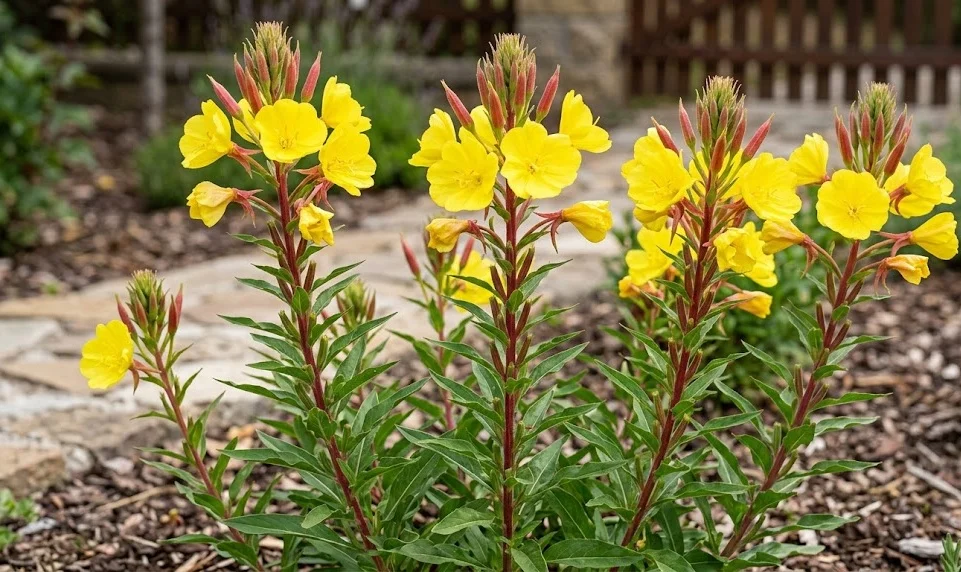

Red-sepal evening primrose usually survives winter as a compact basal rosette rather than as a tall flowering plant. Its cold tolerance is generally good, but the crown and roots can suffer in soil that remains saturated for long periods. Winter preparation should therefore focus on drainage, sensible cleanup, and protection from repeated freezing and thawing in exposed containers. Heavy insulation is rarely necessary for plants growing in suitable garden soil.
Preparing plants in autumn
Allow selected seed capsules to mature before removing flowering stems. Dry capsules provide seed for future generations, which is important because individual plants may die after flowering. Cut unwanted stems near the base once seed collection is complete. Use clean tools to avoid tearing the crown.
Healthy basal leaves should remain in place through autumn. They continue to gather energy and protect the growing point close to the soil surface. Remove only leaves that are rotten, heavily diseased, or collapsing over the crown. Excessive cutting can weaken young rosettes before winter.
Clear dense weeds and accumulated debris from around each plant. This improves airflow and prevents the crown from remaining trapped beneath wet material. Work carefully because the root system should not be disturbed late in the season. Shallow hand weeding is safer than deep cultivation.
Do not apply rich fertiliser in autumn. Late feeding may stimulate tender growth that is more vulnerable to cold and wet conditions. The plant should gradually enter dormancy or slow winter growth. Nutrient applications are better reserved for spring if the soil genuinely requires them.
More articles on this topic
Protecting plants in open ground
Established rosettes generally need little protection in ordinary temperate gardens. Their low growth form helps them tolerate wind and freezing temperatures. The most important requirement is that excess water can drain away. Raised beds or gently sloping ground are advantageous in regions with wet winters.
A thin layer of coarse mulch can reduce soil splash and moderate temperature fluctuations. Gravel or fine grit is often more suitable around the crown than thick, moisture-retentive organic material. Keep mulch away from the central growing point. Direct contact with wet leaves or compost can encourage rot.
In exceptionally cold, exposed sites, a light covering of dry leaves or horticultural fleece may be used during severe weather. Remove or loosen the covering when conditions improve. Permanent dense covering restricts airflow and traps moisture. Protection should remain breathable and temporary.
Frost heaving can lift young plants from the soil when repeated freezing and thawing occurs. Inspect the bed during mild periods and gently firm raised root balls back into place. Do not press frozen or waterlogged soil. A light surface mulch can reduce rapid temperature changes.
More articles on this topic
Overwintering container-grown plants
Plants in pots are more exposed to cold because their roots are surrounded by a limited volume of compost. Choose frost-resistant containers with unobstructed drainage holes. Raise pots slightly above the ground so water can escape freely. Standing water around the base greatly increases winter risk.
Move containers to a sheltered outdoor position protected from persistent rain and harsh wind. An unheated greenhouse, open cold frame, or covered wall may be suitable. The location should remain cool and bright rather than warm. Indoor household temperatures can disrupt the plant’s natural seasonal cycle.
Wrap the outside of the pot with insulating material in very cold regions. Protect the container rather than covering the leaves with airtight plastic. Grouping several pots together can also reduce temperature extremes. Ensure that drainage remains open after wrapping.
Check compost occasionally during frost-free weather. It should not become completely dry, but winter watering must remain limited. Apply a small amount only when the compost is clearly dry below the surface. Never water a frozen pot or leave it sitting in a filled saucer.
Spring recovery after winter
As temperatures rise, remove temporary coverings and inspect the rosette. Trim away soft, blackened, or badly damaged leaves. Healthy central growth should remain firm and green. New leaves usually appear as soil conditions improve.
Container plants moved under shelter should be returned gradually to full exposure. Sudden movement from protection into strong sun and cold wind can scorch tender growth. Increase light and airflow over several days. Continue to protect plants from unusually severe late frosts.
Resume watering only as active growth increases. Wet compost combined with cool temperatures can still damage roots in early spring. Check moisture before each application. Feeding should wait until the plant is clearly producing fresh foliage.
Some mature plants may not return because they completed their life cycle after flowering and seed production. This is normal for a biennial or short-lived species. Look for young self-sown rosettes nearby before assuming the plant has disappeared entirely. Retaining several generations ensures continuity even when older specimens die.