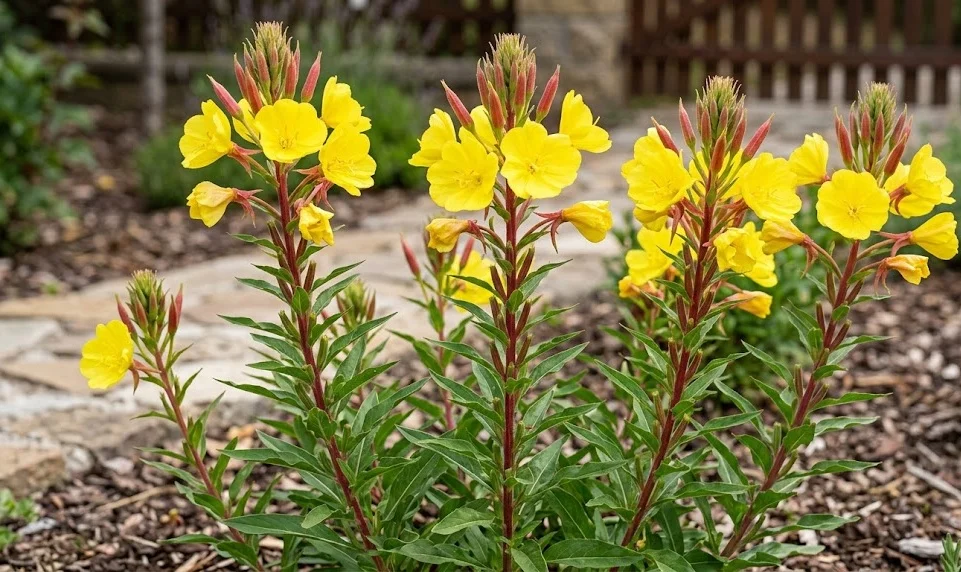

Red-sepal evening primrose develops its strongest stems and most generous display in full sun. Direct light supports compact rosette growth, abundant bud formation, and the opening rhythm of its evening flowers. Although the plant can tolerate limited partial shade, prolonged shade usually results in leaning stems and fewer blooms. Choosing the brightest practical position is therefore one of the most important decisions in its cultivation.
Growing in full sun
A position receiving six or more hours of direct sunlight is generally ideal. Morning and afternoon sun both contribute to vigorous growth, although uninterrupted midday exposure is especially useful in cooler regions. Well-lit plants tend to develop stronger stems and more evenly spaced flower buds. Their foliage also dries quickly after rain.
Full sun should be combined with suitable soil moisture. Plants in hot, sandy sites may require occasional deep watering during prolonged dry weather. Adequate moisture prevents leaf scorch and premature flowering decline. Constantly wet soil is still unnecessary and potentially harmful.
Open sunlight promotes a balanced, upright habit. The plant is less likely to stretch toward neighbouring gaps or fall across nearby perennials. This makes staking less necessary in moderately fertile soil. Good light also supports reliable seed ripening at the end of the season.
Sunny positions attract the greatest range of visiting pollinators. Flowers become especially noticeable around dusk, when their pale yellow petals reflect fading light. Moths and other insects can locate them easily in open areas. The plant therefore performs both an ornamental and ecological role in sunny borders.
More articles on this topic
Tolerating partial shade
Light partial shade may be acceptable where the plant receives several hours of direct sun. A position with morning sun and light afternoon shade can work well in regions with extremely hot summers. The soil should remain well drained and the surrounding vegetation should not be dense. Moderate shade can reduce heat stress without eliminating flowering.
Plants receiving only filtered light beneath trees often grow more weakly. Tree roots also compete for water and nutrients, creating additional stress. The combination of shade and dry soil can severely reduce flowering. Such positions are less suitable than an open bed with controlled moisture.
In partial shade, spacing becomes especially important. Crowded stems receive even less light and remain damp after rainfall. Thin self-sown plants so every rosette has access to open air and available sunlight. Removing nearby overhanging growth may also improve performance.
Watch the direction of stem growth during early summer. A strong lean toward one side usually indicates that the plant is seeking brighter conditions. Support may prevent collapse, but it does not correct the underlying light shortage. Future seedlings should be retained in a sunnier position.
More articles on this topic
Matching light to climate and garden design
In cool or maritime climates, maximum sunlight is usually beneficial. Lower temperatures and frequent cloud cover reduce the risk of heat stress. South-facing borders and open meadow areas are particularly effective. Sheltered but shaded corners should be avoided.
In very hot inland climates, intense afternoon sun can combine with dry soil to scorch foliage. A site with full morning sun and slight late-day protection may then be preferable. Mulching the soil lightly and watering deeply helps roots remain cool. The crown must still stay open and well ventilated.
When integrating the plant into a mixed border, place it where taller neighbours will not shade the rosette in spring. Later in the season, its own flowering stem can rise above many companion plants. Consider the changing height of surrounding perennials throughout the year. A location that appears sunny in early spring may become shaded by midsummer.
Light levels also influence the visual effect of the flowers. The yellow blooms are luminous against darker foliage and remain visible as daylight fades. Positioning plants near a terrace, path, or window allows their evening display to be appreciated. The best decorative site should still meet the plant’s basic need for direct sunlight.