Pruning and cutting back red-sepal evening primrose

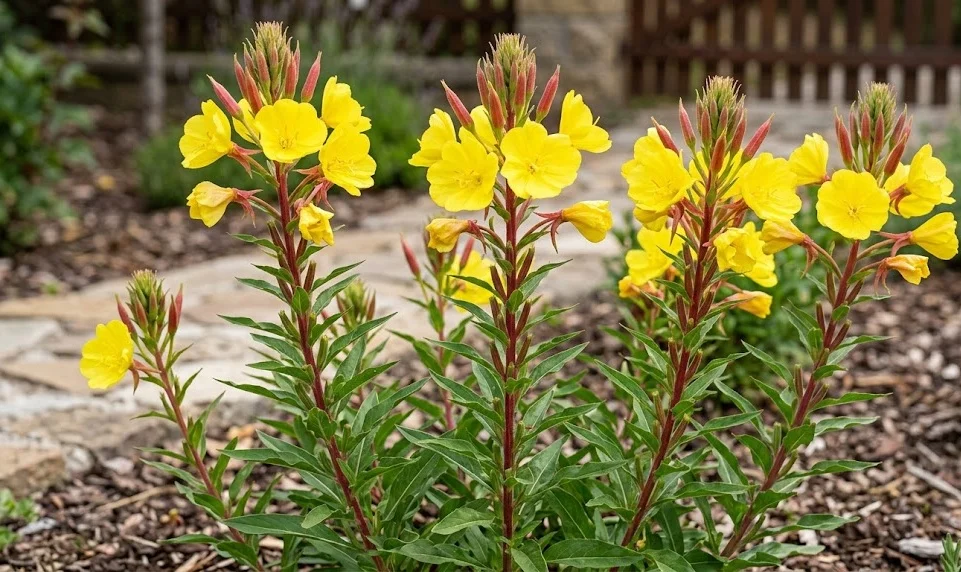
Pruning red-sepal evening primrose is mainly a matter of managing spent flowers, controlling seed production, and removing exhausted stems. The plant does not require structural pruning in the same way as a shrub, and excessive cutting can interfere with its natural biennial cycle. Timing depends on whether you want a tidy border, a longer flowering period, or a fresh generation of self-sown plants. Selective cutting usually gives better results than removing every stem at once.
Deadheading during flowering
Remove faded flowers when a neat appearance is important. Deadheading prevents the developing capsules from drawing energy into seed production. It may also encourage remaining buds to continue opening over a longer period. Work carefully because fresh flowers and unopened buds often occur close together.
Use clean, sharp scissors or secateurs for precise cuts. Pinching by hand is possible, but pulling can damage tender sections of the stem. Cut just above a healthy bud, leaf, or side shoot. Avoid leaving long, bare stubs that later dry unattractively.
Not every flower needs to be removed immediately. Individual blooms are short-lived, and the plant naturally carries flowers, buds, and developing capsules at the same time. Regular light attention is easier than one severe operation. Inspecting the plant every few days helps preserve a natural appearance.
Deadheading all flowers will prevent most self-seeding. This may be useful in small formal gardens where volunteers are unwanted. In naturalistic areas, leave selected flowers to form capsules. A mixed approach provides both tidiness and future replacement plants.
More articles on this topic
Cutting back flowering stems
Spent flowering stems can be removed once blooming has finished and seed is no longer required. Cut them close to the base without damaging the basal rosette or nearby seedlings. Removing old stems improves appearance and airflow. It also prevents dry stalks from falling across surrounding plants.
If seeds are wanted, wait until the capsules turn dry and begin to split. Collect them before strong wind or heavy rain scatters the contents. The remaining stem can then be cut down. Wear gloves if the dry material feels rough against the skin.
Partially cutting back a leaning stem during flowering is sometimes necessary after wind damage. Remove the broken section to a sound joint or side shoot. A damaged main stem may still produce smaller secondary flowers. Clean cuts reduce the amount of torn tissue exposed to infection.
Avoid cutting healthy first-year rosettes to ground level. Their leaves are essential for storing energy before the flowering season. Remove only damaged or diseased foliage. Severe autumn cutting can weaken the plant and reduce its ability to overwinter.
More articles on this topic
Controlling spread and maintaining plant health
Pruning is the most direct way to control self-seeding. Remove most capsules while they are still green if no additional plants are needed. Check the plant repeatedly because capsules mature at different times. A few overlooked stems can release many seeds.
Where natural renewal is desirable, retain capsules on the strongest and healthiest plants. This supports future generations with good vigour. Avoid collecting seed from severely diseased or poorly formed specimens. Selective seed retention gradually improves the quality of the garden population.
Remove diseased leaves and stems as soon as symptoms become clear. Cut back into healthy tissue and clean tools before moving to another plant. Do not leave infected material beneath the rosette. Prompt sanitation reduces the chance of spores surviving or spreading.
At the end of the growing cycle, remove fully exhausted plants after seed collection. Their death after flowering may be a normal feature of biennial growth rather than a cultivation failure. Clear the old root crown if it has begun to rot. Leave healthy young rosettes nearby to continue the display in the following season.