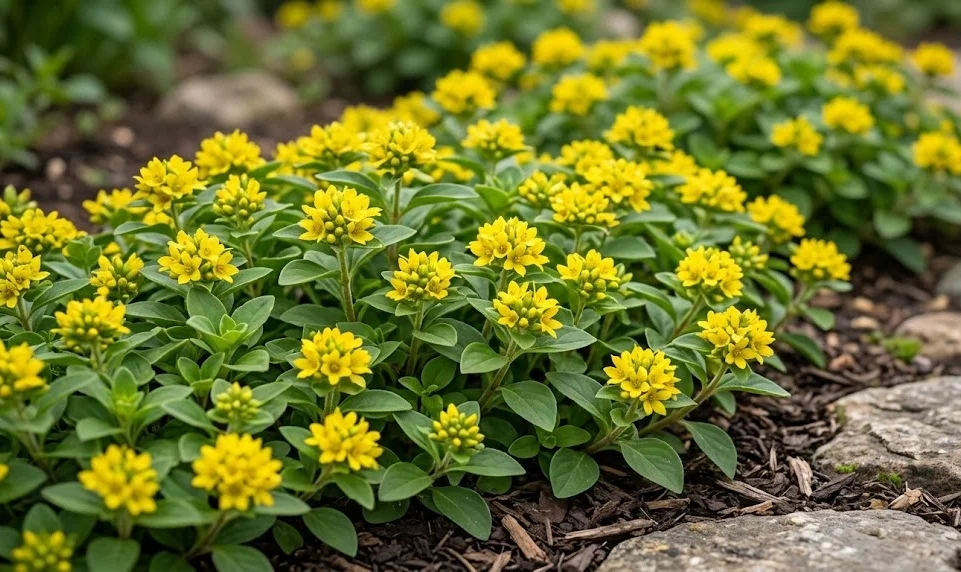

Golden globes loosestrife establishes best when planting is done with attention to soil moisture, root health, and seasonal timing. Although it is often treated as a decorative container or edging plant, it benefits from the same careful preparation given to more demanding perennials. Successful propagation also depends on handling young shoots gently and maintaining stable humidity around developing roots. With the right method, gardeners can produce compact, vigorous plants that flower reliably and settle quickly into their final position.
The best time and site for planting
Spring is generally the safest time to plant golden globes loosestrife outdoors. The soil is warming, growth is beginning, and the plant has a full season to establish before winter. Early autumn can also work in mild climates if the soil remains warm and moisture is reliable. Planting during intense summer heat is less ideal because root development may lag behind water loss.
Before planting, choose a site that offers bright light without severe heat stress. Morning sun and light afternoon shade often give the best balance between flowering and foliage quality. In cooler regions, a sunnier site may be suitable. In hotter gardens, some shade during the most intense part of the day is usually beneficial.
The planting area should be free from aggressive weeds before the plant is introduced. Young golden globes loosestrife plants do not compete well with strong-rooted weeds during establishment. Removing weeds by hand or shallow cultivation is better than disturbing the soil too deeply. A clean starting area reduces competition for moisture and nutrients.
Spacing should allow the plant to spread naturally without becoming crowded too quickly. In borders, leave enough room for air movement around the stems. In containers, avoid combining it with highly vigorous plants that will dominate the root space. Good spacing leads to fuller growth and fewer disease problems later in the season.
More articles on this topic
Preparing the soil and planting correctly
Soil preparation should focus on moisture retention and drainage at the same time. Work mature compost into the planting area to improve structure and biological activity. Heavy clay may need additional organic matter to open the texture. Very sandy soil may need compost and fine bark to hold moisture longer.
The planting hole should be wider than the root ball and only slightly deeper than the container. Planting too deeply can bury the crown and increase the risk of rot. The top of the root ball should sit level with the surrounding soil. After planting, the soil should be firmed gently without compacting it.
If the roots are circling tightly inside the pot, loosen them carefully before planting. This encourages roots to grow outward into the surrounding soil. Any dead or blackened roots should be trimmed away with clean tools. Healthy roots should look pale, firm, and active.
Water thoroughly after planting to settle the soil around the roots. This first watering removes air pockets and helps the plant begin contact with its new environment. A thin mulch layer can then be added to conserve moisture. Keep mulch slightly away from the crown so that the base remains airy.
More articles on this topic
Propagation by cuttings
Soft stem cuttings are one of the most practical ways to propagate golden globes loosestrife. Take cuttings from healthy, non-flowering shoots when the plant is actively growing. Shoots that are too soft may wilt quickly, while very old stems may root more slowly. A cutting with several nodes gives the best chance of success.
Remove the lower leaves from each cutting to prevent them from rotting in the propagation mix. The lower node should be inserted into a moist, well-drained medium. A mix of perlite and fine compost or a seed-starting medium can work well. The medium should be damp but never saturated.
Humidity is important while cuttings are forming roots. A clear cover or propagation dome can reduce moisture loss from the leaves. However, ventilation is also necessary to prevent fungal growth. Opening the cover briefly each day helps refresh the air.
Place cuttings in bright indirect light rather than direct sun. Strong sun can overheat the enclosed environment and cause wilting. Rooting usually proceeds best when temperatures are mild and stable. Once new growth appears and resistance is felt when tugged gently, the cuttings can be potted individually.
Division, aftercare, and young plant establishment
Division may be possible when a mature plant has formed a sufficiently dense clump. It is best done in spring or early autumn when the plant is not under heat stress. Lift the plant carefully and separate rooted sections with clean hands or a sharp knife. Each division should have both healthy roots and viable shoots.
New divisions should be replanted immediately to prevent root drying. If planting must be delayed, keep the roots shaded and moist. Divisions should be watered thoroughly after replanting. They may look slightly tired for a short period, but steady moisture supports recovery.
Young plants should not be overfed immediately after propagation. Their first priority is root development, not rapid top growth. A weak fertilizer solution can be used only after active growth resumes. Strong feeding too early may damage tender roots or create soft growth.
During the first few weeks, monitor young plants more closely than established specimens. Check moisture regularly, protect them from harsh sun, and remove any yellowing leaves. Gradual acclimatization helps prevent shock when moving plants outdoors or into brighter positions. Once established, they can be cared for in the same way as mature golden globes loosestrife.