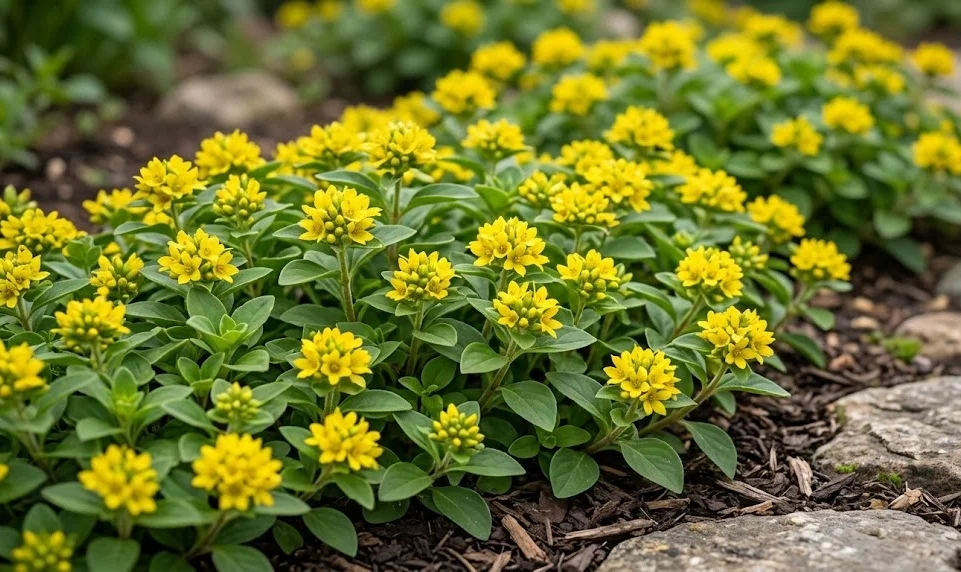

Golden globes loosestrife is a compact, warm-toned perennial grown for its bright yellow, cup-shaped flowers and softly spreading habit. It is especially useful in containers, balcony plantings, edging schemes, and sheltered mixed borders where a low, cheerful flowering plant can soften hard lines. Although it is not difficult to grow, it performs best when moisture, light, drainage, and nutrition are kept in balance. Good care is less about constant intervention and more about creating steady conditions that support healthy foliage and repeated bloom.
Understanding its growth habit and ornamental value
Golden globes loosestrife forms a low, spreading mound rather than a tall, upright clump. Its stems can trail gently over the edge of pots, raised beds, or retaining walls. This makes it valuable as both a filler and a softening plant in ornamental designs. In mild conditions, it can create a lush carpet-like effect without looking heavy or coarse.
The plant is appreciated mainly for its yellow flowers, which appear in small clustered displays above fresh green foliage. The color is clear and bright, so it works well with blue, purple, white, and silver-leaved companions. It can also bring light to shaded corners where stronger yellow annuals may struggle. When used thoughtfully, it gives a natural but polished look to small garden spaces.
Its growth is relatively quick during the active season when temperatures are moderate and moisture is reliable. In stressful heat or dry soil, the plant may slow down and lose some of its density. This is often a response to conditions rather than a sign that the plant is failing. Once the root zone becomes comfortable again, fresh shoots usually resume.
Golden globes loosestrife suits gardeners who enjoy plants that look informal but still respond well to careful maintenance. It is not a rigid bedding plant that stays identical all season without attention. Instead, it benefits from light trimming, consistent watering, and occasional feeding. These simple practices keep it compact, leafy, and floriferous.
More articles on this topic
Choosing the right position in the garden
The best position is bright but not harsh, especially in regions with hot summers. Morning sun with light afternoon shade is often ideal because it supports flowering without overheating the foliage. In cooler climates, the plant can usually tolerate more direct sun. In very warm sites, protection from scorching midday rays helps prevent wilting and leaf edge browning.
Golden globes loosestrife should not be placed in deep shade if abundant flowering is the goal. It may survive in lower light, but the stems can stretch and the bloom display may become sparse. A position with filtered light beneath open shrubs or beside a bright wall can work well. The key is to avoid both intense heat and dull, stagnant shade.
Air movement also matters, particularly in humid gardens and densely planted containers. Crowded, still conditions can encourage fungal spotting and weak growth. A position where the plant receives gentle airflow will help the foliage dry after rain or irrigation. This reduces disease pressure without making the plant suffer from drying winds.
In containers, placement should be adjusted through the season rather than treated as permanent. A pot that thrives in spring sun may need slight afternoon shade in midsummer. Balcony gardeners can use railings, taller plants, or shade cloth to moderate heat. This flexibility is one of the advantages of growing the plant in movable planters.
More articles on this topic
Soil structure and root-zone comfort
Golden globes loosestrife prefers soil that stays evenly moist but does not remain waterlogged. A humus-rich loam is close to ideal because it holds water while still allowing oxygen to reach the roots. In heavy clay, drainage improvement is important before planting. In sandy soil, organic matter helps reduce rapid drying.
The plant’s fine root system benefits from a friable, open soil texture. Compacted ground can restrict root expansion and make watering less effective. Before planting, loosen the soil wider than the root ball rather than digging only a narrow hole. This encourages roots to move into the surrounding soil and establish more evenly.
For containers, use a high-quality potting mix rather than dense garden soil. A good mix should hold moisture while draining freely after watering. Adding composted bark, coco fiber, or mature compost can improve water retention and microbial activity. However, the mix should still remain airy, because constantly wet roots are vulnerable to decline.
Mulching is helpful when the plant is grown in beds or larger planters. A thin layer of fine bark, leaf mold, or compost helps stabilize moisture and reduce soil temperature swings. Mulch should not be piled directly against the crown of the plant. Keeping the crown open reduces rot risk and encourages healthy basal growth.
Watering for steady growth and flowering
Consistent moisture is one of the most important care factors for golden globes loosestrife. The plant does not enjoy prolonged drought, especially when grown in pots or shallow soil. Dry stress can cause wilting, reduced flowering, and premature yellowing of older leaves. Regular watering keeps the stems turgid and the foliage attractive.
Water deeply enough to moisten the full root zone rather than sprinkling lightly over the surface. Shallow watering encourages shallow roots, which makes the plant more vulnerable during warm weather. In garden beds, check the soil several centimeters below the surface before deciding whether to water. In containers, lift the pot or feel the mix to judge moisture more accurately.
The frequency of watering depends on season, pot size, exposure, and soil type. A plant in a small hanging pot may need water far more often than one in open ground. During cool spring weather, overwatering can be more damaging than mild dryness. During summer heat, however, delayed watering can quickly reduce the quality of the display.
Avoid leaving pots standing permanently in saucers full of water unless the weather is extremely hot and the mix drains very freely. Saturated conditions deprive roots of oxygen and can trigger root rot. After watering, excess water should be able to drain away. A healthy watering routine combines generosity with good drainage.
Feeding without forcing soft growth
Golden globes loosestrife responds well to moderate feeding during active growth. It does not need heavy fertilization, and excessive nitrogen can make stems soft, stretched, and more vulnerable to pests. Balanced nutrition supports compact foliage and steady flowering. The aim is to feed the plant enough to maintain vitality without pushing lush but weak growth.
In fertile garden soil, a spring application of compost may be enough. Compost improves both nutrient supply and soil structure, so it supports the plant in several ways at once. If growth remains pale or weak, a mild balanced fertilizer can be added. Slow-release products are useful because they provide nutrients gradually.
Container-grown plants usually need more regular feeding because nutrients wash out with watering. A diluted liquid fertilizer every few weeks during the growing season can maintain flowering performance. It is better to feed lightly and consistently than to apply a strong dose after the plant has already become stressed. Feeding dry or wilted plants should be avoided until they are rehydrated.
By late summer or early autumn, feeding should be reduced in colder climates. Continued high nitrogen late in the season may encourage tender growth that is less prepared for winter. A plant entering dormancy should be allowed to slow naturally. This seasonal adjustment improves resilience and helps prevent soft tissue damage.
Pruning, grooming, and seasonal tidiness
Light pruning keeps golden globes loosestrife dense and attractive. Removing faded flowers and leggy stems encourages new side shoots. This is especially helpful in containers, where the plant can otherwise become loose or uneven. Regular grooming also improves airflow within the canopy.
Pinching young shoots early in the season can create a fuller plant. This technique redirects energy from one long stem into multiple branching points. It is best done while the plant is actively growing and not under drought stress. After pinching, steady moisture helps the plant recover quickly.
If the plant becomes tired after a heavy flowering period, a gentle trim can refresh it. Cutting back only part of the growth is often safer than hard pruning during heat. The plant should retain enough foliage to continue photosynthesis. After trimming, water carefully and avoid strong fertilizer until new growth begins.
Dead, damaged, or diseased material should be removed promptly. Clean cuts reduce entry points for infection and make the plant look cared for. Tools should be sharp, especially when trimming several plants in succession. Good hygiene is a simple but important part of professional plant maintenance.
Long-term care and garden performance
Golden globes loosestrife performs best when its care is adjusted through the year. Spring is the time for planting, refreshing containers, and encouraging compact growth. Summer care focuses on watering, light feeding, and protection from heat stress. Autumn care is more about reducing inputs and preparing the plant for cooler weather.
In colder regions, winter survival may depend on shelter and drainage. The plant should not sit in cold, wet soil for long periods. Container plants are especially exposed because their roots experience stronger temperature swings. Moving pots to a sheltered position can make a significant difference.
In mild climates, the plant may remain semi-evergreen and continue to look presentable for much of the year. Even so, older foliage should be cleaned away when it becomes unattractive. This keeps the crown open and reduces overwintering sites for pests. A tidy plant usually begins spring growth more strongly.
With thoughtful care, golden globes loosestrife can become a reliable feature in small-scale ornamental planting. Its value lies in its cheerful flowers, adaptable habit, and ability to combine well with many other plants. It rewards consistent attention rather than complicated techniques. When moisture, light, soil, and grooming are kept in balance, it offers a long season of fresh and lively color.