
Planting Amur maple successfully depends on choosing the right site, preparing the soil carefully, and giving the young plant enough support during establishment. This species is forgiving, but early mistakes can influence its shape, root strength, and long-term health. Propagation is possible from seed, cuttings, or layering, although each method requires patience and attention to detail. With proper technique, Amur maple can be introduced into gardens as a resilient ornamental shrub or small tree.
Choosing the planting site
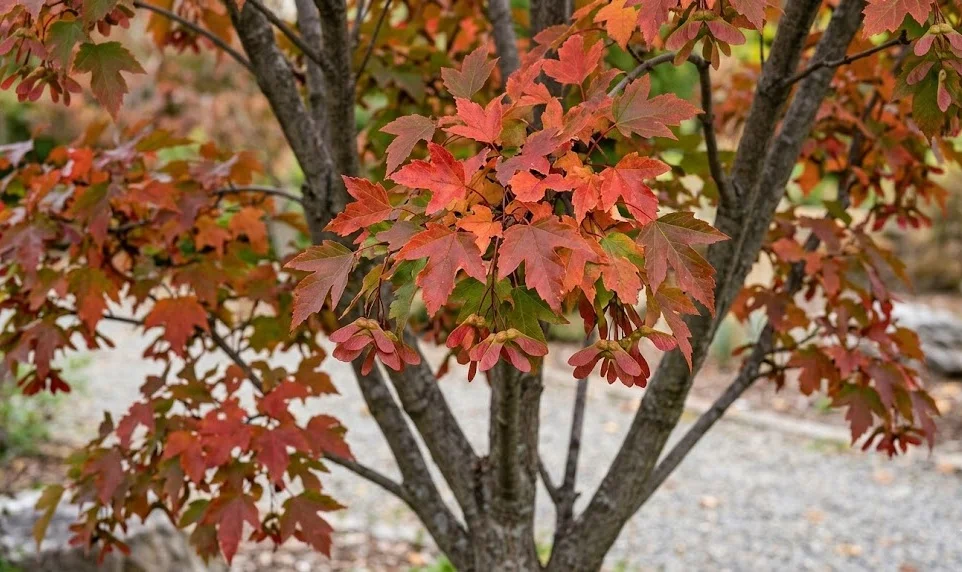
The best planting site provides sun to light shade, good air movement, and well-drained soil. Amur maple colours most intensely in autumn when it receives several hours of direct sunlight each day. Light shade is acceptable, especially in hot regions, but deep shade reduces density and weakens seasonal colour. A balanced site helps the plant grow steadily without excessive stress.
Space should be planned according to the final form of the plant. A specimen grown as a small tree needs room for a broad crown and comfortable access around the base. A hedge or screen can be planted more closely, but each plant still needs enough soil volume. Crowded planting often leads to weak inner branches and increased pruning work.
The site should also be considered in relation to buildings, paths, and underground services. Although Amur maple is not among the largest trees, its roots still need a generous rooting area. Planting too close to walls or paving can increase drought stress and distort growth. A thoughtful position prevents future conflicts between plant health and garden use.
Wind exposure should be assessed before planting. Mature Amur maple tolerates wind reasonably well, but young plants can dry out or lean if the site is very exposed. A temporary stake may be useful during establishment, especially for tree-form specimens. Shelter from severe prevailing winds helps the plant establish a stronger root system.
More articles on this topic
Planting technique and establishment
Planting is best done in autumn or early spring when the weather is cool and the soil is workable. These seasons allow roots to develop before the stress of summer heat. Container-grown plants can be planted during the growing season, but they require more careful watering. Bare-root plants should be planted while fully dormant.
The planting hole should be wider than the root ball but not deeper. Roots establish more easily when the surrounding soil is loosened across a broad area. The root flare should sit at or slightly above the final soil level. Planting too deeply is a common mistake that can lead to poor oxygen exchange and trunk problems.
After positioning the plant, the soil should be returned gently around the roots and firmed without heavy compaction. Watering immediately after planting settles soil around the roots and removes large air pockets. A shallow watering basin can help direct water into the root zone during the first season. Mulch should then be applied in a wide ring while keeping it away from the trunk.
Establishment care is just as important as the planting itself. The young plant should be watered deeply whenever the root zone begins to dry. Competing grass should be kept away from the base because it takes moisture and nutrients from new roots. Strong establishment during the first years produces a healthier and more drought-resistant plant later.
More articles on this topic
Propagation from seed
Seed propagation is a practical method for producing Amur maple, but it does not always create plants identical to the parent. Seedlings may vary in autumn colour, growth habit, and vigour. For garden use, this variation can be interesting, especially when selecting strong young plants. For uniform hedges or named selections, vegetative propagation is more reliable.
Seeds are usually collected when the winged fruits mature and begin to dry. Fresh seed often germinates better when handled promptly and given appropriate cold treatment. Many maple seeds benefit from a period of moist chilling before they sprout. This process mimics winter conditions and helps break dormancy.
The seed can be sown outdoors in a prepared nursery bed in autumn. Natural winter cold then provides the stratification needed for spring germination. Alternatively, seed can be mixed with moist sand or vermiculite and chilled under controlled conditions. The medium should stay moist but not wet enough to encourage mould.
Seedlings should be protected from drying, weeds, and strong competition. Once they develop several true leaves, they can be thinned or transplanted into individual containers. Young plants should grow for at least one or two seasons before permanent planting. This allows the gardener to select the best forms and discard weak seedlings.
Vegetative propagation and young plant care
Semi-hardwood cuttings can be taken in summer from healthy, current-season growth. The cutting material should be firm enough to hold its shape but not fully woody. Lower leaves are removed, and the base may be treated with rooting hormone. A moist, free-draining propagation medium improves the chance of root formation.
Humidity control is essential for cuttings because they lose water before they have roots. A propagation chamber, mist system, or covered tray can help maintain moisture around the foliage. The medium should remain damp but never stagnant. Excessive wetness encourages rot and can quickly destroy cuttings.
Layering is another useful method, especially for gardeners working with a small number of plants. A low, flexible branch can be wounded slightly, pinned to the soil, and covered with a small mound of moist growing medium. Roots may form where the branch contacts the soil. Once the rooted section is strong enough, it can be separated from the parent plant.
Young propagated plants need gradual hardening before they are placed in the garden. They should be exposed slowly to brighter light, wind, and outdoor temperature changes. Regular watering and light feeding support steady growth without forcing weak shoots. Careful nursery management produces stronger plants and reduces transplant shock.