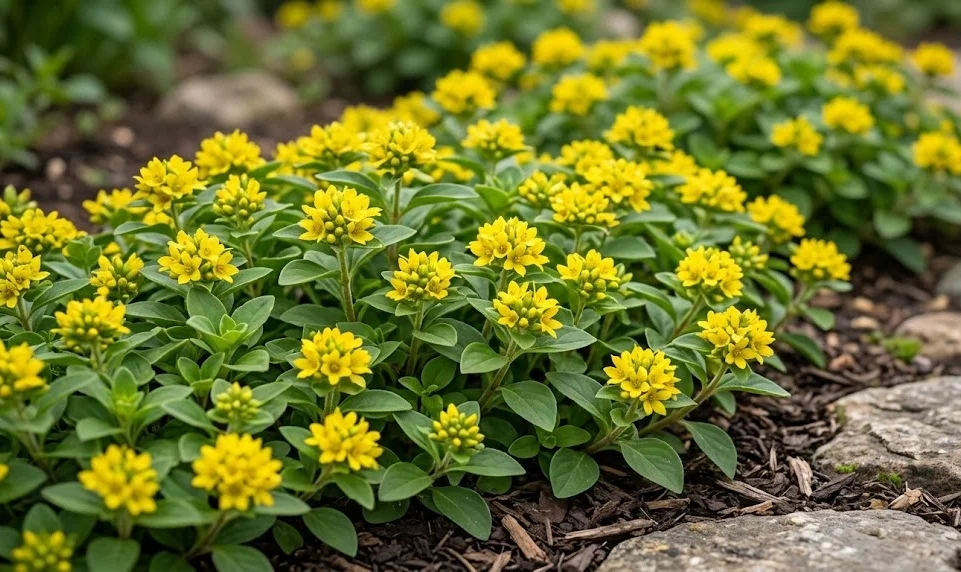

Golden globes loosestrife is generally manageable in home gardens, but it can still suffer from pests and diseases when growing conditions become unbalanced. Most problems begin with stress, such as poor airflow, excessive moisture, drought, overcrowding, or weak nutrition. Early observation is the most effective form of protection because small issues are easier to correct than established infestations. A healthy plant in the right position will usually resist serious damage far better than one struggling in unsuitable conditions.
Why plant health determines resistance
A vigorous golden globes loosestrife plant is less attractive to many pests than a stressed one. Firm stems, active roots, and balanced growth help the plant recover from minor feeding damage. When plants are weakened by drought or waterlogging, their tissues become more vulnerable. This is why care practices and pest prevention are closely connected.
Overcrowding is a common cause of disease pressure. Dense foliage traps humidity and slows drying after rain or watering. Fungal spores germinate more easily when leaves remain wet for long periods. Proper spacing and periodic trimming reduce this risk significantly.
Nutrition also affects disease and pest susceptibility. Too much nitrogen can produce soft, lush growth that aphids and other sap-feeding insects prefer. Too little nutrition can leave the plant pale and slow to recover. Balanced feeding creates stronger tissue and steadier growth.
Garden hygiene should not be overlooked. Fallen leaves, old flowers, and decaying stems can shelter pests and fungal organisms. Removing this material keeps the planting cleaner and more breathable. Clean surroundings are especially important in containers and small enclosed patios.
More articles on this topic
Aphids, whiteflies, and other sap-feeding pests
Aphids may appear on tender new shoots, flower buds, and the undersides of leaves. They feed by sucking sap, which can distort growth and leave sticky honeydew behind. This honeydew may attract ants or encourage sooty mold. Small colonies can often be removed before they become serious.
Whiteflies are more common in sheltered, warm, and still conditions. When disturbed, they may rise from the foliage in small pale clouds. Their feeding weakens leaves and can create a tired, speckled appearance. They are especially troublesome where plants are grown close together under cover.
Regular inspection is the best way to catch sap-feeding pests early. Look closely at new growth, because pests usually settle where tissues are softest. A strong but careful spray of water can dislodge many insects. Repeated physical removal may be enough for light infestations.
If treatment is needed, insecticidal soap or horticultural oil can be used carefully according to label directions. Coverage must reach the undersides of leaves, where pests often hide. Treatments should not be applied during high heat or direct intense sun. Protecting beneficial insects is important, so broad-spectrum insecticides should be avoided whenever possible.
More articles on this topic
Slugs, snails, and chewing damage
Slugs and snails may damage young golden globes loosestrife growth, especially in moist gardens. They usually feed at night and leave irregular holes in leaves. Silvery slime trails are a useful clue. Damage is often worse in dense mulch, shaded corners, and wet weather.
Young transplants are particularly vulnerable because they have less foliage to spare. A few nights of heavy feeding can make a small plant look badly weakened. Larger established plants usually tolerate minor chewing better. Even so, repeated damage can reduce flowering and overall vigor.
Cultural control starts with reducing hiding places. Keep old leaves, boards, and excessive wet debris away from the planting area. Watering in the morning rather than evening can make the surface less inviting overnight. Raising containers slightly can also reduce access.
Hand-picking is effective in small gardens when done consistently. Barriers and wildlife-safe slug controls can be considered where pressure is high. Any control method should be used responsibly, especially where pets, birds, and beneficial organisms are present. The goal is to reduce damage without disrupting the garden ecosystem.
Fungal leaf spots, mildew, and rot
Leaf spot diseases may appear as small brown, black, or yellow-edged marks on the foliage. They often develop when humidity is high and leaves remain wet. Minor spotting is usually cosmetic, but severe infection can weaken the plant. Removing affected leaves helps slow spread.
Powdery mildew can occur when air circulation is poor and plants experience stress. It appears as a pale, powdery coating on leaf surfaces. Although it is associated with humidity, it can also develop when roots are dry and foliage is stressed. Improving airflow and correcting watering are key steps.
Crown and root rots are more serious than leaf blemishes. They are usually linked to waterlogged soil, buried crowns, or poorly drained containers. The plant may wilt despite wet soil, and stems at the base may soften. Prevention is far easier than rescue once rot is advanced.
To manage fungal issues, avoid overhead watering when conditions are cool or humid. Space plants well, trim congested growth, and remove infected debris. Repot container plants if the medium has collapsed or drains poorly. Fungicides should be considered only after cultural problems have been corrected.
Integrated prevention and recovery
Integrated pest and disease management begins with choosing the right site. Bright light, gentle airflow, and evenly moist but drained soil create the foundation for healthy growth. A plant in balance requires fewer interventions. Prevention is always more elegant than repeated rescue treatments.
Monitoring should become part of routine care. Check leaves, stems, buds, and the soil surface while watering or grooming. Early signs such as sticky residue, distorted shoots, holes, or spots should be addressed immediately. Quick action prevents small problems from becoming established.
When a plant is damaged, recovery depends on correcting the underlying cause. Removing pests is helpful, but the plant will remain vulnerable if it is still too dry, too wet, or overcrowded. Trim away badly affected growth to stimulate clean regrowth. Support recovery with steady moisture and mild nutrition only when roots are healthy.
Healthy golden globes loosestrife can rebound well from moderate pest or disease pressure. Its compact habit and active growth allow it to replace damaged foliage during the season. The best results come from combining observation, sanitation, balanced care, and restraint. This approach protects both the plant and the wider garden environment.