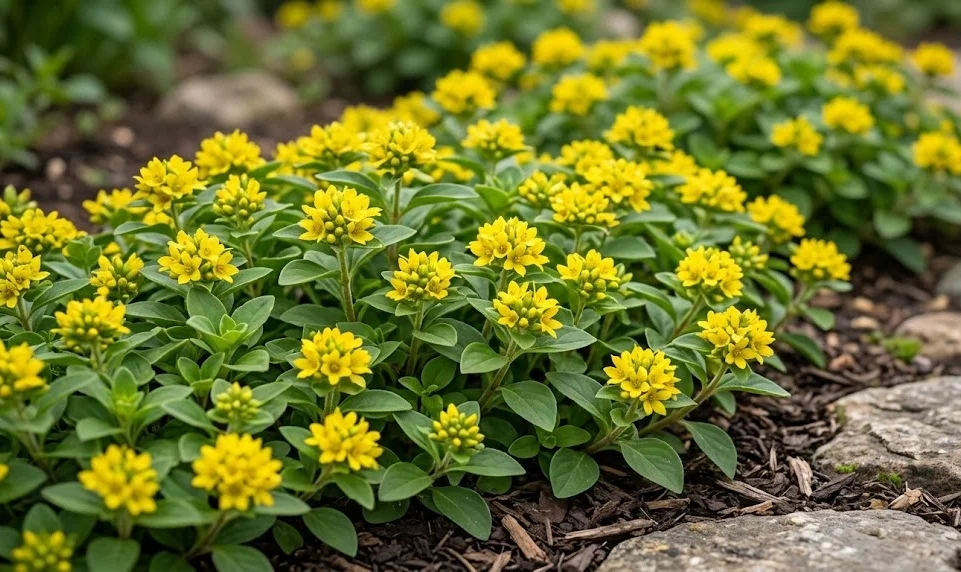

Pruning golden globes loosestrife is a light, regular process rather than a severe annual operation. The plant responds well to grooming because its spreading stems can become loose after flowering or during stressful weather. Timely cutting encourages branching, improves airflow, and keeps containers or border edges looking intentional. The best results come from removing the right growth at the right time without weakening the plant’s ability to recover.
Why pruning improves plant quality
Pruning helps golden globes loosestrife maintain a dense, rounded habit. Without trimming, some stems may extend beyond the rest of the plant and create an uneven outline. This is especially noticeable in containers, where balance and proportion matter. A small amount of regular trimming prevents the need for harsh correction later.
Cutting back faded flowers can also improve appearance. Old blooms draw attention away from fresh buds and healthy foliage. Removing them makes the plant look cleaner and may encourage continued flowering. This practice is particularly useful during the main display period.
Pruning improves airflow through the plant canopy. Dense, tangled stems hold moisture after rain or watering. Better airflow reduces the risk of fungal leaf spots and crown problems. This is a practical benefit as well as an aesthetic one.
The plant should never be pruned mechanically without observing its condition. A drought-stressed or newly planted specimen needs recovery time before cutting. Healthy, actively growing plants respond best to trimming. Timing and plant vigor are more important than rigid calendar rules.
More articles on this topic
Pinching, deadheading, and light trimming
Pinching young shoot tips early in the season encourages branching. This creates more growing points and a fuller plant. Pinching is best done with clean fingers or small snips. The plant should be watered well afterward so it can produce new side shoots.
Deadheading can be done throughout the flowering period. Remove faded flowers along with a short section of stem if needed. This keeps the plant tidy and prevents energy from being spent on old growth. It also helps reveal new buds developing lower on the shoots.
Light trimming is useful when stems become too long or uneven. Cut back to just above a leaf pair or branching point. This encourages regrowth from a natural node rather than leaving bare stubs. Clean cuts heal more efficiently and look better.
Avoid removing too much foliage during hot or dry weather. Leaves are needed for photosynthesis and for shading the crown. A moderate trim is safer than cutting the entire plant back hard in midsummer. If stronger rejuvenation is needed, do it during mild conditions and support the plant with steady moisture.
More articles on this topic
Seasonal cutting back and aftercare
In spring, remove winter-damaged or dead material once new growth begins. This makes it easier to see which stems are alive. Cutting too early in uncertain weather can expose tender shoots to late cold. A patient spring cleanup usually produces better results.
During summer, pruning should focus on grooming and shaping. Remove leggy stems, faded flowers, and any diseased leaves. If the plant becomes tired after flowering, reduce the longest stems to stimulate fresh growth. Follow pruning with careful watering rather than heavy fertilizer.
In autumn, cutting back should be more restrained. Remove unhealthy or collapsing material, but do not force a flush of tender new growth late in the season. In colder regions, some top growth may help protect the crown temporarily. Final cleanup can be completed in spring when winter damage is clear.
After any pruning, observe how the plant responds. New shoots should appear firm, green, and well-spaced. If regrowth is weak, review watering, light, and nutrition rather than pruning again. Successful cutting back works with the plant’s natural rhythm and keeps golden globes loosestrife compact, healthy, and ornamental.