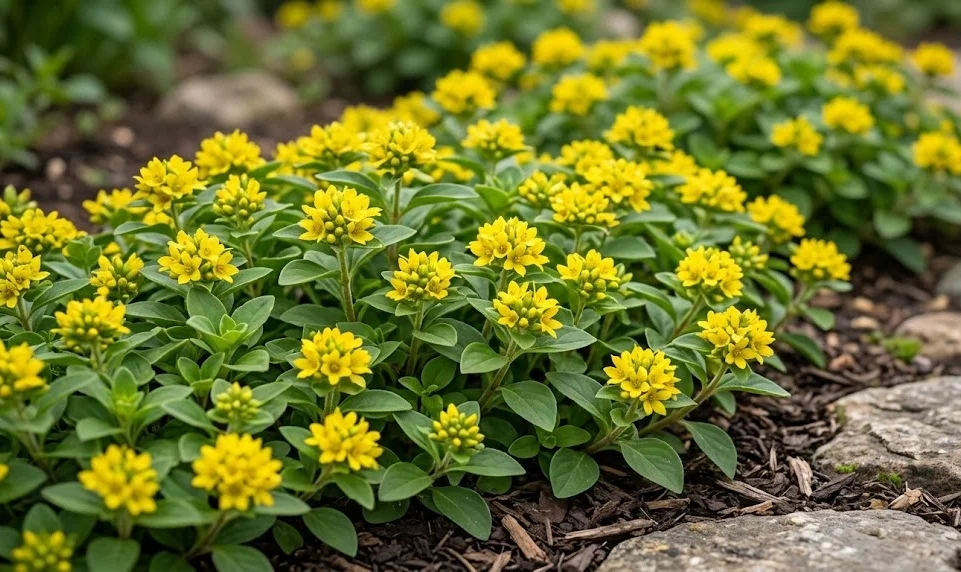

Golden globes loosestrife grows best in bright conditions that support flowering without exposing the plant to excessive heat. Light intensity affects stem length, leaf color, moisture demand, and the number of flowers produced. The plant is adaptable, but it shows its best form when sun and shade are balanced according to climate. Understanding its light needs helps gardeners choose better positions and avoid common problems such as weak growth or scorched foliage.
Finding the ideal light balance
The ideal position usually provides bright light with some protection from harsh afternoon sun. Morning sun is particularly valuable because it is strong enough to support flowering but less likely to overheat the plant. Light shade later in the day helps preserve foliage quality. This balance is especially useful in warm regions.
In cooler climates, golden globes loosestrife can often tolerate more direct sun. Longer exposure may improve flowering where temperatures remain moderate. The plant still needs consistent moisture in sunny positions. Sun and water management should always be considered together.
Deep shade is not recommended for strong flowering. The plant may remain alive, but stems can become elongated and the flower display may decline. Leaves may appear thinner, and the plant can lose its compact shape. If shade is unavoidable, choose the brightest available position.
Filtered light can be excellent when it is not too dim. The open shade beneath sparse shrubs or beside light-colored walls can create a productive microclimate. Reflected light may help brighten the area without exposing the plant to direct heat. This kind of position often suits container displays and small urban gardens.
More articles on this topic
Symptoms of too much or too little light
Too much intense light often appears as wilting during the hottest part of the day. Leaves may develop pale or brown edges, especially if the root zone is also dry. Flowers may fade more quickly in harsh sun. In containers, overheating of the pot can make these symptoms worse.
Too little light produces a different set of problems. Stems stretch toward the brightest direction and become less compact. Flowering becomes sparse because the plant cannot generate enough energy for abundant bud formation. The whole plant may look loose and less vigorous.
Light stress is sometimes mistaken for a watering problem. A plant in hot sun may wilt even when the soil is moist because leaf water loss is too rapid. A plant in shade may stay damp too long and develop weak roots. Correct diagnosis requires looking at both light and soil conditions.
The best solution is often a small adjustment rather than a dramatic move. Shifting a container slightly away from afternoon heat can restore balance. Thinning nearby plants may improve light in an overly shaded border. Careful positioning gives better results than trying to correct light problems with fertilizer.
More articles on this topic
Managing light in containers and mixed plantings
Containers make light management easier because the plant can be moved as seasons change. A spring position with generous sun may become too hot in midsummer. Moving the pot to partial shade can protect the foliage and extend flowering quality. This flexibility is useful on balconies and patios.
In mixed containers, companion plants should not shade golden globes loosestrife completely. Taller plants can provide useful afternoon protection, but they should not block all direct light. Arrange companions so that the plant receives light from the front or side. Good design supports both beauty and plant health.
In garden beds, observe the site at different times of day before planting. A place that looks sunny in the morning may be shaded by afternoon structures or trees. Seasonal changes also matter because deciduous plants alter light patterns through the year. Planting decisions are better when based on real observation rather than guesswork.
When the light is right, golden globes loosestrife grows with shorter internodes, fresher foliage, and more reliable blooms. Its yellow flowers appear brighter against healthy green leaves. The plant keeps a more natural, rounded shape with less corrective pruning. Balanced light is therefore one of the most important foundations of professional care.