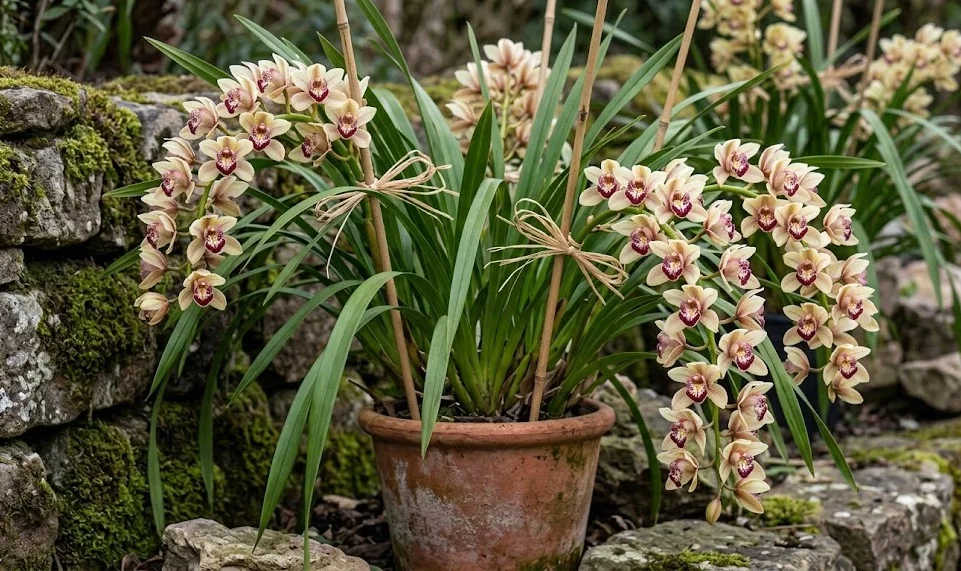

Winter care is a decisive stage for boat orchids because cool, bright conditions help preserve energy and support flowering. These plants do not need tropical heat through winter, and excessive warmth can interfere with their natural rhythm. At the same time, they must be protected from frost, cold drafts, and wet roots. Successful wintering means keeping the plant cool, bright, stable, and only moderately moist.
Preparing the plant before winter
Preparation should begin before the first dangerous cold nights arrive. Plants kept outdoors should be checked carefully for pests before being moved inside. Insects hidden in leaf bases can multiply quickly indoors. Cleaning the plant early prevents larger problems later.
Old flower spikes, dead leaves, and loose debris should be removed. This improves hygiene and reduces hiding places for pests. The pot surface should also be inspected for decomposed medium. A sour or collapsed mix may cause trouble during the cool season.
The plant should be acclimated gradually when possible. A sudden move from bright outdoor air to a dim room can stress leaves and buds. A bright sheltered transition space is ideal. The aim is to reduce shock while avoiding cold injury.
Flower spikes may already be forming by the time winter conditions begin. They should be protected from breakage during movement. The pot should be carried by the container, not by the leaves or spikes. Young spikes are especially fragile.
More articles on this topic
Ideal winter temperature and light
Boat orchids prefer cool winter conditions, but they should remain above freezing. A bright room with cool nights is often better than a warm living space. Many plants flower more reliably when they experience a clear temperature drop. This cool period should be stable rather than extreme.
Light remains important during winter. Short days and weak sunlight can reduce plant strength. The brightest safe position available is usually best. However, leaves should not press against icy glass.
A frost-free conservatory, enclosed porch, or cool greenhouse can be excellent. These spaces often provide the combination of light and cool air that boat orchids appreciate. Ventilation is still necessary on mild days. Stale damp air can encourage fungal problems.
Indoor heating can create difficulties. Warm dry air can stress foliage, while low winter light reduces growth. If the plant must be kept in a heated room, it should receive the brightest position possible. Additional humidity around the plant may help, but the roots must not remain wet.
More articles on this topic
Winter watering and feeding
Watering should be reduced in winter because evaporation and root activity slow down. The potting mix should become partly dry before more water is applied. Constant moisture in a cool pot can lead to root rot. This is the main winter danger.
The plant should still not be abandoned completely. Pseudobulbs can shrivel if the plant remains dry for too long. Moderate watering protects stored reserves. The correct interval depends on pot size, medium, and temperature.
Fertilizer should usually be reduced or paused during the coolest period. A plant that is not actively growing has limited nutrient demand. Excess fertilizer can accumulate in the medium. Clean water is safer than unnecessary feeding.
When watering, morning is the best time. The plant and pot then have the day to dry slightly before temperatures fall at night. Water should not collect in leaf bases. Good drainage remains essential.
Returning to active growth
As days lengthen and temperatures rise, the plant should be observed for new growth. Fresh shoots and roots indicate that active care can gradually resume. Watering can increase step by step. Fertilizer should return only when the plant is clearly growing.
Plants that flowered during winter or early spring may need support afterward. Flowering uses stored energy, and the plant must rebuild reserves. Removing spent spikes helps redirect energy. Leaves and pseudobulbs should remain intact.
Outdoor placement can resume only after cold danger has passed. The plant should be introduced gradually to brighter conditions. Sudden sun exposure can scorch leaves that developed indoors. A shaded transition period prevents damage.
Winter performance should be reviewed honestly. If the plant did not flower, the likely causes include insufficient light, excessive warmth, weak summer growth, or poor root health. Adjusting the next growing season is often more effective than changing only winter care. Flowering is the result of the whole year, not just one month of attention.