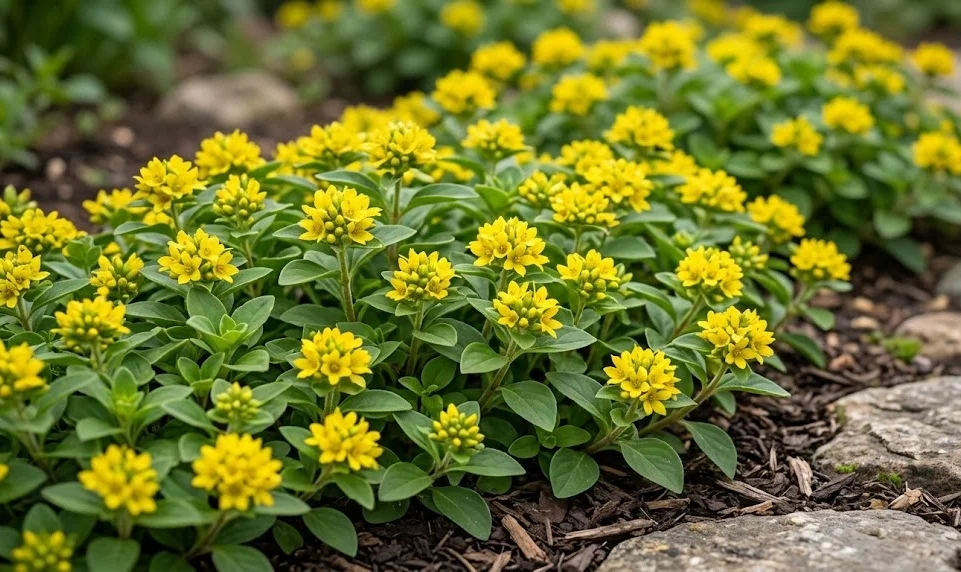

Watering and feeding are the two care practices that most directly influence the quality of golden globes loosestrife. The plant needs enough moisture to sustain its lush foliage and bright flowers, but it also needs oxygen around the roots. Nutrition should be steady rather than excessive, because forced growth often becomes weak and less attractive. When irrigation and fertilization are planned together, the plant remains compact, fresh, and productive through much of the growing season.
Understanding its moisture needs
Golden globes loosestrife prefers evenly moist soil during active growth. It is not a plant that thrives in prolonged dryness, especially in containers. When moisture drops too low, the stems may wilt and the flowering period may shorten. Repeated drought stress can also cause older leaves to yellow and fall.
The root zone should be checked before watering rather than relying only on a fixed schedule. Weather, pot size, wind, soil composition, and plant maturity all affect water use. A plant in a sunny balcony box can dry much faster than one in a shaded border. Observation is more reliable than routine alone.
In garden beds, moisture should penetrate deeply enough to encourage stable root development. Light surface watering may make the top layer look damp while the deeper roots remain dry. Deep watering also helps the plant tolerate short warm spells. It builds a more resilient root system over time.
In containers, drainage holes are essential. A pot without drainage creates conditions that can quickly damage roots. Even a moisture-loving plant cannot stay healthy in stagnant, airless compost. The best container system combines frequent watering with rapid removal of excess water.
More articles on this topic
Practical irrigation techniques
Water at the base of the plant whenever possible. This delivers moisture directly to the roots and keeps the foliage drier. Wet leaves are not automatically harmful, but they can increase disease risk in humid or crowded conditions. Morning watering is especially useful because foliage dries during the day.
During warm weather, containers may need daily checking. Small pots dry faster than large planters, and hanging baskets lose moisture rapidly through wind exposure. A finger test in the potting mix gives a quick reading of moisture below the surface. If the mix feels dry several centimeters down, watering is usually needed.
Mulch can reduce watering pressure in garden beds. Fine bark, compost, or leaf mold helps slow evaporation and keeps the soil temperature more stable. The mulch layer should be thin enough to allow air exchange. Thick, wet mulch pressed against the crown can encourage rot.
Avoid alternating extreme dryness with heavy soaking whenever possible. This irregular pattern stresses roots and can lead to uneven growth. Consistency is especially important during bud formation and flowering. A plant that receives steady moisture is more likely to produce a balanced display.
More articles on this topic
Recognizing overwatering and underwatering
Underwatered golden globes loosestrife often wilts first at the shoot tips. Leaves may feel soft and lose their fresh color. Flower buds can dry before opening, and open flowers may fade faster than usual. If the plant recovers quickly after watering, drought stress was likely the main issue.
Overwatered plants may also wilt, which can confuse gardeners. The difference is that the soil remains wet, heavy, or sour-smelling. Leaves may yellow from the base upward, and stems near the crown may soften. In severe cases, roots become brown, mushy, and unable to absorb water.
A moisture meter can help, but it should not replace physical inspection. Pot weight, soil smell, drainage behavior, and plant response all provide important clues. If water runs straight through a dry pot, the mix may have become hydrophobic. In that case, repeated gentle watering or soaking the pot briefly can restore even moisture.
Correcting watering problems should be gradual. A severely dry plant should be rehydrated carefully, not flooded repeatedly. A waterlogged plant should be allowed to drain and may need repotting into a fresher medium. The goal is to return the roots to a moist but oxygenated environment.
Feeding in beds and containers
In open ground, golden globes loosestrife often needs only modest feeding. A spring layer of compost can provide enough nutrients for steady growth. If the soil is poor, a balanced slow-release fertilizer may be added at planting. This supports the plant without creating sudden nutrient surges.
Container plants depend more heavily on gardener-supplied nutrition. Frequent watering gradually leaches nutrients from the potting mix. A diluted liquid feed every few weeks can maintain color and flowering. The exact interval should be adjusted according to growth rate and season.
A balanced fertilizer is usually preferable to a high-nitrogen formula. Too much nitrogen encourages leafy growth at the expense of flowers. Soft, lush stems may also attract aphids and become more prone to collapse. Moderate feeding produces a firmer, more durable plant.
Feeding should be reduced when the plant is stressed. Do not fertilize during severe heat, drought, or root damage. Nutrients are most useful when the plant is actively growing and able to absorb them. Restoring proper watering should come before adding fertilizer.
Seasonal feeding strategy and soil health
In spring, feeding should encourage fresh growth without forcing it. Compost, mild organic fertilizer, or a low-dose balanced product works well at this stage. The plant is building stems, leaves, and roots at the same time. Gentle support helps it develop a strong structure.
During the main flowering period, regular but light nutrition can extend performance. Container plants may especially benefit from this approach. Liquid feeding after watering is safer than feeding dry soil. Moist roots absorb nutrients more evenly and are less likely to burn.
By late summer, the feeding program should become more restrained. The plant may still flower, but it also begins responding to seasonal changes. Excessive late feeding can produce tender growth that is less resilient. This is particularly important where winters are cool or unpredictable.
Long-term soil health is just as important as fertilizer choice. Organic matter improves water retention, drainage, nutrient exchange, and root activity. A living, well-structured soil reduces the need for constant correction. In that environment, golden globes loosestrife grows with fewer problems and a more natural rhythm.