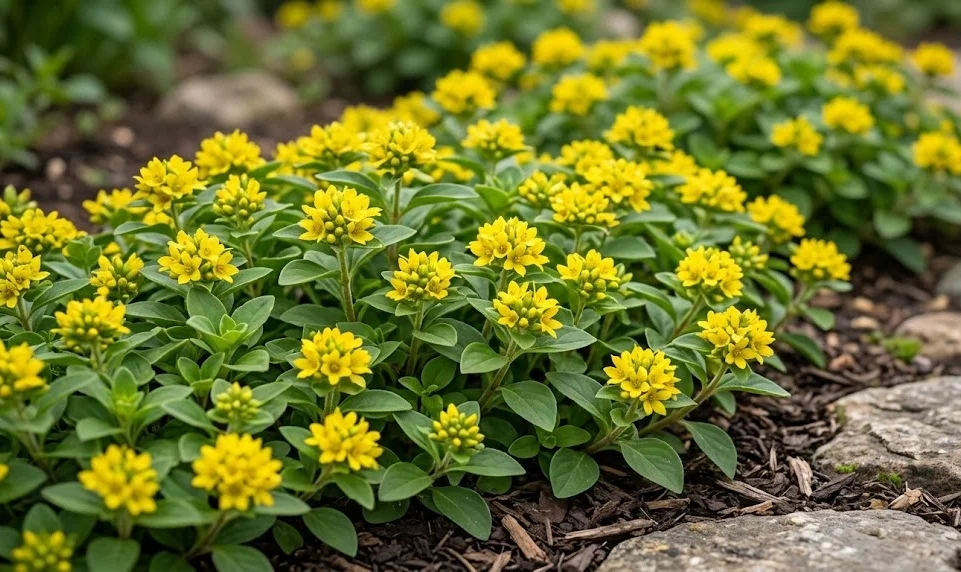

Overwintering golden globes loosestrife successfully depends on protecting the crown and roots from the combined stress of cold, wet soil, and sudden temperature changes. The plant is often grown in containers, where roots are more exposed than they would be in the ground. Even where top growth declines, a healthy crown can return strongly when spring conditions improve. Good winter preparation begins before the first hard frost and continues with careful moisture control through the dormant season.
Preparing the plant before winter
Late summer and early autumn care should encourage the plant to slow down naturally. Feeding should be reduced as days shorten and temperatures begin to fall. Too much late nitrogen can produce tender growth that is easily damaged by cold. A firmer, more mature plant enters winter in better condition.
Remove faded flowers, dead leaves, and weak stems before winter weather settles in. This improves hygiene and reduces places where pests or disease organisms can persist. However, avoid severe pruning too early if the foliage is still healthy. Remaining leaves can continue feeding the crown while conditions are mild.
As autumn progresses, watering should be adjusted carefully. The soil should not become bone dry, but it should also not stay saturated. Cool weather slows evaporation and plant water use. This means the same watering routine used in summer may become excessive.
Check the crown position before winter. Soil or mulch should not bury the base of the plant. A buried crown is more likely to rot in wet weather. Keeping the crown slightly open and airy is one of the simplest ways to improve winter survival.
More articles on this topic
Overwintering plants in garden beds
In garden beds, drainage is the most important winter factor. Cold wet soil is more dangerous than cold soil that drains well. If the plant is growing in a low, water-holding spot, it may struggle through winter. Raised beds or slightly sloped positions are safer.
A light protective mulch can help stabilize soil temperature. Fine bark, leaf mold, or compost can reduce freeze-thaw stress around the roots. The layer should be moderate rather than thick and heavy. Mulch should be kept away from direct contact with the crown.
In climates with mild winters, the plant may retain some foliage. Damaged or unattractive leaves can be removed gradually. In colder climates, top growth may die back more noticeably. This is not necessarily a problem if the crown and roots remain healthy.
Avoid disturbing the plant during winter. Digging, dividing, or transplanting is best left until spring or mild autumn conditions. Winter disturbance exposes roots to cold and drying. A settled plant is more likely to resume growth cleanly when temperatures rise.
More articles on this topic
Protecting container-grown plants
Containers require extra attention because roots are surrounded by a limited volume of potting mix. The sides of the pot transmit cold more quickly than garden soil does. Small pots are especially vulnerable to freezing and thawing cycles. Larger containers provide more stable root conditions.
Move pots to a sheltered place before severe weather arrives. A position near a house wall, under a porch, or in a cold frame can reduce exposure. The goal is not to keep the plant warm like a houseplant. The goal is to protect it from extremes of cold wind, heavy rain, and repeated freezing.
Container plants should be watered sparingly but not forgotten. Potting mix can dry out during winter, especially under cover. At the same time, overwatering in low temperatures can cause root problems. Check moisture by touch and water only when needed.
If severe frost is expected, the pot can be wrapped with insulating material. Bubble wrap around the pot, burlap, or horticultural fleece can reduce root-zone temperature swings. The top of the plant should still receive some air circulation. Completely sealing the plant can trap moisture and encourage decay.
Spring recovery after winter
In spring, inspect the plant before assuming it is lost. Dormant crowns may look quiet for some time before new shoots appear. Gently remove dead stems and old leaves once the worst frost has passed. This allows light and air to reach emerging growth.
Watering should increase gradually as new shoots develop. A plant with little foliage uses less water than a fully active one. Overwatering early in spring can delay recovery or damage roots. Increase irrigation in step with growth and weather.
Feeding should also begin gently. A small amount of compost or mild balanced fertilizer can support new growth. Strong feeding too early is unnecessary and may stress a recovering plant. Wait until the plant is actively growing before using regular fertilizer.
Container plants may need repotting if the mix has degraded over winter. A sour smell, poor drainage, or compacted texture suggests that renewal is needed. Fresh potting mix gives roots oxygen and nutrients for the new season. With careful spring handling, golden globes loosestrife can return to a dense and attractive form.