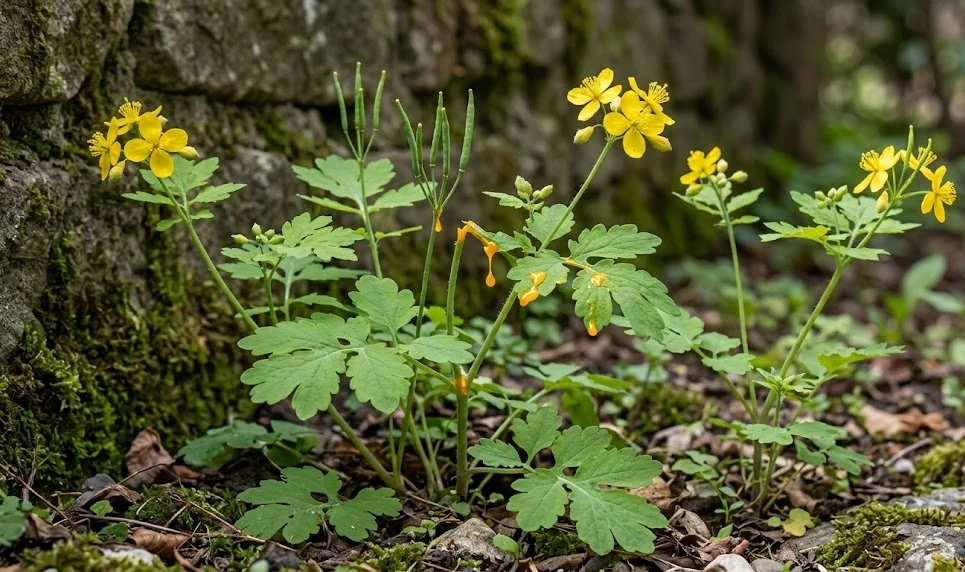

Greater celandine grows best when water and nutrients are supplied moderately rather than generously. It is a naturally adaptable plant, and excessive care can make it too lush, too tall, and too eager to spread. The best approach is to maintain steady soil moisture during establishment, then reduce intervention once roots are active. Fertilizing should be light, soil-focused, and guided by actual plant performance rather than routine feeding habits.
Water needs during establishment
Newly planted greater celandine needs consistent moisture while roots move into the surrounding soil. The first few weeks after planting are the most important, especially in spring winds or warm weather. A deep watering every few days is usually more useful than frequent shallow sprinkling. The goal is to moisten the full root zone, not just the surface.
Soil texture changes the watering strategy. Sandy soil dries quickly and may need more frequent attention during dry spells. Clay soil holds water longer, so it should be checked before irrigation is repeated. Loamy soil usually provides the most forgiving balance between drainage and moisture retention.
Signs of water stress include drooping leaves, dull foliage, and premature yellowing of older leaves. Mild midday wilting can occur in warm weather and may recover by evening. Persistent wilting in the morning indicates a more serious moisture shortage. In that case, water slowly and deeply so the root ball and surrounding soil reconnect.
Overwatering newly planted specimens can be just as damaging as drought. If the soil remains wet and airless, roots may struggle to function properly. The plant prefers moist but breathable conditions. Good establishment depends on both water and oxygen reaching the roots.
More articles on this topic
Watering established plants
Once established, greater celandine is usually able to rely on rainfall in many temperate gardens. Its natural growth cycle allows it to make strong spring progress before summer drought becomes severe. In informal areas, some summer decline can be tolerated without harming the long-term plant. In ornamental settings, occasional watering helps maintain appearance.
Established plants should be watered when the upper soil dries and the plant shows sustained stress. A slow soak at the base is preferable to overhead spraying. Wet foliage in shaded sites can remain damp for long periods, which may encourage fungal problems. Directing water to the soil is cleaner and more efficient.
During prolonged drought, flowering may shorten and seed production may be reduced. This can be beneficial where spread is a concern, but it may also make the plant look tired. Watering at key moments can extend its useful display without creating excessive softness. One thorough irrigation before severe drought is often more effective than late rescue watering.
Plants growing under trees or large shrubs need special attention. Even if rain falls, the canopy may intercept much of it before it reaches the soil. Woody roots also compete strongly for available moisture. In these locations, checking the soil by hand is more reliable than judging by rainfall alone.
More articles on this topic
Mulching for moisture stability
Mulch is valuable because it reduces evaporation and moderates soil temperature. Leaf mold, composted bark, or mature garden compost works well around greater celandine. These materials suit its woodland-edge character and improve soil structure gradually. A thin, even layer is better than a heavy blanket.
Mulch should be applied around the plant rather than directly against the stems. Soft stems can suffer if damp organic matter is piled too close. Leaving a small gap around the crown allows airflow and reduces rot risk. This detail is especially important in shaded or humid gardens.
In sandy soils, mulch helps rainfall and irrigation last longer. In clay soils, it protects the surface from cracking and compaction. Over time, organic mulch supports earthworms and soil microbes, which improve root conditions naturally. This makes mulching a better long-term strategy than relying only on fertilizer.
Mulch also helps suppress weed seedlings, although it will not stop greater celandine from self-seeding entirely. Its own seeds may still germinate in loose organic material. Regular inspection remains necessary if strict control is desired. Mulch supports plant health, but it does not replace maintenance.
Fertilizing in garden soil
In open ground, greater celandine rarely needs concentrated fertilizer. A modest annual dressing of compost in spring is usually enough. This feeds the soil rather than forcing rapid top growth. It also supports the moisture balance that the plant prefers.
High-nitrogen fertilizers should generally be avoided. They can produce soft, elongated stems that collapse after rain or wind. Excess fertility may also increase seed production and make the plant more difficult to manage. For this species, restrained growth is often better garden growth.
If soil fertility is very low, a small amount of balanced organic fertilizer can be used in early spring. It should be spread lightly and kept away from direct contact with the crown. Watering after application helps nutrients move into the root zone. A single light feeding is normally sufficient for the season.
Fertilizer should not be applied to stressed, dry plants without first correcting moisture conditions. Roots need water to absorb nutrients safely. Feeding a drought-stressed plant can worsen stress rather than solve it. Always assess watering, soil structure, and light before deciding that fertilizer is needed.
Feeding plants in containers
Container-grown greater celandine depends more directly on the potting mix provided. Nutrients wash out through drainage holes, especially with regular watering. A loam-based compost with added grit and organic matter gives a stable start. Very light peat-free mixes may dry too quickly and require closer care.
During active growth, a diluted balanced liquid feed can be applied occasionally. It should be weaker than the rate used for heavy-feeding bedding plants. Feeding every few weeks during spring and early summer is usually enough. Once flowering declines or growth slows, feeding should be reduced.
Container watering and fertilizing are closely linked. If the pot dries completely, water may run down the sides without soaking the root ball. In that case, slow watering or temporary soaking may be needed before feeding resumes. Fertilizer should never be applied to a bone-dry root system.
Repotting may be necessary when roots fill the container or growth becomes weak despite proper watering. Refreshing part of the compost restores structure and nutrient supply. Oversized pots should be avoided because they can hold too much wet compost around the roots. A practical container is deep, well-drained, and easy to monitor.