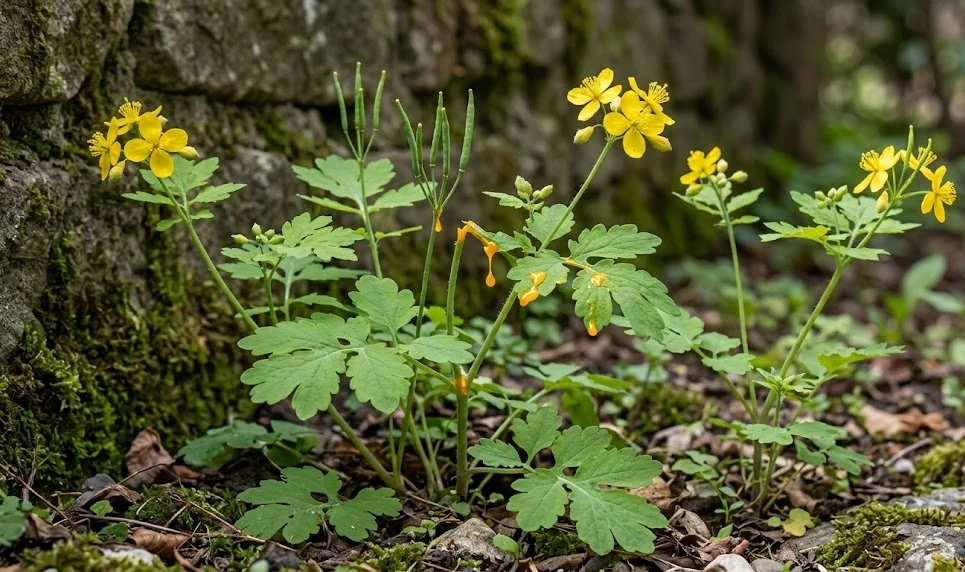

Greater celandine is typically winter-hardy in temperate gardens and does not require elaborate protection. Its above-ground growth naturally declines in autumn, while the plant survives through established crowns and, often, through self-sown seedlings. Good overwintering care focuses on drainage, cleanup, seed control, and avoiding unnecessary disturbance. The plant usually performs best when allowed to follow its seasonal rhythm with only light guidance from the gardener.
Autumn preparation
Autumn care begins by observing how much seed has formed. If spread is not wanted, seed capsules should be removed before they split. This single task can prevent a large number of unwanted seedlings the following spring. It is much easier to manage seed production in autumn than to weed out dense germination later.
As the weather cools, stems may yellow, soften, or collapse. This is normal and should not automatically be treated as disease. The plant is redirecting energy away from top growth as the season ends. Removing untidy stems improves appearance and reduces damp debris around the crown.
Cutting back can be done gradually or in one cleanup session. In formal beds, earlier removal keeps the planting neat. In wildlife-oriented areas, some stems may be left briefly for habitat value, provided they are not carrying mature seed. The level of tidiness should match the garden’s purpose.
Gloves should be worn during autumn cleanup because the sap remains irritating. Cut stems cleanly and avoid crushing them unnecessarily. Tools should be washed after use if sap accumulates on the blades. This is especially important when tools will later be used on edible crops or delicate ornamentals.
More articles on this topic
Winter soil and drainage
Winter survival depends more on soil drainage than on insulation. Greater celandine tolerates cold better than stagnant wetness around the crown. If soil remains saturated for long periods, roots may weaken or rot. A site with breathable, structured soil is the best protection.
Heavy clay soil can be improved with organic matter, but this should be done thoughtfully. Adding compost to the broader planting area improves structure over time. Digging aggressively around dormant crowns may damage roots and create more harm than benefit. Surface mulching with a light, open material is often safer.
Mulch can protect soil from erosion and temperature swings, but it should not smother the crown. A thin layer of leaf mold or composted bark is suitable. Keep the immediate base of the plant slightly clear to prevent trapped moisture. This small gap helps avoid crown rot in wet winters.
Container-grown plants require closer winter management. Pots are more exposed to freezing and waterlogging than garden soil. Raise containers on feet so drainage holes remain open. Move pots to a sheltered outdoor position if heavy winter rain is persistent.
More articles on this topic
Protection from cold and disturbance
In most temperate regions, greater celandine does not need fleece, cloches, or indoor storage. It is a hardy perennial with a natural ability to return after winter. Excessive covering can trap moisture and create disease conditions. Protection should be used only in unusually exposed containers or severe climates.
Young plants established late in autumn are more vulnerable than mature clumps. They may benefit from a light mulch around, but not over, the crown. Their root systems have had less time to anchor and explore the soil. In windy sites, firming the soil gently after frost heave can help.
Avoid unnecessary digging in winter. Dormant crowns and young seedlings can be difficult to see, and they may be damaged accidentally. Marking the planting area with a small label or stake prevents accidental disturbance. This is useful in mixed borders where spring maintenance begins early.
Animal disturbance can occasionally be a problem in loose soil or mulched beds. Birds, pets, or wildlife may expose crowns while searching for insects. Exposed roots should be covered again promptly. Light firming and a modest mulch usually restore protection.
Spring recovery after winter
Spring regrowth usually appears as fresh basal foliage when temperatures rise. The timing varies with local climate, soil temperature, and exposure. Plants in sheltered positions often start earlier than those in open ground. Do not assume a plant is dead too quickly, because dormant crowns may respond later than expected.
Remove winter-damaged stems and any debris that remains around the crown. This improves airflow and allows new shoots to develop cleanly. If seedlings have appeared, thin them while they are still small. Early thinning prevents competition and keeps the planting intentional.
A light spring compost dressing can support recovery. Apply it around the plant and water if the soil is dry. Heavy fertilizer is not necessary and may cause weak, lush growth. The plant’s natural vigor is usually enough once the season begins.
Spring is also a good time to divide or relocate plants if needed. Moving them early gives roots time to establish before summer. Any unwanted seedlings can be transplanted, composted, or removed. Overwintering care is complete when the new season’s growth has been guided into the desired pattern.