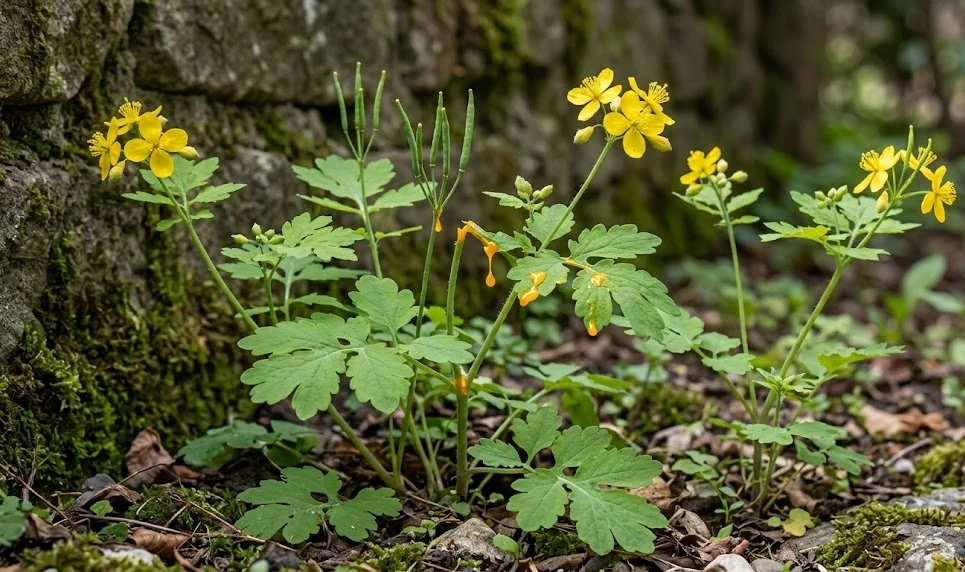

Greater celandine is generally robust, but it is not completely free from pest and disease issues. Most problems develop when plants are crowded, overwatered, weakened by drought, or grown in stagnant shade. Because the species is naturally vigorous, prevention usually works better than intensive treatment. Healthy spacing, balanced moisture, clean cutting, and regular observation are the foundations of plant protection.
Common causes of poor health
Many health problems in greater celandine begin with unsuitable growing conditions rather than a specific pathogen. Deep shade can produce weak, elongated stems that bend or collapse. Constantly wet soil may damage roots and reduce the plant’s ability to recover from stress. Dry, compacted soil can also weaken growth and make leaves yellow prematurely.
Crowding is another common cause of decline. When surrounding plants press tightly against greater celandine, airflow is reduced and foliage dries slowly after rain. This creates a more favorable environment for fungal leaf spots and soft decay. Thinning neighboring growth often improves plant health without any chemical intervention.
Nutrient imbalance can also affect resistance. Too much nitrogen encourages soft tissue that is easier for pests and diseases to exploit. Very poor soil, on the other hand, may produce weak plants with sparse foliage. A moderate, compost-based fertility program gives the best balance.
Mechanical damage should not be overlooked. Broken stems release sap and create entry points for decay organisms. Rough weeding, trampling, or careless pruning can leave the plant untidy and vulnerable. Clean cuts and careful handling reduce unnecessary stress.
More articles on this topic
Fungal leaf problems
Leaf spots may appear as small brown, gray, or dark lesions on older foliage. They are usually more noticeable in damp weather or crowded plantings. A few affected leaves are rarely serious, but widespread spotting can reduce ornamental value. Removing badly affected leaves helps slow the spread and improves appearance.
Powdery mildew can occur when plants experience dry roots combined with humid air around the foliage. It appears as a pale, powdery coating on leaves and young stems. Although it is not usually fatal, it can weaken growth and shorten the attractive season. Better spacing and more even soil moisture often reduce the problem.
Downy or gray mold-like growth may develop in cool, wet, poorly ventilated conditions. Soft stems and aging leaves are especially vulnerable when they remain wet for long periods. The best response is to remove decaying material promptly. Watering at soil level instead of over the foliage also helps.
Fungicides are rarely necessary in home or low-input professional plantings. Cultural correction is usually more effective for a plant as resilient as greater celandine. Removing infected debris, reducing crowding, and avoiding excess nitrogen are practical first steps. If disease recurs every year, the site may simply be too damp or enclosed.
More articles on this topic
Root and crown issues
Root problems are most likely in waterlogged or compacted soil. Symptoms may include wilting despite moist soil, yellowing foliage, weak stems, and poor regrowth. Because these symptoms can resemble drought stress, the soil should be checked carefully before watering more. Adding extra water to a saturated root zone can make the problem worse.
Crown rot may occur when organic matter, wet mulch, or soil is piled against the base of the plant. The crown can soften, darken, and collapse. This is more common in shaded sites with poor airflow. Keeping the crown slightly open and dry at the surface reduces risk.
Plants affected by severe root or crown rot are often best removed. Trying to rescue badly decayed plants can spread problems and wastes time. Healthy seedlings or divisions can be replanted in a better-drained position. Soil structure should be improved before replacing plants in the same spot.
Prevention is based on drainage, spacing, and restraint. Greater celandine does not need a constantly wet root zone. It prefers soil that holds some moisture but still allows air movement. That balance is central to avoiding underground disease.
Aphids, slugs, and other pests
Aphids may gather on soft new shoots, flower stems, or the undersides of leaves. They feed by sucking sap and can cause distortion when populations are high. Small colonies can often be washed off or rubbed away with gloved fingers. Natural predators such as ladybirds, lacewings, and hoverfly larvae usually help control them.
Slugs and snails may damage young seedlings and tender spring growth. Their feeding leaves irregular holes and ragged edges. Damage is usually worse in damp, shaded gardens with heavy mulch or dense debris. Reducing hiding places and protecting young plants during establishment can prevent serious losses.
Leaf miners may occasionally create pale trails or blotches within leaves. These are usually cosmetic and do not seriously weaken established plants. Removing affected leaves is enough in most cases. Broad insecticide use is not justified because it may harm beneficial insects.
Caterpillars and chewing insects can sometimes feed on foliage, but greater celandine usually tolerates minor damage. The plant’s vigorous growth often replaces lost leaf area quickly. Intervention should be based on severity rather than the presence of a few holes. In wildlife-friendly gardens, low-level feeding is part of the ecological value of the planting.
Integrated management and hygiene
Integrated pest and disease management begins with regular inspection. Checking plants once a week during active growth allows early action before problems spread. Look at the undersides of leaves, stem bases, and crowded interior growth. Early removal of affected material is simple and effective.
Good hygiene is especially important when cutting back the plant. Tools should be clean, and diseased material should be removed from the bed. Seed-bearing or infected stems should not be scattered around the garden. Gloves protect the gardener from sap while also encouraging more careful handling.
Biological balance should be protected wherever possible. Flowering greater celandine can attract insects, and surrounding biodiversity helps keep pest outbreaks in check. Avoiding unnecessary pesticides preserves predators and pollinators. A diverse planting is usually more stable than a monoculture patch.
If problems are severe every year, reassess the site rather than treating symptoms repeatedly. The plant may be too shaded, too wet, too crowded, or too heavily fed. Moving it to a more suitable place can solve several issues at once. With correct conditions, greater celandine is usually a low-problem plant.