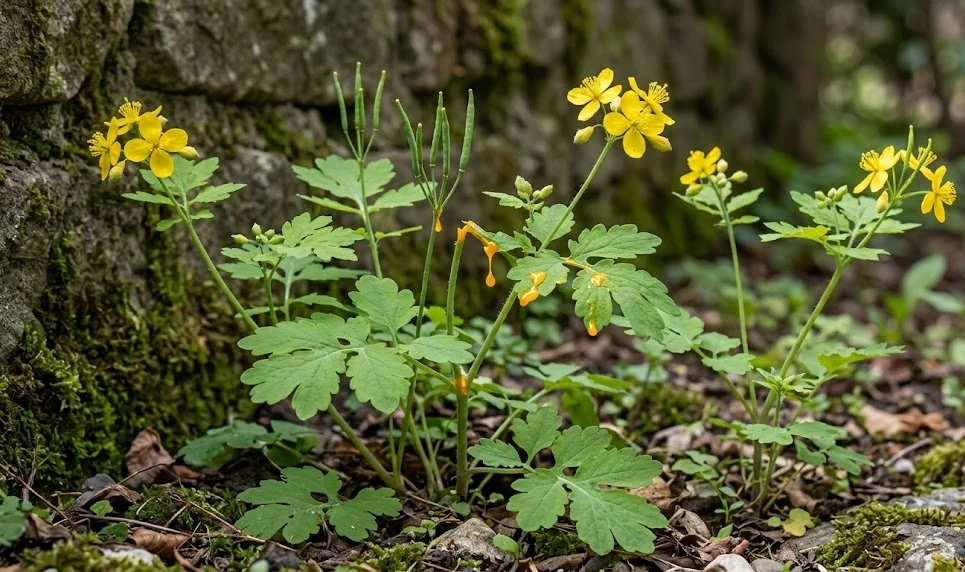

Pruning greater celandine is mainly about control, safety, and maintaining a tidy appearance. The plant does not need complex shaping, but it benefits from timely deadheading, removal of tired stems, and occasional cutting back after flowering. Because it produces irritating orange-yellow sap, every pruning task should be done with gloves and clean tools. Good cutting practice keeps the plant attractive while reducing unwanted self-seeding.
When and why to prune
The first reason to prune greater celandine is to control seed production. The plant can self-seed freely if flowers are allowed to mature into capsules. Removing spent flowers before seed release keeps it from spreading into unwanted places. This is especially important in small gardens and formal beds.
The second reason is to refresh appearance. After flowering, stems may become long, yellowing, or untidy. Cutting them back encourages cleaner regrowth if the season is still favorable. It also prevents the plant from collapsing over neighboring species.
Pruning can also improve plant health. Removing congested, damaged, or decaying stems increases airflow around the clump. Better airflow reduces the chance of fungal problems in damp shade. Clean growth is easier to inspect for pests and disease.
Timing should follow the plant’s growth cycle. Light deadheading begins during flowering, while stronger cutting back is usually done after the main display. Autumn cleanup removes dying stems before winter. Avoid severe cutting during drought unless the plant will be watered afterward.
More articles on this topic
Deadheading and seed control
Deadheading should be done before seed capsules ripen and split. The capsules are narrow and can mature quickly, so plants should be checked regularly. Removing flowers too late may still allow seed to scatter during handling. Early action is the most reliable method.
Use small shears or scissors rather than tearing stems by hand. Clean cuts reduce damage and make the work more precise. Gloves are important because sap can irritate skin. Eye contact with sap should be avoided carefully.
In informal gardens, not every flower head has to be removed. Some self-seeding may be welcome where a natural colony is desired. The key is to prevent spread into sensitive areas such as vegetable beds, gravel paths, and seedling nurseries. Selective deadheading allows both ecological value and practical control.
Collected flowering stems should be handled according to seed maturity. Immature, seed-free stems can usually be composted. Mature capsules should be disposed of more carefully if the compost pile does not heat thoroughly. This prevents accidental redistribution of seed with finished compost.
More articles on this topic
Cutting back and rejuvenation
After the main flowering period, greater celandine can be cut back to promote fresh basal growth. This is most effective when soil moisture is adequate. If the plant is cut hard during hot drought, regrowth may be weak or delayed. Watering before and after cutting can help in dry conditions.
Cut stems close to the base, but do not damage the crown. Leaving ragged stubs can look untidy and may decay in damp weather. Sharp tools make cleaner cuts and reduce crushing. Cleaning tools afterward removes sticky sap and plant residue.
Rejuvenation cutting is useful for plants that have become leggy or have flopped over nearby plants. It restores order in mixed borders and reduces shading of smaller companions. New foliage may appear within a few weeks during active growth. If the season is late, regrowth may wait until spring.
Autumn cutting is simpler and focuses on sanitation. Remove dead, diseased, or heavily seeded material before winter. In wildlife areas, some harmless dry stems may be left temporarily, but seed control should still be considered. By spring, old growth should be cleared so new shoots can emerge cleanly.