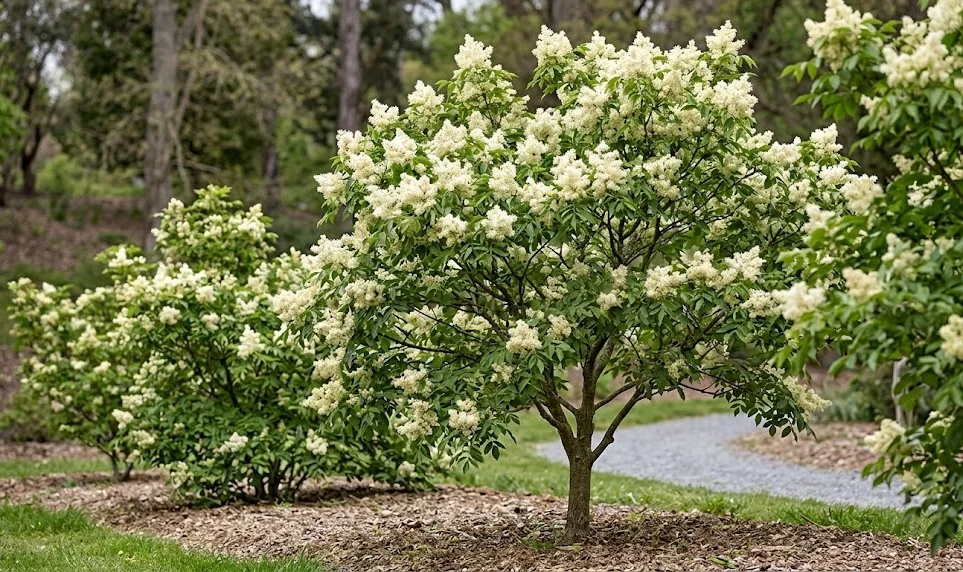

Flowering ash establishes best when planting is treated as a long-term horticultural decision rather than a quick installation task. The tree is naturally tolerant once mature, but the quality of the first season has a strong influence on later root strength, crown balance, and resistance to drought. Good planting means choosing the right site, preparing the soil properly, placing the root ball at the correct depth, and supporting the tree without restricting it. Propagation is possible, but it requires patience, because seed-grown plants develop gradually and may vary in habit and flowering quality.
Selecting a planting site
A sunny, open site is ideal for flowering ash because light directly influences crown density and flowering performance. The tree can tolerate partial shade, but it is less likely to produce a generous floral display where light is limited. Open conditions also help the foliage dry more quickly after rain, which can reduce the pressure from leaf diseases. The position should allow the tree to mature without constant pruning.
The soil should drain freely, especially during winter and after heavy rainfall. Flowering ash can adapt to many soil types, including calcareous and stony soils, but it dislikes stagnant water around the roots. If the chosen area remains wet for days after rain, drainage should be improved before planting. Planting into unsuitable ground often creates problems that are difficult to correct later.
Spacing should be based on the mature crown, not on the small size of the young tree. A cramped tree may survive, but it will not show its natural shape properly. Competition from large shrubs, hedges, and vigorous trees can reduce growth and flowering. Giving flowering ash a clear root zone during establishment improves long-term results.
Urban and courtyard gardens can still be suitable if heat and reflected light are managed carefully. In paved areas, the root zone must be large enough to collect water and exchange air. A tree pit that is too small can turn even a tolerant tree into a stressed specimen. The more restricted the site, the more important proper soil volume becomes.
More articles on this topic
Planting technique
The best planting period is usually autumn or early spring, when temperatures are moderate and soil moisture is easier to maintain. Autumn planting allows roots to begin settling before summer heat arrives. Spring planting can also work well if watering is reliable during the first growing season. Avoid planting during frozen ground, extreme heat, or prolonged drought.
The planting hole should be wider than the root ball but not unnecessarily deep. A broad hole encourages lateral root development into loosened surrounding soil. The root collar should sit at the same level as it did in the nursery container or slightly above heavy soil. Planting too deep is a common mistake and can weaken the tree over time.
Backfill should be firmed gently to remove large air pockets, but the soil should not be compacted harshly. Excessive stomping around the roots can reduce oxygen and slow establishment. If the native soil is reasonable, it is better to use it rather than create a small pocket of overly rich amended material. Roots need to move into the surrounding ground, not remain confined in a soft planting hole.
After planting, water thoroughly so the soil settles around the roots. A mulch layer can then be applied over the planting area while keeping the trunk clear. Staking may be helpful on windy sites, but it should allow slight movement so the trunk can strengthen naturally. Stakes should be checked regularly and removed once the tree is stable.
More articles on this topic
Seed propagation
Flowering ash can be propagated from seed, although this method requires time and careful handling. Seeds may need a period of cold stratification before they germinate reliably. This mimics natural winter conditions and helps break dormancy. Without proper treatment, germination can be uneven and slow.
Fresh seed should be collected when mature and cleaned before storage or sowing. It is important to avoid seed that is damaged, moldy, or poorly developed. A free-draining propagation medium helps prevent rot during the waiting period. Moisture should be steady but never excessive.
Seedlings should be grown in bright conditions and protected from severe drying while young. They usually develop a stronger root system when they are not kept too long in small containers. Potting on at the right time prevents circling roots and improves later planting success. A seedling with a healthy root structure will establish better than one forced to remain crowded.
Seed-grown flowering ash may show natural variation in growth habit, vigor, and flowering. This can be useful in ecological or large-scale planting, but less predictable for formal ornamental design. If uniformity is important, nursery-selected plants are often the better choice. Propagation from seed is rewarding, but it is not the fastest route to a finished landscape tree.
Young plant aftercare
The first year after planting is the most sensitive period for flowering ash. Regular deep watering is essential during dry spells, even though mature trees are drought tolerant. The root ball can dry faster than the surrounding soil, especially in windy or sunny conditions. Checking moisture by hand is more reliable than assuming rainfall has reached the roots.
Weed control around the base is also important because grasses and vigorous groundcovers compete strongly for water. A clear mulched circle gives the young tree a better start. Mulch should be renewed as it breaks down, but it should never be piled against the trunk. This simple habit improves both moisture stability and soil health.
Pruning after planting should be minimal and focused only on damaged or poorly placed branches. The tree needs foliage to produce energy and support root establishment. Removing too much growth too soon can delay recovery. Structural pruning is better done gradually as the tree begins active growth.
Protection from physical damage is often overlooked but extremely important. Lawn equipment, animals, and careless foot traffic can injure bark and compact soil. Young trees are especially vulnerable because their trunks and roots are not yet resilient. A protected, well-mulched root zone gives flowering ash the calm start it needs.