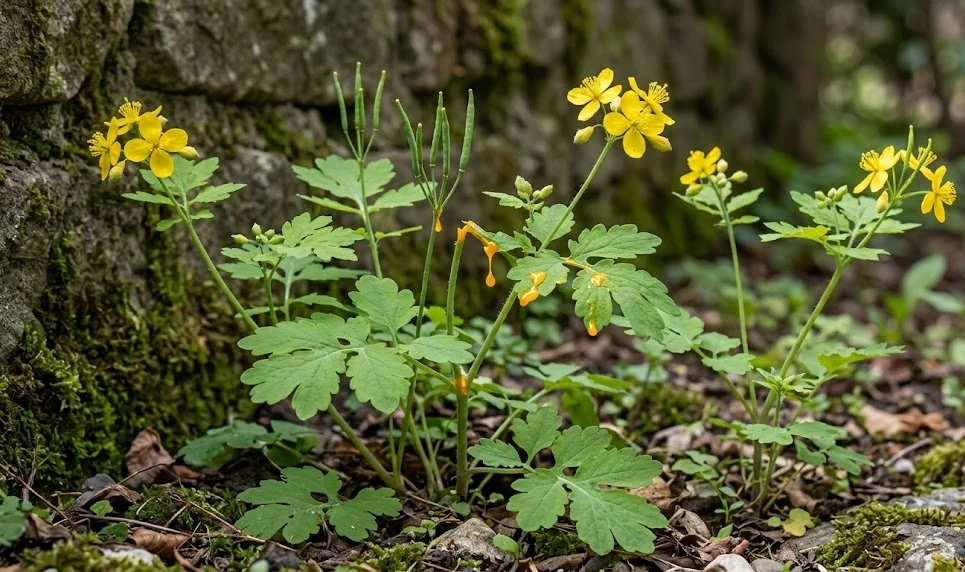

Greater celandine is a resilient, herbaceous perennial that often behaves like a self-sustaining wild garden plant rather than a demanding ornamental. It is valued for its finely divided foliage, bright yellow flowers, and ability to grow in semi-shaded corners where many cultivated plants struggle. In professional horticulture, it should be treated with respect because its orange-yellow sap can irritate skin and eyes, and the plant may spread readily by seed. Successful care therefore means balancing its natural vigor with thoughtful placement, controlled maintenance, and safe handling.
Understanding the growth habit
Greater celandine forms an upright, branching plant with soft, brittle stems and deeply lobed leaves. Its growth is usually most vigorous in spring and early summer, when soil moisture is still reliable and temperatures are moderate. The plant can flower over a long period, especially when conditions are mild and spent growth is not allowed to collapse into dense, untidy mats. In a managed garden, its informal character works best in naturalistic borders, wildlife corners, woodland edges, and less formal herbaceous plantings.
The root system is not usually difficult to manage, but the plant compensates with abundant seed production. Once established, it may appear in paving cracks, under shrubs, along fence lines, and in neglected soil pockets. This is not necessarily a problem in spacious or semi-wild gardens, but it can become inconvenient in small beds or carefully designed ornamental schemes. Regular observation is therefore part of good care, because young seedlings are much easier to remove than mature clumps.
The leaves emerge with a fresh green tone and often remain attractive when the plant receives enough moisture. In dry, exposed positions, foliage may yellow earlier, become sparse, or look prematurely aged. The stems contain a colored latex that is characteristic of the plant and should not be handled casually. Gloves are recommended during pruning, transplanting, or cleanup, especially for people with sensitive skin.
Greater celandine is adaptable, but it is not a plant that benefits from excessive pampering. Rich feeding, constant watering, and highly fertile soil can encourage overly lush growth that flops or self-seeds aggressively. Moderate conditions generally produce a sturdier and more manageable plant. The aim is to support healthy growth without pushing it beyond the level needed for the chosen planting purpose.
More articles on this topic
Choosing the right location
The best location for greater celandine is a partially shaded site with open, well-drained soil. It often thrives near hedges, walls, shrubs, and deciduous trees, where it receives morning light or filtered sun. Strong midday sun is tolerated only when soil moisture remains adequate and temperatures do not remain extreme for long periods. In hot, dry gardens, light shade produces better foliage quality and reduces stress.
A woodland-edge position is especially suitable because it reflects the plant’s natural preference for disturbed, semi-shaded ground. It can grow beneath open-canopied shrubs, beside compost areas, or at the margins of informal beds. However, it should not be placed where its self-seeding would interfere with delicate alpine plants, young vegetable seedlings, or low-growing ornamental carpets. Location choice is the most effective way to prevent future maintenance problems.
Good air movement is helpful, even though the plant tolerates sheltered places. Dense shade combined with still, humid air can encourage weak stems and poor drying after rain. If the plant is grown in a crowded border, surrounding vegetation should not smother it completely. A little space around each clump improves both appearance and plant health.
Greater celandine can also be grown in containers, but it is rarely at its best as a refined pot specimen. In pots, it needs more attentive watering because the root zone dries faster than garden soil. Container culture is useful when control is important or when the plant is being observed for educational, herbal, or botanical purposes. A deep pot with drainage holes and a gritty, loam-based medium is preferable to a shallow decorative container.
More articles on this topic
Soil preparation and structure
Greater celandine grows in a wide range of soils, but it performs best in moderately fertile, humus-rich ground. Soil that holds some moisture while allowing excess water to drain is ideal. Heavy clay is acceptable if it is not waterlogged for long periods, while very sandy soil may need compost to improve moisture retention. The plant does not require highly cultivated soil, but extreme compaction should be corrected before planting.
Before establishing plants, remove perennial weeds that would compete strongly at root level. Incorporating mature compost can improve biological activity and create a more even moisture supply. Fresh manure is unnecessary and may be too rich, especially if the goal is compact, controllable growth. A modest soil improvement is usually enough for this naturally vigorous species.
Drainage matters because prolonged saturation can weaken roots and encourage decay. If the selected area remains wet in winter, planting on a slight mound or raised edge is safer. Organic matter should be mixed through the soil rather than left as a heavy, wet layer around the crown. This helps roots explore the soil evenly and prevents surface crusting.
Soil pH is rarely a major limitation for greater celandine. It can tolerate neutral to mildly alkaline conditions and is often seen near walls where lime-rich materials influence the soil. Slightly acidic soil is also acceptable if structure and drainage are good. In practical care, texture, moisture balance, and competition from neighboring plants are more important than precise pH adjustment.
Watering and moisture management
Newly planted greater celandine should be watered regularly until it is established. The aim is to keep the root zone evenly moist but never saturated. During the first few weeks, shallow watering is less effective than a thorough soak that reaches the developing roots. Once the plant has settled, it usually manages well with natural rainfall in many temperate gardens.
Established plants are relatively tolerant of short dry spells, but drought can reduce flowering and leaf quality. In prolonged heat, the plant may pause growth, yellow, or shed older leaves. Supplemental watering is most useful when the plant is part of a visible ornamental border where appearance matters. In wilder areas, some seasonal decline can simply be accepted as part of its natural rhythm.
Mulching can help stabilize soil moisture, especially in light soils or under trees. A thin layer of leaf mold, composted bark, or mature garden compost is suitable. The mulch should not be piled against the stems, because trapped moisture around soft tissue may encourage rot. A breathable mulch also supports soil organisms and reduces weed competition.
Overwatering is more harmful than occasional dryness. Constantly wet soil can create weak growth and increase the risk of root problems. Greater celandine should not be treated like a moisture-loving marginal plant. Its best care comes from moderation, with watering guided by soil condition rather than a fixed calendar.
Feeding and nutrient balance
Greater celandine does not need heavy fertilization. In ordinary garden soil, a yearly addition of compost is usually sufficient. Excessive nitrogen can produce tall, soft stems that are more likely to flop and less attractive in mixed plantings. It can also increase the plant’s capacity to seed itself across the garden.
If growth is weak because the soil is genuinely poor, a light application of balanced organic fertilizer in spring may help. This should be used sparingly and watered in well. The goal is to support steady development rather than force lush foliage. Strong growth is not always desirable with a plant that naturally colonizes open ground.
In container culture, feeding must be slightly more deliberate because nutrients leach from the potting mix. A low-strength liquid feed during active growth can maintain foliage color and flowering. Feeding should stop when the plant begins to slow down toward autumn. Overfed container plants may become coarse, top-heavy, and harder to manage.
Nutrient deficiency is uncommon, but pale leaves, poor growth, and sparse flowering can indicate exhausted soil or root restriction. These symptoms should be assessed alongside light, watering, and competition before fertilizer is added. Many apparent feeding problems are actually caused by drought, deep shade, or compacted soil. Careful diagnosis prevents unnecessary intervention.
Managing spread and appearance
The most important maintenance task is controlling self-seeding. Flowers develop into slender seed capsules, and these should be removed if spread is not wanted. Deadheading before seed ripening greatly reduces unwanted seedlings. This is especially important near gravel paths, vegetable beds, nursery areas, and cracks in paving.
Seedlings are easiest to remove when the soil is moist. They can be hand-pulled or lightly hoed before roots become established. In naturalistic areas, some seedlings may be left to create continuity and a spontaneous look. The gardener’s role is to decide where the plant belongs and where it does not.
Cutting back tired stems can refresh the plant and improve the border’s appearance. After the main flowering period, leggy or yellowing growth may be reduced close to the base. New shoots often appear if the plant has enough moisture and the season remains favorable. This keeps the clump neater and prevents the garden from looking neglected.
Because the sap can irritate, pruning should be done with gloves and clean tools. Cut material should not be left where children or pets might play with it. Composting is generally possible, but seed-bearing stems should be handled carefully if the compost pile does not heat properly. Disposal before seed maturity is the safest approach where spread is a concern.
Safety, seasonal care, and long-term value
Greater celandine has a long history of traditional use, but garden care should focus on safe cultivation rather than home treatment. The plant’s sap is biologically active and should not be applied to skin or consumed without qualified professional guidance. In a public, educational, or family garden, clear placement and responsible handling are important. Its value as a plant does not remove the need for caution.
In autumn, the plant naturally declines as temperatures fall and day length shortens. Dead stems can be cut back once they become unsightly or after seeds have been managed. Leaving a small amount of plant debris in informal areas may support soil life, but diseased or heavily seeded material should be removed. Winter cleanup should be practical rather than overly severe.
Greater celandine usually returns reliably from established crowns and from seedlings. This resilience makes it useful in low-input plantings, especially where a wild, semi-natural effect is desired. It is less suitable for highly controlled formal beds, where its casual growth and seeding can clash with design discipline. Matching the plant to the right garden style is therefore central to successful care.
When managed thoughtfully, greater celandine can be an attractive and ecologically interesting component of a garden. It offers early greenery, yellow flowers, tolerance of difficult sites, and a strong sense of natural character. The best results come from moderate soil fertility, partial shade, occasional watering, and consistent seed control. With these principles in place, it remains useful without becoming troublesome.