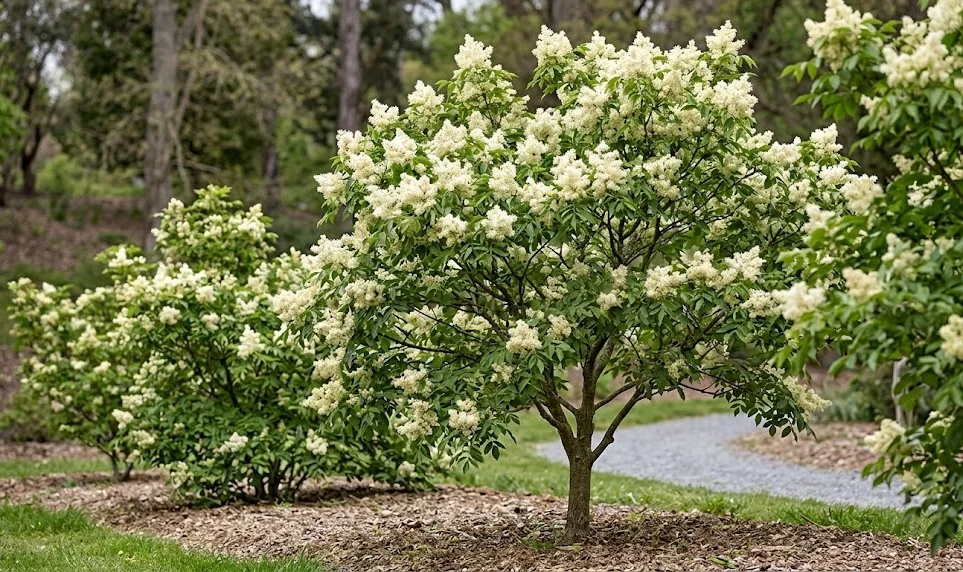

Flowering ash is a hardy deciduous tree in many temperate gardens, but winter still matters, especially for young specimens and trees planted in exposed positions. Proper overwintering is less about keeping the tree warm and more about helping it enter dormancy in good condition. The roots, trunk, and young shoots should be protected from drought, frost stress, wind, and sudden temperature swings. With sensible autumn preparation, flowering ash usually passes through winter reliably and resumes growth strongly in spring.
Preparing the tree in autumn
Autumn care begins with reducing stress before the first hard frosts arrive. A tree that has suffered severe drought through late summer may enter winter weakened. If autumn is dry, deep watering can help restore moisture in the root zone. This is especially important for young trees that have not yet developed extensive roots.
Fertilizing should be avoided late in the season because it can stimulate tender growth. Soft shoots produced too close to winter may not mature properly. Instead of feeding, focus on soil moisture, mulch, and general cleanliness around the tree. The goal is to support dormancy, not encourage new growth.
Fallen leaves can be collected if disease was present during the growing season. This reduces the chance of fungal material overwintering close to the tree. If the foliage was healthy, some leaf litter can still contribute to soil life when managed appropriately. Garden hygiene should be practical rather than excessive.
A fresh mulch layer can help stabilize soil temperature and conserve moisture. It should be spread over the root area but kept away from the trunk. The mulch should not become a mound against the bark. Proper placement protects roots without creating a damp collar around the base.
More articles on this topic
Protecting young trees
Young flowering ash trees are more vulnerable to winter stress than established specimens. Their root systems are smaller, and their bark may be more sensitive to temperature changes. In exposed gardens, wind can dry shoots and soil even during cold weather. Good establishment care before winter is therefore essential.
A breathable trunk guard can protect young bark from animal damage and winter sun injury. It should not trap moisture tightly against the trunk. Guards need to be checked so they do not restrict growth or shelter pests. Protection should help the tree without creating a new problem.
Stakes should also be inspected before winter storms. A loose or damaged stake can rub the trunk, while overly tight ties can injure bark. The tree should be supported only as much as necessary. Slight natural movement helps the trunk strengthen over time.
Container-grown young flowering ash plants need extra attention because roots in pots are more exposed to freezing than roots in the ground. The container can be moved to a sheltered outdoor position or insulated if severe cold is expected. The soil should not dry out completely during winter. However, it should also never remain saturated for long periods.
More articles on this topic
Winter water and root care
Dormant trees still lose some moisture, especially through bark and buds during windy weather. In open ground, winter rainfall is usually enough, but dry winters can create hidden stress. If the soil is unfrozen and unusually dry, occasional watering may be useful for newly planted trees. This should be done carefully and only when needed.
Waterlogging is a greater danger in poorly drained soils. Cold, wet soil reduces oxygen availability around the roots and can encourage root decline. Flowering ash tolerates many soil conditions, but stagnant winter moisture is not ideal. Good drainage remains important even during dormancy.
Mulch helps reduce freeze-thaw fluctuations in the upper root zone. Repeated freezing and thawing can disturb young roots and stress newly planted trees. A moderate organic layer offers protection without sealing the soil surface. The mulch should remain loose enough to allow air and water movement.
Avoid digging or heavy traffic around the tree in winter. Wet soil compacts easily, and compacted soil can remain a problem long after winter ends. Root zones are living areas, not empty ground. Protecting the soil is one of the most overlooked parts of overwintering.
Spring recovery after winter
In early spring, flowering ash should be inspected calmly before any major pruning decisions are made. Some buds may open later than expected, especially after a cold winter. Waiting until growth is clearly visible prevents accidental removal of living wood. Patience is an important part of spring assessment.
Dead or damaged branches can be pruned once they are easy to identify. Clean cuts help the tree close wounds as growth resumes. Avoid heavy pruning unless there is a structural reason. The tree needs healthy foliage to rebuild energy after winter.
Mulch can be renewed in spring if it has decomposed or shifted. At the same time, the trunk base should be checked to ensure it is not buried. Any protective guards should be adjusted or removed if they are no longer needed. Spring is a good time to correct small maintenance issues.
Watering should resume based on weather and soil conditions. A dry spring can stress a young flowering ash just as much as a hot summer. If the tree was planted the previous autumn, it should still be treated as newly established. Strong spring care sets up healthier growth for the rest of the year.