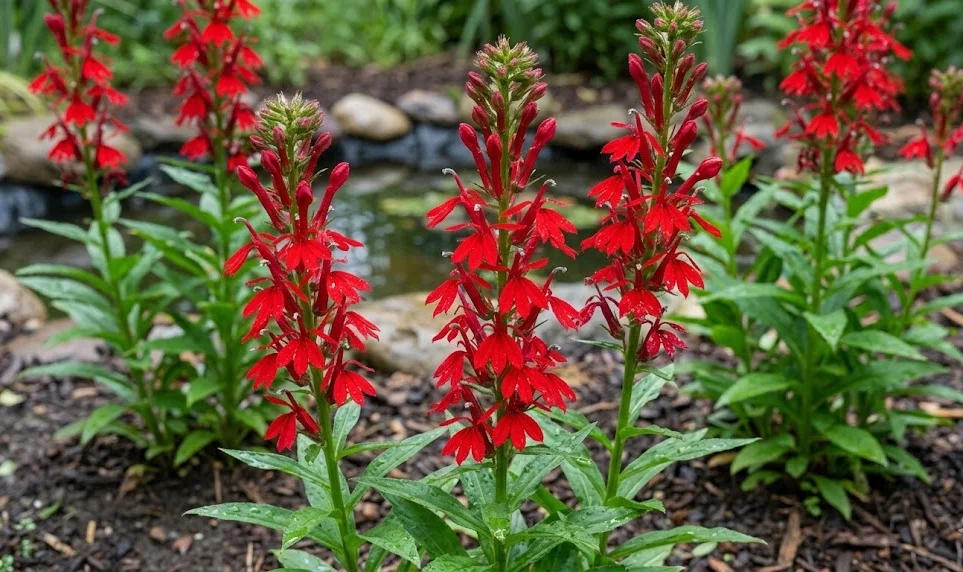

Cardinal flower depends on steady moisture and moderate nutrition to produce tall, richly colored flower spikes. It is not a plant that can be treated like a drought-tolerant border perennial, because its shallow root system responds quickly to dry soil. At the same time, it should not be overfed or forced into lush, weak growth. The best results come from combining consistent watering, humus-rich soil, and careful seasonal feeding.
Moisture needs through the growing season
From spring emergence onward, cardinal flower should have evenly moist soil. The plant grows naturally in damp places, so its roots are adapted to a reliable water supply. If the soil dries repeatedly, the plant may wilt, drop lower leaves, or produce shorter flower stems. Moisture stress during early growth can also reduce the number of flowering shoots later in the season.
During late spring and early summer, the plant builds the structure that will support flowering. This is a key period for watering because developing stems need uninterrupted growth. Inconsistent water at this stage often leads to weaker plants and smaller flower spikes. A deep soak whenever the upper soil begins to dry is usually better than brief surface watering.
Flowering plants need especially stable moisture. Hot weather, wind, and full sun can increase water demand sharply. If the plant wilts during bloom, flowers may fade faster and the display may lose intensity. Keeping the root zone cool and moist extends ornamental value.
After flowering, watering should not stop suddenly. Cardinal flower often forms new basal shoots that support the next season’s growth. These shoots need moisture to develop before the plant enters winter dormancy. A dry autumn can weaken the crown and reduce survival in colder regions.
More articles on this topic
Practical watering methods
The most effective watering method is slow, deep irrigation at soil level. A watering can with a rose, a drip line, or a soaker hose can deliver moisture without soaking the foliage. This approach reduces evaporation and lowers the risk of leaf disease. It also encourages roots to spread into the surrounding soil.
Overhead sprinkling is sometimes unavoidable, but it should be done in the morning. Morning watering gives leaves time to dry before evening temperatures fall. Wet foliage overnight can create favorable conditions for fungal leaf spots. In dense plantings, base watering is almost always preferable.
Mulch can reduce the frequency of watering by slowing evaporation. A thin layer of organic mulch keeps soil cooler and protects shallow roots from heat. Leaf mold and fine composted bark are especially useful because they imitate woodland-edge conditions. Keep the mulch open around the crown so that the center of the plant can breathe.
Container-grown cardinal flower needs more frequent watering than plants in the ground. Pots heat up quickly and lose moisture from all sides. Large containers are far better than small ones because they buffer moisture changes. Even in containers, drainage holes remain necessary to prevent sour, stagnant compost.
More articles on this topic
Recognizing water stress and overwatering
Underwatering usually appears as wilting, dull foliage, browning leaf edges, and reduced stem height. The plant may recover after irrigation, but repeated stress weakens it over time. Flower spikes can become shorter or fail to open evenly. Young plants are especially vulnerable because their root systems are still limited.
Soil that is too dry often pulls away from container edges or becomes pale and dusty at the surface. In garden soil, dryness can be checked by inserting a finger below the mulch layer. If the soil is dry several centimeters down, watering is needed. Visual inspection alone is not always reliable because mulched soil can look damp while the root zone is dry.
Overwatering is less common in suitable soils, but it can occur in compacted ground or poorly drained pots. Symptoms include yellowing leaves, soft crowns, blackened basal tissue, and a sour smell in the soil. The plant likes moisture but still needs oxygen around the roots. Persistent standing water around the crown is risky, especially in cool weather.
Correcting water problems requires identifying the soil condition rather than reacting only to leaf symptoms. A wilted plant may be dry, but it may also have damaged roots in waterlogged soil. Check the root zone before applying more water. Healthy cardinal flower care depends on moist, oxygenated soil, not simply wet soil.
Fertilizing for strong but controlled growth
Cardinal flower benefits from fertile soil that releases nutrients gradually. Compost applied in spring often provides enough nutrition for plants growing in good garden soil. This method also improves moisture retention and supports soil life. It is a balanced approach that suits the plant’s natural growth pattern.
A slow-release balanced fertilizer can be used when soil fertility is low. Apply it lightly in spring as shoots begin active growth. Follow label rates conservatively because more fertilizer does not necessarily mean more flowers. Excess nutrients can produce tall, soft stems that bend easily.
Avoid high-nitrogen feeding, especially in rich or wet soil. Nitrogen encourages leafy growth, but too much can reduce stem strength and increase disease susceptibility. Plants near water features should be fertilized with extra caution to avoid runoff. Organic amendments are usually safer and more sustainable in these settings.
Midseason feeding is rarely necessary if the soil was prepared well. If growth is pale and weak despite good moisture, a light liquid feed may help. Apply it to moist soil rather than dry soil to prevent root stress. Stop feeding well before autumn so the plant can prepare for dormancy naturally.
Soil fertility, pH, and long-term nutrition
Cardinal flower grows best in soil rich in organic matter. Organic matter holds moisture, buffers nutrients, and helps maintain a living soil structure. It also prevents the rapid drying that often damages shallow-rooted perennials. Annual top-dressing with compost is one of the simplest long-term care practices.
The plant generally tolerates a range of mildly acidic to neutral soils. Extremely alkaline or very poor soils may reduce nutrient availability and weaken growth. If leaves remain pale despite adequate moisture and feeding, soil testing can be useful. A test helps identify whether the problem is nutrient deficiency, pH imbalance, or something else.
In rain gardens, nutrients may move through the soil differently than in standard borders. Heavy rain can wash soluble nutrients away, while organic matter can slowly replenish them. This makes compost-based feeding especially practical. It supports the plant without creating a sudden nutrient surge.
Long-term fertilizing should aim for resilience rather than maximum size. Strong cardinal flower plants have firm stems, healthy basal shoots, and deep green foliage without excessive softness. They flower well because the entire growing environment supports balanced development. When watering and feeding are coordinated, the plant reaches its full ornamental potential.