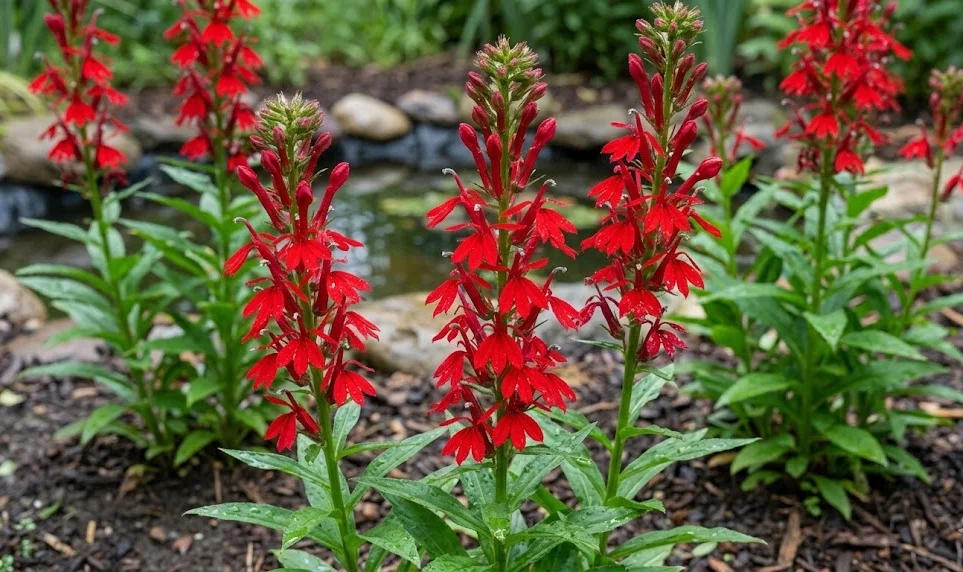

Cardinal flower establishes best when planting and propagation are handled with attention to moisture, crown position, and the plant’s natural renewal habit. It is not a difficult perennial to introduce into a garden, but it dislikes rough handling, drought, and deep planting. Successful planting begins with choosing vigorous young plants and preparing soil that stays cool and evenly moist. Propagation can be done by seed, division, or basal offsets, and each method has its own practical advantages.
Preparing the planting area
The planting area should be selected before the plant is purchased or divided. Cardinal flower needs soil that can hold moisture through warm weather, so dry raised beds are rarely suitable without irrigation. A position near a pond, stream, rain garden, or regularly watered border is usually more reliable. The site should also offer enough light to encourage flowering without exposing the plant to severe drought stress.
Soil preparation should focus on structure rather than simple fertilization. Compost, leaf mold, and well-rotted organic matter improve both moisture retention and root development. The soil should be loosened carefully so young roots can move into the surrounding ground. If the soil is compacted, water may sit on the surface while roots still lack oxygen.
Good planting soil should feel damp but not stale. If water remains in the planting hole for a long time after filling it, drainage may be too poor for the crown. In that situation, planting slightly higher on the edge of the wet area is safer. Cardinal flower likes moisture around its roots, but it does not benefit from a crown trapped in anaerobic mud.
Before planting, soak container-grown plants thoroughly. A dry root ball can shed water after planting and leave the plant stressed even in moist soil. Gently tease out circling roots if the plant is pot-bound, but avoid excessive disturbance. The goal is to help roots connect with the new soil without damaging the crown.
More articles on this topic
Planting techniques for strong establishment
Plant cardinal flower with the crown at the same level it was growing in the pot. This detail is crucial because a buried crown is prone to rotting, while an exposed root ball dries too quickly. Set the plant in the hole, backfill with improved soil, and firm gently with the hands. Avoid pressing with heavy force because compacted wet soil can suffocate new roots.
Water immediately after planting, even if the ground already seems moist. This settles soil around the roots and removes air gaps. In the first month, check the plant frequently because establishment depends on continuous moisture. A single severe drying episode can set the plant back significantly.
Spacing should allow airflow as well as visual impact. In garden borders, plants are commonly spaced so their mature foliage can touch without crowding. Crowded planting can reduce air movement and encourage leaf diseases in humid conditions. Small groups of three or five plants often look more natural than a single plant standing alone.
Mulching after planting is strongly recommended. Use a fine, breathable mulch such as leaf mold, composted bark, or shredded leaves. Keep mulch away from direct contact with the crown to avoid trapping excess moisture. A mulch layer also reduces weed competition, which is important while the plant is forming new roots.
More articles on this topic
Propagating by seed
Seed propagation is useful when a gardener wants many plants or wishes to create a naturalistic colony. Cardinal flower produces fine seed that needs light to germinate, so it should not be buried deeply. Sow the seed on the surface of a moist, sterile seed-starting medium and press it gently into contact. Keep the medium evenly damp until germination occurs.
Cold stratification often improves germination because it imitates natural winter conditions. Seeds can be sown outdoors in autumn in a protected tray or seed bed. They can also be refrigerated in a moist medium for several weeks before spring sowing. This treatment helps produce more even and reliable germination.
Seedlings are small at first and must not be allowed to dry out. Use gentle watering to avoid washing them away or causing damping-off. Bright light without scorching heat helps them develop sturdy growth. Good air circulation is important because overly humid seed trays can encourage fungal problems.
When seedlings are large enough to handle, transplant them carefully into individual pots or a nursery bed. They should be grown on until they have a strong root system and several healthy leaves. Plant them outside after hardening off and after the risk of severe stress has passed. Seed-grown plants may not flower heavily in their first season, but they can become strong garden specimens with good care.
Propagating by division and offsets
Division is the quickest way to maintain named selections and refresh older clumps. The best time is usually spring, when new growth is visible but the plant is not yet under summer heat stress. In mild climates, early autumn division can also work if there is enough time for roots to establish before winter. Avoid dividing during hot, dry weather because the shallow roots suffer easily.
Lift the clump carefully with a garden fork, keeping as much root as possible. Look for healthy young rosettes or side shoots around the older flowering crown. These younger sections are often the most valuable parts of the plant. Old, woody, weak, or rotting material should be discarded.
Each division should include healthy roots and an active growing point. Replant divisions immediately into prepared moist soil or pot them temporarily in a rich, moisture-retentive mix. Water them thoroughly and keep them shaded from harsh sun while they recover. Newly divided plants require close moisture control until fresh roots begin to grow.
Basal offsets can also be separated when they form naturally around the parent plant. This method is gentle and well suited to plants that are still vigorous. Remove offsets with a small portion of root attached, then pot or plant them promptly. Over several seasons, this practice helps preserve a planting without relying only on the original crown.