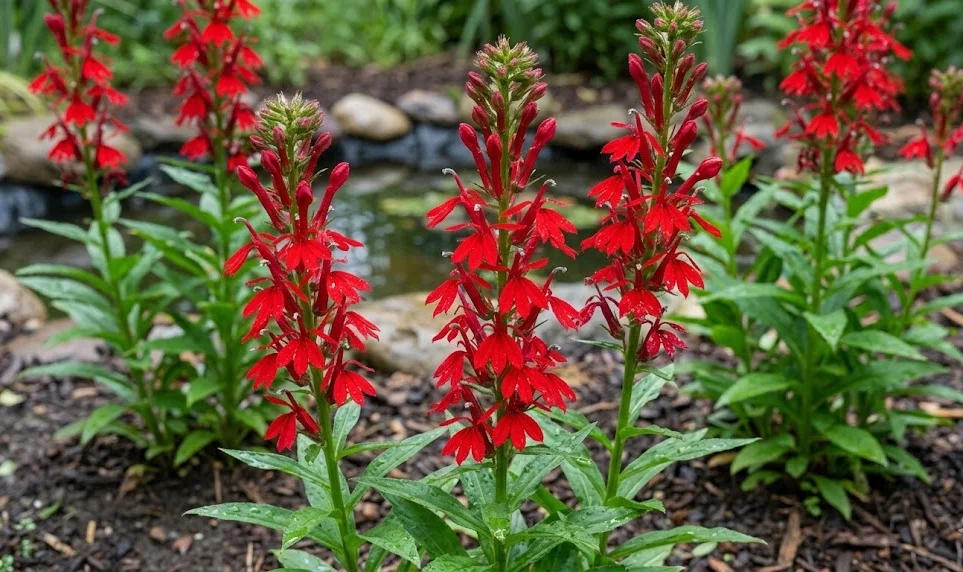

Cardinal flower is generally a robust perennial when grown in the right conditions, but stress can make it vulnerable to diseases and pests. Most problems begin when the plant is too dry, too crowded, too deeply planted, or sitting in stagnant soil. Prevention is therefore more important than repeated treatment. By understanding the common warning signs, gardeners can protect the plant before minor issues become serious.
Common disease problems
Fungal leaf spots are among the more frequent disease issues on cardinal flower. They usually appear as brown, tan, or dark lesions on leaves, especially in humid weather. Crowded planting, overhead watering, and poor air circulation increase the risk. Removing affected leaves early can slow the spread and improve the plant’s appearance.
Powdery mildew may appear when days are warm, nights are cool, and airflow is limited. It creates a pale, powdery coating on leaf surfaces and can reduce plant vigor. Cardinal flower is not the most mildew-prone perennial, but stressed plants may still be affected. Improving spacing and avoiding drought stress are useful preventive steps.
Crown rot is a more serious problem because it attacks the base of the plant. It is most likely when the crown is buried, mulched too heavily, or kept in cold, stagnant soil. Symptoms include soft basal tissue, yellowing growth, collapse, and an unpleasant smell from the crown area. Once severe rot develops, affected sections are often difficult to save.
Root rot can occur in containers or compacted beds where water cannot drain properly. The plant may wilt even though the soil is wet because damaged roots cannot absorb water. Leaves may yellow from the bottom upward, and growth may become weak. Correcting drainage and removing decayed roots are essential if the plant is to recover.
More articles on this topic
Pest issues to watch for
Slugs and snails can damage young cardinal flower shoots, especially in damp gardens. Their feeding creates irregular holes in leaves and can destroy tender new growth in spring. Because the plant likes moist conditions, slug pressure may be higher than in dry borders. Regular inspection after rain helps detect damage early.
Aphids may gather on soft new stems and flower spikes. They feed by sucking sap, which can distort young growth and leave sticky honeydew behind. Small populations can often be washed off with water or removed by hand. Beneficial insects usually help control aphids when broad-spectrum insecticides are avoided.
Spider mites are less common in moist conditions but can appear during hot, dry periods. Their feeding causes stippled, pale leaves and fine webbing on the undersides of foliage. Dry stress makes plants more vulnerable, so proper watering is the first defense. Increasing humidity around the plant’s root zone without wetting foliage excessively can help reduce mite pressure.
Deer and rabbits may browse cardinal flower in some gardens, although feeding pressure varies by region. Young plants are usually more vulnerable than established clumps. Protective netting or fencing may be needed where browsing is intense. In mixed plantings, surrounding cardinal flower with less palatable plants may reduce casual damage.
More articles on this topic
Preventing problems through good culture
Healthy growing conditions are the best protection against diseases and pests. Cardinal flower should be planted in moist, humus-rich soil with the crown at the correct level. Plants that are stressed by drought, heat, or poor soil recover more slowly from pest damage. Strong plants can tolerate minor feeding without losing ornamental value.
Air circulation matters, even for a moisture-loving plant. Space plants so foliage can dry after rain and morning dew. Avoid packing them tightly among dense, aggressive neighbors. Good airflow reduces fungal pressure without forcing the plant into dry conditions.
Watering should be directed at the soil rather than the leaves. This is especially important during humid periods when foliage dries slowly. Drip irrigation, soaker hoses, and careful hand watering are all effective. Clean watering habits often prevent more problems than chemical treatments can solve later.
Sanitation should be part of routine care. Remove diseased leaves, collapsed stems, and rotting plant material from around the crown. Do not compost heavily diseased material unless the composting system reaches reliable high temperatures. Keeping the planting area clean reduces overwintering sites for pests and pathogens.
Treatment strategies for infected plants
When disease appears, start with physical control. Remove affected foliage with clean tools and dispose of it away from the bed. Sterilize tools after cutting diseased material to avoid spreading pathogens. This simple action can be very effective when problems are caught early.
For fungal leaf problems, improve spacing and reduce leaf wetness before considering sprays. Fungicides may protect new growth, but they rarely repair damaged leaves. In ornamental gardens, cultural correction is often the most sustainable approach. Repeated disease usually means the site conditions need adjustment.
If crown rot is suspected, gently inspect the base of the plant. Remove soft, blackened, or foul-smelling tissue and save only firm, healthy sections if possible. Replant healthy divisions at the correct depth in fresher, better-aerated soil. Severely rotted plants should be discarded to protect neighboring specimens.
Pest treatment should begin with the least disruptive method. Hand-pick slugs, rinse aphids from stems, and encourage beneficial insects. Use targeted controls only when damage is significant and identification is certain. A careful approach protects pollinators and keeps the garden ecosystem more balanced.
Monitoring and long-term resilience
Regular monitoring is especially important during spring growth and summer flowering. These are the periods when young shoots, lush stems, and developing flower spikes are most attractive to pests and most sensitive to disease. A few minutes of inspection each week can prevent serious loss. Look closely at leaf undersides, crown tissue, and new growth tips.
Keep notes on where problems occur each year. If the same bed repeatedly develops rot or leaf spot, the location may be too crowded, shaded, or poorly drained. Moving plants slightly or improving soil structure can make a major difference. Long-term observation is one of the most valuable tools in perennial gardening.
Encouraging plant renewal also improves resilience. Divide vigorous clumps, protect young offsets, and allow a few seedlings where appropriate. This creates replacement plants if older crowns decline. For a short-lived perennial, maintaining a healthy population is often better than trying to preserve one old plant indefinitely.
Cardinal flower rewards attentive but not excessive care. Most diseases and pests can be managed through correct planting, moisture balance, sanitation, and observation. Chemical intervention should be the last option rather than the foundation of care. When the plant’s habitat needs are respected, it remains vigorous, floriferous, and visually impressive.