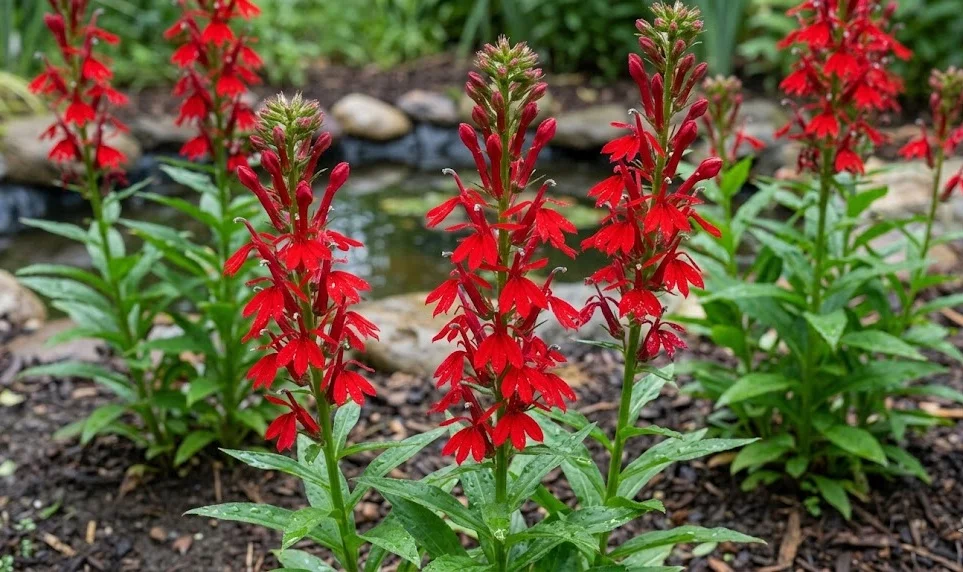

Pruning cardinal flower is mostly about timing, cleanliness, and protecting the plant’s natural renewal cycle. It does not require hard shaping like a shrub, but it benefits from removing spent flower spikes, damaged leaves, and old stems at the right time. Cutting too aggressively can weaken the basal rosettes that support future growth. A careful approach keeps the plant tidy while allowing it to regenerate.
Routine pruning during the growing season
During spring, remove dead or damaged foliage left from winter. Work gently because new shoots often emerge close to the crown and can be brittle. Use clean, sharp snips rather than pulling old material by hand. Pulling can disturb shallow roots or detach young offsets.
As the plant grows, yellowing or diseased leaves can be removed whenever they appear. This improves air circulation and reduces the spread of fungal problems. It also keeps the plant looking fresh in ornamental beds. Regular light grooming is better than waiting for heavy cleanup.
Flower stems usually do not need cutting before they bloom unless they are broken or diseased. Cardinal flower naturally forms upright spikes, and excessive pinching may reduce the display. If stems lean, support is usually better than pruning. Neighboring plants can often provide natural support without making the planting look artificial.
Dead or damaged stems should be cut back to healthy tissue. Do not leave soft, rotting material around the crown. Clean pruning reduces pest shelter and disease pressure. This is particularly important in damp gardens where plant debris decomposes slowly.
More articles on this topic
Cutting back after flowering
After flowering, spent spikes can be removed for a tidier appearance. Cut the stem back above healthy basal foliage or near the base if the flowering shoot is declining. This prevents the old spike from drawing attention away from fresh growth. It also reduces unwanted self-sowing in formal plantings.
Leaving some seed heads can be useful in naturalistic gardens. Cardinal flower may self-sow in moist, open soil when conditions are favorable. Seedlings help maintain the planting because individual rosettes can be short-lived. A balanced approach is to cut some spikes and leave others.
Do not cut away healthy basal rosettes after bloom. These low shoots are important for the plant’s future. They gather energy and may become next season’s flowering growth. Removing them can weaken the clump and reduce overwintering success.
If the plant looks exhausted after flowering, focus on water and soil care rather than severe pruning. A light cleanup, steady moisture, and a breathable mulch are usually enough. The plant needs time to rebuild after producing flowers. Harsh cutting during this recovery period can do more harm than good.
More articles on this topic
Seasonal cleanup and long-term renewal
Autumn pruning should be moderate. Remove collapsed flower stems and diseased foliage, but leave healthy basal growth in place. This protects the crown and supports winter survival. A completely bare crown is more exposed to freeze-thaw stress.
In colder regions, some gardeners leave old stems standing until spring. These stems can mark the plant’s location and provide slight protection. They may also add winter texture in naturalistic plantings. Spring cleanup can then remove the remaining dead material before new growth expands.
Pruning should be combined with division when older clumps decline. If the center becomes weak but young shoots appear around the edge, those shoots can be separated and replanted. This renewal is often more effective than simply cutting the old plant harder. Cardinal flower responds best when vigorous young growth is encouraged.
Good pruning respects the plant’s growth habit. The aim is not to force a compact shape, but to maintain health, flowering, and renewal. Remove what is dead, diseased, spent, or crowded, and preserve what is young and vigorous. With this method, cardinal flower remains clean, strong, and capable of producing its vivid red spikes year after year.