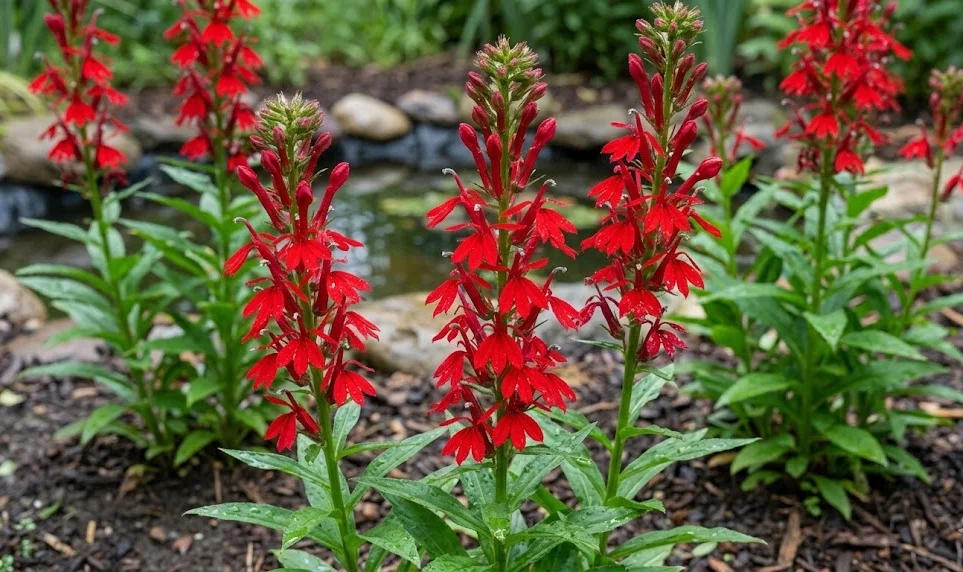

Cardinal flower needs enough light to flower well, but the best exposure depends strongly on soil moisture and climate. It can tolerate full sun in cool, wet conditions, yet it often performs better with partial shade where summers are hot. The plant’s light requirement should therefore be understood together with water availability. When light and moisture are balanced, the result is sturdy growth, healthy foliage, and vivid red flower spikes.
Full sun, partial shade, and climate
In cool climates, cardinal flower can grow successfully in full sun if the soil remains consistently moist. Strong light encourages upright stems and generous flowering. Plants in full sun often produce the most dramatic display when water is never limiting. The risk appears when sun exposure is high but soil moisture is unreliable.
In warmer regions, partial shade is usually the better choice. Morning sun and afternoon shade protect the plant during the hottest part of the day. This exposure reduces wilting and helps flowers last longer. It also keeps the root zone cooler, which is important for a shallow-rooted perennial.
Deep shade is not ideal because it reduces flowering and can produce weak, stretched stems. The plant may survive in shade, but it will not show its best ornamental character. Foliage may become loose, and flower spikes may be fewer or shorter. Bright filtered light is much better than dense, dry shade.
The best site often changes with garden conditions. A pond edge in full sun may be excellent because moisture is constant. A dry border in the same light may be unsuitable. Always judge light exposure together with soil moisture, not as a separate factor.
More articles on this topic
Signs of too much or too little light
Too much light combined with insufficient moisture often causes midday wilting. Leaves may curl, edges may brown, and flowers may fade quickly. The plant may recover in the evening but still lose vigor over time. Repeated daily wilting is a sign that the site is too stressful.
Scorched leaf margins can also indicate excessive sun exposure. This is especially common during heat waves or in reflective locations near walls and paving. Adding mulch and increasing irrigation may help if the site is otherwise suitable. If symptoms persist, moving the plant to afternoon shade is wiser.
Too little light produces a different pattern. Stems become longer, softer, and more likely to lean. Flowering may be delayed or reduced, and the red spikes may be less abundant. The plant may look leafy but not especially floriferous.
Good light balance produces firm stems, rich green leaves, and strong flowering. The plant should not collapse in midday heat, and it should not stretch excessively toward light. Observing growth habit is often more useful than measuring hours of sun exactly. The plant’s appearance shows whether the exposure is working.
More articles on this topic
Designing with light in the garden
Cardinal flower is excellent for the bright edge of a woodland garden. It can receive filtered light through open tree canopies while staying protected from harsh afternoon heat. This setting often resembles its natural habitat. Moist soil and broken light create a particularly stable growing environment.
Near water features, the plant can handle brighter exposure. Reflected light can intensify the visual impact of red flowers, especially beside still water. However, reflected heat from stone edging may increase stress. Planting with moisture-loving companions can shade the soil and reduce temperature swings.
In mixed borders, cardinal flower works well behind lower foliage plants that protect the root zone. Sedges, ferns, and low moisture-loving perennials can shade the soil without covering the flower spikes. This creates a cooler microclimate around the crown. It also makes the planting look more natural and layered.
When moving a plant to improve light conditions, choose spring or early autumn. Avoid transplanting during peak summer heat unless absolutely necessary. Water carefully after moving because root disturbance increases sun sensitivity. With the right exposure, cardinal flower quickly shows stronger posture and better flowering.