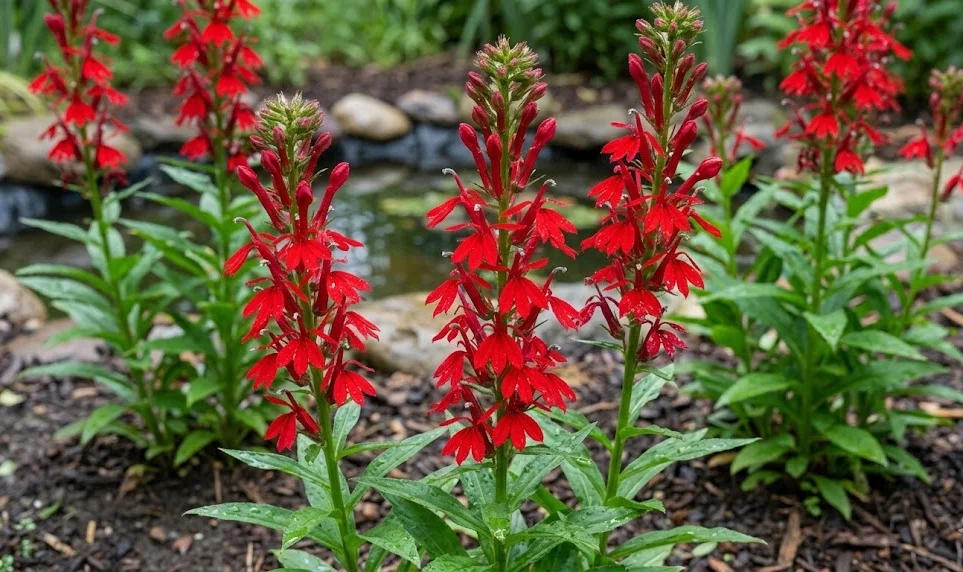

Cardinal flower can survive winter well when its crown is protected from extreme drying, heaving, and stagnant wetness. The plant is naturally adapted to moist habitats, but winter moisture behaves differently from summer moisture. Cold, airless soil around the crown can cause rot, while exposed roots may be damaged by freeze-thaw cycles. Successful overwintering depends on balancing protection, drainage, and crown health.
Preparing plants before winter
Autumn preparation should begin after flowering, not after severe cold has already arrived. Remove spent flower stems if seed is not needed, but avoid damaging the basal rosettes. These low shoots are important because they help the plant renew itself. Healthy basal growth entering winter usually means stronger regrowth in spring.
Continue watering during dry autumn periods. Many gardeners stop watering after flowering, but cardinal flower still needs moisture while it forms replacement growth. Dry autumn soil can weaken the crown before winter begins. Water deeply when rainfall is lacking, especially for recently planted specimens.
Avoid late heavy fertilization. Soft, nutrient-rich growth produced late in the season is more vulnerable to cold damage. The plant should enter winter gradually, with firm tissues rather than lush new leaves. Compost top-dressing is better reserved for spring or applied lightly early enough in autumn to settle.
Inspect the crown before winter protection is added. Remove decaying leaves and any soft plant material that could trap moisture at the center. Healthy crowns should feel firm and sit at soil level. If the plant has sunk or become buried, gently adjust the surrounding soil rather than covering it further.
More articles on this topic
Mulching for winter protection
Winter mulch should be light, breathable, and carefully placed. Shredded leaves, pine needles, straw, or fine bark can protect shallow roots from temperature swings. The mulch should cover the root zone but not smother the crown. A loose layer is much safer than a dense, wet mat.
Mulch is particularly useful where freeze-thaw cycles lift plants from the soil. This heaving can expose roots and damage the crown. A protective layer helps keep soil temperatures more stable. In regions with reliable snow cover, snow itself may provide additional insulation.
Do not apply thick mulch too early while the soil is still warm. Early mulching can trap warmth and moisture, encouraging decay or unwanted late growth. It is usually better to wait until the soil has cooled and the plant is entering dormancy. Timing matters as much as material choice.
In very wet winter climates, less mulch may be better than more. The priority is to prevent crown rot while still protecting roots. A thin layer around the plant, combined with open space at the crown, often works well. Gardeners should adapt the method to local winter conditions rather than follow one rigid rule.
More articles on this topic
Overwintering plants in containers
Container-grown cardinal flower needs special attention because pots freeze and dry more quickly than garden soil. The root ball is exposed to cold from the sides, making roots more vulnerable. Move containers to a sheltered position where they are protected from severe wind and repeated freezing. An unheated cold frame, sheltered wall, or frost-protected outdoor corner can be useful.
The potting mix should remain slightly moist through winter. It should not be allowed to dry completely, but it should also not stay waterlogged. Check containers during mild spells and water sparingly if the mix becomes dry. Always make sure drainage holes remain open.
Large containers overwinter better than small pots. A larger soil volume changes temperature more slowly and holds moisture more evenly. Small pots can freeze solid and thaw repeatedly, which stresses the roots. If a plant is in a small container, placing it inside a larger insulating pot can help.
Do not bring cardinal flower into a warm indoor room for winter. Warm indoor conditions interrupt dormancy and usually provide too little light and humidity. The plant needs a cool rest period rather than active winter growth. Cool, protected outdoor storage is normally much more suitable.
Spring recovery after winter
In spring, remove winter mulch gradually as temperatures rise. Pull material back from the crown so new shoots can emerge freely. Leaving wet mulch packed around new growth can encourage rot. Gentle cleanup is better than aggressive raking because young shoots are easily damaged.
Inspect the plant for signs of survival. Healthy cardinal flower will produce firm green or reddish new shoots from the crown or nearby offsets. Old flowering crowns may not return, but younger side rosettes may take over. This natural renewal can make the plant appear shifted slightly from its original position.
If frost has lifted the plant, press it gently back into contact with the soil. Add a little compost around the root zone if needed, but keep the crown exposed. Water the plant well once active growth begins. Early spring moisture supports root repair and new shoot development.
Do not judge winter survival too early. Cardinal flower may emerge later than some other perennials, especially in cool soil. Give the crown time before removing it from the bed. With proper winter care, even plants that look modest in early spring can produce strong flowering stems by summer.