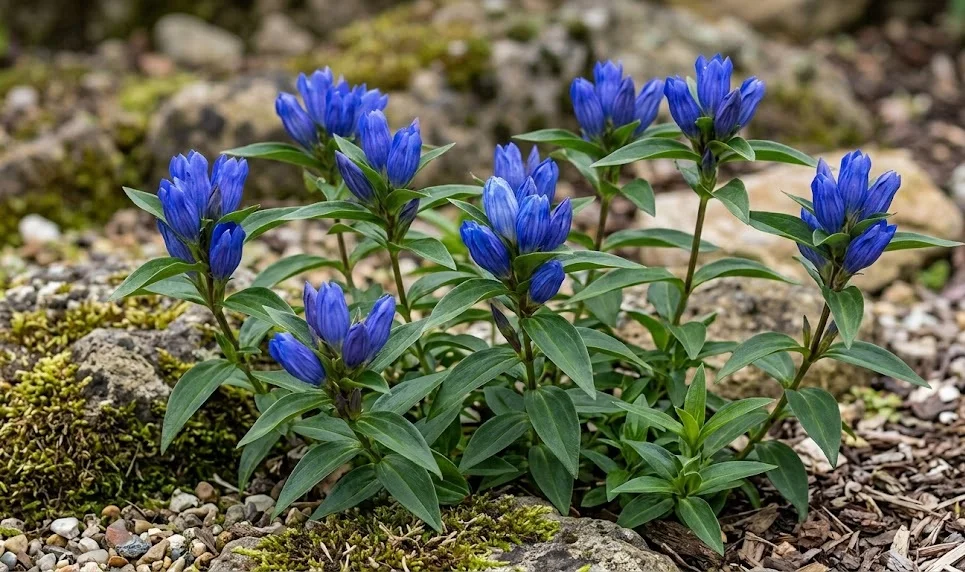

Pruning the makino gentian is a simple but effective task that helps maintain the plant’s appearance and promotes its overall health. The most common form of pruning is “deadheading,” which involves removing the flowers once they have finished blooming and started to fade. This process prevents the plant from putting all its energy into seed production and instead directs it back into the root system. For many gardeners, this small effort is the secret to a more robust and longer-lived perennial.
To deadhead correctly, use a pair of clean, sharp garden snips to cut the flower stem just above the next set of healthy leaves. Avoid just pulling the flowers off with your hands, as this can tear the delicate outer layer of the stem and invite disease. If the entire stem has finished blooming, you can follow it all the way down to the base of the plant and remove it there. This keeps the clump looking neat and prevents a cluttered appearance in the late autumn garden.
It is worth noting that some gardeners prefer to leave a few spent flowers on the plant if they wish to collect their own seeds. If you choose to do this, only leave the strongest and most vibrant blooms to ensure the highest quality of future plants. However, keep in mind that allowing a plant to go to seed can slightly reduce its vigor for the following growing season. Most enthusiasts find a balance by deadheading the majority of the plant while leaving just a small section for propagation.
Beyond the aesthetic benefits, removing dead material also improves the airflow within the center of the plant. Dense clusters of old flowers and stems can trap moisture and provide a hiding place for pests like aphids or fungal spores. By keeping the plant “cleaned out,” you are practicing proactive pest management and ensuring a healthier environment. This is a great task to perform during a quiet evening stroll through your garden beds.
Rejuvenation and dormancy preparation
As the growing season comes to a close in late autumn, the makino gentian will naturally begin to turn yellow and die back. This is a sign that the plant is preparing for its winter rest and moving its nutrients into the storage organs below ground. Once the foliage has completely turned brown and is no longer providing energy through photosynthesis, it is time for the final cutback. Cutting the plant down at this stage makes for a much cleaner spring awakening and reduces the risk of winter rot.
More articles on this topic
Using your sharp shears, cut all the stems down to about two or three inches above the ground level. Be careful not to damage the “crown,” which is the central part of the plant where the stems meet the roots. Leaving a small amount of stem visible helps you remember where the plant is located during the winter months. This is particularly useful if you plan on adding mulch or doing other work in the garden while the plant is hidden.
Some experts suggest leaving the dead foliage in place throughout the winter to provide a bit of natural protection for the crown. While this can be effective in very cold, dry climates, it can lead to problems in areas with wet, heavy winters. If the dead leaves turn into a soggy mat, they can actually encourage rot rather than preventing it. Most experienced growers prefer to remove the debris and replace it with a clean, airy mulch like pine needles or evergreen boughs.
This final pruning session is also the perfect time to inspect the base of the plant for any signs of trouble that were hidden during the summer. Look for any evidence of crown rot, pest damage, or overcrowding from neighboring plants. Taking care of these issues now, before the snow falls, gives the plant the best possible start for the following year. A well-prepared plant is a resilient plant that will return with even more beauty in the spring.
Tools and techniques for precision
The quality of your pruning tools makes a significant difference in the health of your gentians and the ease of the task. Always use bypass pruners or sharp garden scissors rather than anvil-style cutters, which can crush the stems instead of slicing them. A clean, smooth cut heals much faster and is far less likely to become an entry point for bacteria or fungi. Keeping your blades sharp and rust-free is an investment in the long-term success of your entire garden.
More articles on this topic
Disinfecting your tools between plants is another professional habit that is highly recommended for maintaining a healthy collection. Various plant diseases can easily be carried from one specimen to another on the surface of your pruning shears. A simple wipe with a bit of rubbing alcohol or a mild bleach solution is all it takes to keep your garden safe. This step is especially important if you have recently worked on a plant that showed any signs of sickness or stress.
When making a cut, always try to angle it slightly so that rainwater or dew can run off rather than sitting on the flat surface of the stem. Moisture that stays on a fresh cut can encourage rot or fungal growth, particularly during the humid summer months. The cut should be located about a quarter of an inch above a node or a set of leaves to promote clean healing. These small details in technique are what separate the master gardener from the casual enthusiast.
Finally, remember that the makino gentian is a relatively slow-growing plant that does not require aggressive pruning. Unlike some shrubs that can handle being hacked back, these perennials respond best to a gentle and precise approach. Trust your observations and only remove what is truly necessary for the health and appearance of the plant. Over time, you will develop a “feel” for the plant’s needs and pruning will become a natural part of your gardening rhythm.