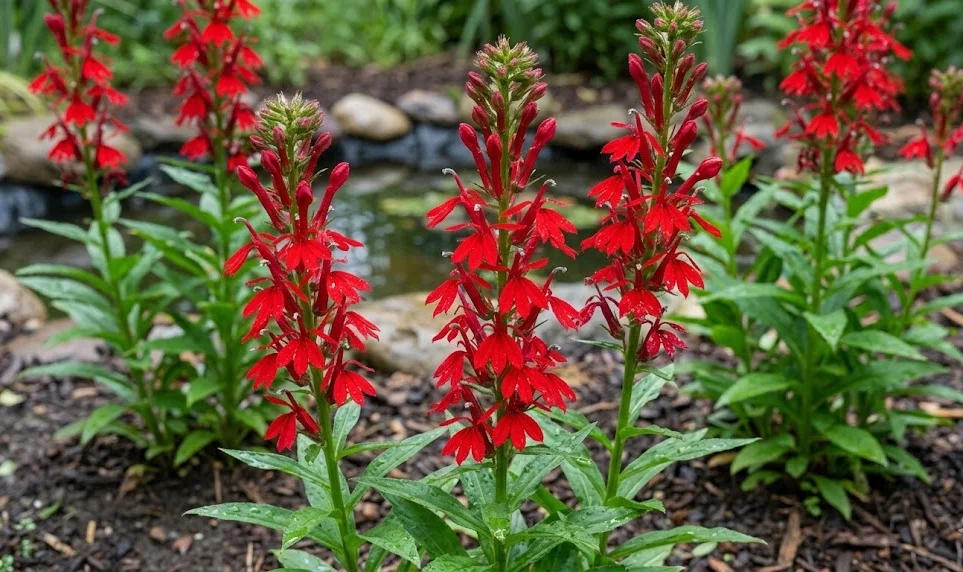

Cardinal flower is one of the most striking moisture-loving perennials for ornamental borders, pond edges, rain gardens, and naturalistic planting schemes. Its upright flower spikes, deep green foliage, and vivid red blooms create a strong vertical accent when many summer borders begin to look tired. Although it has a dramatic appearance, the plant is not difficult to grow when its basic needs are understood. The key is to give it consistently moist soil, suitable light, and a position where its crown is protected from stress.
Understanding the natural growing habit of cardinal flower
Cardinal flower naturally grows in damp meadows, stream banks, marshy edges, and woodland openings where the soil rarely dries out completely. This background explains why the plant performs best when gardeners copy these conditions as closely as possible. It is not a drought-tolerant perennial, even though established plants can survive short dry periods. In ornamental gardens, its long-term success depends on moisture management more than on any other single factor.
The plant forms a basal rosette of leaves, followed by upright stems that carry the flower spikes in summer and early autumn. Its roots are relatively shallow compared with deep-rooted prairie perennials, so the upper soil layer must remain evenly moist. The crown sits close to the soil surface and should not be buried too deeply. When the crown stays healthy, the plant can renew itself from side shoots and short-lived offsets.
Cardinal flower is often described as a short-lived perennial, but good care can keep a clump attractive for several years. Individual rosettes may flower once and decline, while younger shoots around them continue the planting. This is why gardeners should look at the plant as a renewing colony rather than a single permanent crown. Mulching, division, and correct watering help maintain that renewal cycle.
The plant’s red flowers are especially valuable for wildlife-friendly gardens because they are highly attractive to hummingbirds in regions where hummingbirds occur. In European-style gardens, the same bold color still gives strong design value, particularly beside ornamental grasses, ferns, sedges, and late-flowering perennials. Its vertical habit makes it useful in narrow planting spaces where spreading plants would be too bulky. For best visual impact, it is usually planted in small groups rather than as a single isolated specimen.
More articles on this topic
Choosing the right site for healthy plants
A suitable site for cardinal flower should combine good moisture retention with enough air movement to reduce disease pressure. The soil should feel cool and damp during the growing season, but it should not become stagnant and sour. Pond margins, rain garden depressions, irrigated perennial beds, and the edges of shaded water features are often ideal. In dry borders, the plant usually struggles unless watering is reliable.
Light conditions should be chosen according to local climate and soil moisture. In cooler climates, cardinal flower can grow well in full sun when the soil stays consistently moist. In hotter or drier areas, morning sun with afternoon shade is usually safer. Harsh afternoon sun combined with dry soil often causes wilting, scorched leaf edges, and weak flowering.
The best garden soil for cardinal flower is rich in organic matter and able to hold moisture without becoming compacted. Loam amended with compost is excellent because it supports root growth while retaining water. Heavy clay can work if it is not waterlogged for long periods and if the surface is improved with organic material. Very sandy soil needs generous compost and frequent irrigation to prevent rapid drying.
Avoid planting cardinal flower where winter water collects and freezes around the crown for long periods. The plant likes moisture, but crown rot becomes more likely when the crown sits in cold, airless soil. A slightly raised position at the edge of a moist area is often better than the deepest, most stagnant point. This balance between moisture and oxygen is one of the most important details in successful care.
More articles on this topic
Soil preparation and planting depth
Before planting cardinal flower, loosen the soil deeply enough to allow young roots to spread without resistance. Work in mature compost, leaf mold, or well-rotted organic matter to improve structure and moisture retention. Fresh manure should be avoided because it can burn roots and encourage overly soft growth. A prepared planting area should remain crumbly, cool, and evenly damp.
Planting depth is especially important because the crown should remain level with the surrounding soil surface. If planted too deeply, the crown may rot or fail to produce strong replacement shoots. If planted too high, the shallow roots may dry out quickly during warm weather. A careful planting depth gives the plant both stability and access to oxygen.
After planting, firm the soil gently around the roots without compacting it heavily. Water thoroughly so that the soil settles around the root ball and no dry pockets remain. The first few weeks are critical because the plant must establish fine feeder roots before it can tolerate even brief stress. During this period, the soil should never be allowed to dry completely.
Mulch is highly useful, but it must be applied with care. A layer of leaf mold, fine bark, composted wood fiber, or shredded leaves helps conserve moisture and moderate soil temperature. The mulch should be kept slightly away from the crown to prevent damp material from trapping rot at the center of the plant. Renewing a thin mulch layer each spring is usually better than applying one very thick layer.
Watering as the foundation of care
Consistent watering is the foundation of cardinal flower care. The soil should remain evenly moist from spring growth through flowering and into the period when new basal shoots form. Irregular watering can cause wilting, reduced flower spikes, and premature decline after blooming. Deep watering is better than frequent light sprinkling because it encourages a larger root zone.
In beds away from natural water sources, check soil moisture by touching the soil several centimeters below the surface. If it feels dry at that depth, the plant needs water. During hot spells, container-grown plants and newly planted specimens may need daily attention. Established plants in moisture-retentive ground usually need less frequent but still regular watering.
Rain gardens and pond margins can reduce the need for manual irrigation, but they should still be monitored. Seasonal water levels may change, and a site that is wet in spring can become surprisingly dry by late summer. Cardinal flower often blooms during warm months when evaporation is high. Keeping moisture stable during this period supports both flower quality and plant recovery.
Overhead watering is less ideal than watering at the base of the plant. Wet foliage can encourage fungal leaf spots when air circulation is poor. A watering wand, drip line, or seep hose is usually more efficient and healthier for the foliage. Morning watering is preferable because any splashed leaves have time to dry before night.
Feeding for balanced growth and flowering
Cardinal flower benefits from fertile soil, but it does not need aggressive feeding. Excess nitrogen can produce lush, weak stems that are more vulnerable to lodging and disease. A moderate spring application of compost is often enough in garden soil that has been well prepared. The goal is steady growth, not soft, oversized foliage.
If additional fertilizer is needed, use a balanced, slow-release product at a modest rate. Apply it in spring as new growth begins, when the plant can use nutrients efficiently. Avoid heavy feeding late in the season because it may encourage tender growth before winter. Plants grown near ponds should be fertilized cautiously to prevent nutrient runoff into water.
Organic feeding suits cardinal flower particularly well because it improves soil structure while supplying nutrients gradually. Compost, leaf mold, and decomposed plant-based mulches support microbial activity in damp soil. These materials also help maintain the moisture balance the plant prefers. Over time, this approach creates a more resilient planting environment than repeated quick-release feeding.
Signs of underfeeding include pale leaves, weak stems, and short flower spikes, especially in poor sandy soil. However, similar symptoms can also result from drought, root stress, or poor light. Diagnose the growing conditions before adding fertilizer. Correcting moisture and soil structure often improves the plant more than simply increasing nutrients.
Seasonal maintenance and grooming
Spring care begins with removing damaged winter foliage and checking the crown for healthy new shoots. Old stems can be cut back if they were left standing for winter structure. Work carefully around the plant because emerging shoots can be brittle. A light mulch refresh and compost top-dressing can be added once growth is visible.
During the growing season, remove yellowing or damaged leaves to keep the clump clean. This improves appearance and reduces places where fungal problems can develop. If stems lean after heavy rain, they can be supported discreetly with twiggy stakes or neighboring plants. Cardinal flower usually looks most natural when support is subtle rather than rigid.
After flowering, spent spikes may be removed to tidy the plant and redirect energy into new basal growth. Some gardeners leave a few seed heads if natural self-sowing is desired. Seed production can be useful in naturalistic plantings because the species is often short-lived. In formal borders, removing seed heads helps maintain a cleaner appearance.
Autumn care should focus on protecting the crown rather than cutting the plant too harshly. Leave some basal foliage where it remains healthy, because it supports the plant’s renewal. Apply a light, breathable mulch after the soil cools, especially in colder climates. Avoid burying the crown under wet leaves, dense compost, or heavy bark.
Long-term performance in garden design
Cardinal flower is most dependable when used in places that match its moisture-loving character. It pairs beautifully with plants that tolerate similar conditions, such as irises, ferns, sedges, astilbes, and moisture-loving grasses. Its red flowers create strong contrast with blue, purple, white, and soft green companions. In naturalistic designs, it provides a vivid vertical rhythm among softer textures.
Because the plant can be short-lived, it is wise to manage it as part of a dynamic planting. Allowing a few seedlings to develop, dividing healthy clumps, or encouraging side shoots helps preserve the display. Replacing weakened plants is not a failure of care but part of growing this species well. Many expert gardeners treat cardinal flower as a semi-perennial feature that is refreshed over time.
Container culture is possible, especially in large pots that can be kept evenly moist. Use a moisture-retentive, humus-rich potting mix and avoid small containers that dry quickly. Containers should have drainage, even though the plant likes moisture, because stagnant sour compost can damage roots. A container placed beside a water feature can look especially effective.
With the right care, cardinal flower brings a rare combination of elegance, intensity, and ecological value. It asks for more moisture than many border plants, but it rewards that attention with unforgettable color. The best results come from understanding its natural habitat and designing around those needs. When moisture, light, soil, and seasonal maintenance work together, cardinal flower becomes one of the most memorable perennials in the garden.