
Caring for this versatile shrub requires a balanced understanding of its natural woodland heritage and its adaptable nature in modern landscapes. This plant thrives when its environment mimics the moist, dappled light conditions of its ancestral European forests. Proper maintenance ensures that the foliage remains vibrant and the characteristic berries develop fully throughout the summer months. By paying attention to small details, any gardener can help this species reach its full ornamental potential.
Foundations of successful growth
Establishing a healthy plant begins with selecting a location that offers consistent moisture and protection from the harshest afternoon sun. The soil should be rich in organic matter to support the rapid growth during the spring season. You must monitor the drainage to prevent waterlogging, which can lead to root issues over time. A thick layer of bark mulch helps maintain the cool root temperature that this species prefers.
The structural integrity of the shrub depends on a strong root system developed in the first year after planting. You should avoid disturbing the soil around the base once the plant has become established. Adding composted leaves to the surrounding area provides a slow release of nutrients throughout the growing period. Regular observation allows you to spot any signs of environmental stress before they become serious problems.
Temperature stability plays a significant role in the overall vitality of the plant during the transition between seasons. While it is quite hardy, extreme fluctuations in early spring can sometimes damage the emerging new shoots. You can protect young plants with a light fleece if a late frost is predicted in your area. This preventative measure ensures that the initial burst of growth remains healthy and vigorous for the summer.
Managing the space around the shrub is essential for maintaining good air circulation and preventing stagnant conditions. You should ensure that neighboring plants do not crowd the tutsan, as it needs room to breathe. Competition for nutrients can be minimized by keeping a clear zone around the main stem of the plant. This open space also makes it much easier to perform routine maintenance and harvesting tasks.
More articles on this topic
Enhancing the visual appeal
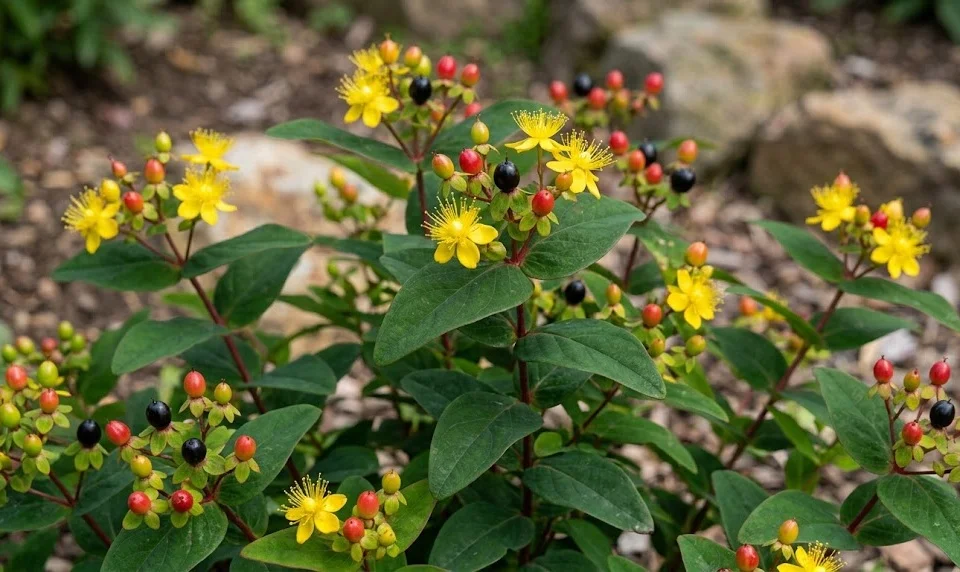
The aesthetic value of this shrub is found in its transition from yellow flowers to colorful berries. To maximize the flowering phase, you should provide a balanced environment that encourages consistent bud development. Avoiding excessive nitrogen in the soil helps the plant focus on blooming rather than just leaf production. This strategic approach results in a more dramatic display of color during the peak of the season.
Berry production is the highlight for many gardeners who choose this specific variety for their landscape. The berries change from green to red and finally to a deep, glossy black as they mature. You can prolong this display by ensuring the plant never suffers from a significant lack of moisture. Healthy foliage provides the perfect backdrop for these striking clusters of fruit throughout the late summer.
Foliage quality is another important aspect of general care that requires your attention during the year. The leaves should remain a healthy green with no signs of yellowing or spotting on the surface. If you notice any discoloration, it is often a sign that the soil pH is not quite right. Adding a bit of acidic mulch can help restore the balance and bring back the deep green hue.
The habit of the plant can be managed to fit either a wild woodland look or a more structured garden. You have the flexibility to let it grow naturally or to guide its shape with gentle interventions. Choosing a style early in the plant’s life makes it much easier to maintain as it reaches maturity. A well-cared-for specimen will serve as a reliable anchor in any mixed border or shrubbery.
More articles on this topic
Seasonal maintenance routines
Spring is the busiest time for anyone looking after these shrubs as the growth cycle begins. You should start by clearing away any debris that has accumulated over the winter months. This is also the perfect time to refresh the mulch and apply a light organic feed. These early steps set the stage for a productive year filled with flowers and berries.
Summer care focuses primarily on hydration and monitoring the progress of the developing fruit. You should water the base of the plant during dry spells to keep the leaves from wilting. Removing any spent flowers can sometimes encourage a second flush of blooms in certain climates. Keeping an eye on the weather forecast helps you anticipate when the plant might need extra support.
Autumn is the season when the berries are at their most beautiful and the plant begins to slow down. You can enjoy the visual harvest without needing to perform much heavy labor during this period. It is important to leave the berries on the plant if you wish to attract local bird populations. The fading leaves also add a touch of seasonal color to the garden before the winter dormancy.
Winter care is relatively simple because the plant is largely dormant and requires very little intervention. You should check the plant after heavy snowfalls to ensure the branches are not under too much weight. Clearing heavy snow prevents the stems from snapping or becoming permanently misshapen by the cold. This dormant period is a vital rest phase that prepares the shrub for the coming spring.
Optimizing the growing environment
Light levels are the most critical factor in determining the health and appearance of the foliage. While the plant can survive in full sun, partial shade is much better for leaf quality. Direct, scorching sun can cause the leaves to turn brown at the edges and look unsightly. Providing a bit of filtered light will result in a much more lush and attractive specimen.
Humidity can also influence how the plant performs, especially in very dry or very humid regions. In dry areas, misting the area around the shrub during the evening can provide a welcome relief. High humidity requires better air circulation to prevent any fungal issues from developing on the leaves. Balancing these factors creates a microclimate where the shrub can truly thrive and grow.
Soil structure is a long-term project that requires your ongoing attention and periodic amendments. Incorporating organic matter every year improves both the texture and the nutrient profile of the ground. You should aim for a loamy soil that holds moisture but still allows excess water to pass through. Testing the soil occasionally can provide insights into what minerals might be lacking for optimal growth.
Wind protection is often overlooked but can make a big difference in the stability of the plant. High winds can dry out the leaves quickly and cause physical damage to the stems. Planting near a fence or among other shrubs can provide a natural barrier against the elements. This sheltered position helps the plant maintain its graceful shape and prevents unnecessary environmental stress.
Managing growth and expansion
This species has a moderate growth rate that makes it easy to manage in most garden settings. It will gradually expand its footprint through new stems emerging from the base of the plant. You can control this spread by removing any unwanted runners that appear outside the designated area. This keeps the shrub within its boundaries and prevents it from overtaking smaller neighboring plants.
The height of the plant can be adjusted through consistent care and minor adjustments during the year. It typically reaches about one meter in height, which is perfect for middle-of-the-border placement. If it starts to grow taller than desired, you can easily manage its stature with careful thinning. This allows light to reach the center of the shrub and keeps the lower branches healthy.
Root management is something you should consider if you are growing the plant in a confined space. In large pots or small garden beds, the roots can eventually become quite crowded and restricted. Repotting or root pruning every few years can rejuvenate a plant that has lost its vigor. This practice ensures that the shrub continues to receive the nutrients it needs to produce berries.
Self-seeding is a natural behavior that you might notice if the berries are left to fall on the ground. These new seedlings can be easily removed or transplanted to other parts of your garden. If you want to prevent spreading, simply harvest the berries before they become overly ripe and drop. This gives you complete control over where the plant grows within your personal landscape.
Advanced health monitoring
Regular inspections of the underside of the leaves can reveal early signs of potential problems. Healthy leaves should be smooth and free from any sticky residue or unusual discolorations. You should also check the stems for any cracks or signs of physical damage from pests. Catching these issues early makes the treatment process much more effective and less stressful for the plant.
The vigor of the new growth in spring is a great indicator of the overall health of the shrub. If the new shoots are thick and vibrant, it means the root system is functioning perfectly. Thin or pale growth might suggest that the plant needs a boost of nutrients or more light. Adjusting your care routine based on these visual cues is the mark of an expert gardener.
Water uptake is another subtle sign that you can use to judge the condition of the root zone. If the soil remains wet for a long time after watering, it might indicate a drainage problem. Conversely, if the plant wilts shortly after watering, the soil might be too sandy to hold moisture. Fine-tuning the soil composition will solve these issues and create a more resilient plant.
Bacterial and fungal health is maintained by keeping the area around the base clean and free of old debris. Removing fallen leaves in the autumn prevents pathogens from overwintering near the sensitive root crown. You should also avoid overhead watering late in the day to keep the foliage dry overnight. These simple cultural practices are the best defense against common garden ailments.
Long-term garden integration
Integrating this shrub into a permanent landscape design requires a bit of forward thinking about its mature size. It works beautifully as a low hedge or as part of a mixed shrub border with other woodland species. The seasonal changes provide year-round interest, from the spring leaves to the winter stems. You should consider how the colors of the berries will contrast with your other garden plants.
Companion planting can enhance the performance of the shrub by providing beneficial environmental conditions. Plants that provide light shade or help retain soil moisture make excellent neighbors for this species. You can create a layered look by planting low-growing groundcovers around the base of the shrub. This creates a cohesive aesthetic while also benefiting the biological health of the entire garden area.
Using the stems in floral arrangements is a common practice for those who enjoy bringing the garden indoors. The berries are highly prized by florists for their longevity and their unique architectural appearance in vases. You can harvest the stems once the berries have reached their final color stage for the best results. This does not harm the plant and can actually serve as a light form of thinning.
Legacy care involves planning for the natural lifespan of the shrub and knowing when to rejuvenate it. While individual plants can live for many years, they may eventually become woody or less productive. You can maintain a youthful appearance by occasionally removing the oldest stems to make room for new growth. This cycle of renewal ensures that the plant remains a beautiful feature of your garden for decades.