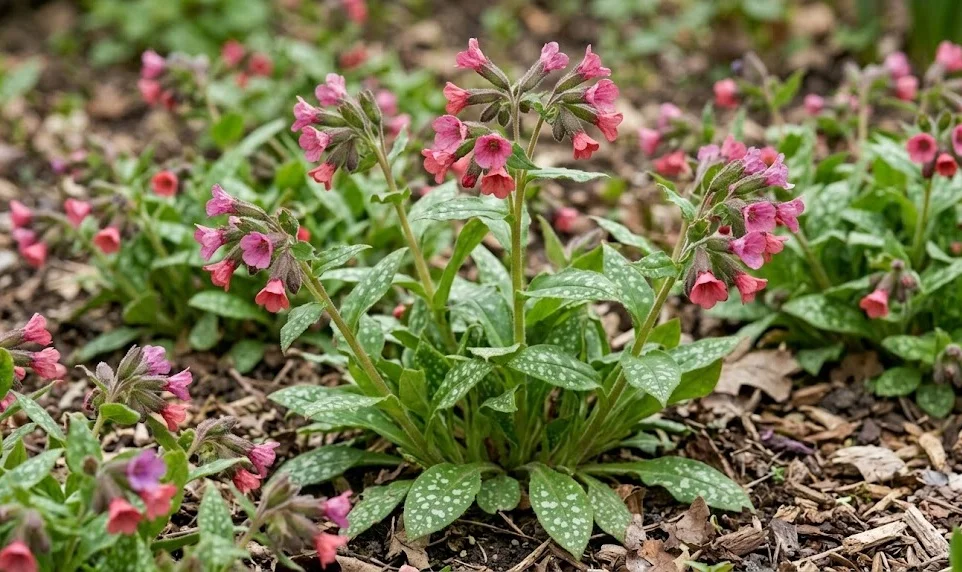

Red lungwort is a cold-hardy perennial that normally survives winter without elaborate protection when it is planted in suitable soil. Its crown remains close to the ground, while the upper foliage may persist, become damaged or die back according to the severity of the season. The greatest winter risk is often not cold itself but stagnant moisture around the roots. Effective overwintering therefore focuses on drainage, crown protection and avoiding unnecessary disturbance.
Garden-grown plants usually cope well beneath deciduous trees and shrubs. Fallen leaves provide natural insulation and soften repeated freezing and thawing. A moderate layer is beneficial, but a thick, compacted mass can trap water and exclude air. Winter preparation should preserve protection without smothering the plant.
Container-grown red lungwort requires more attention because roots in pots are exposed to sharper temperature changes. The smaller the container, the faster it freezes and dries. Pot material, drainage and position all affect winter survival. A hardy plant in the ground may be far less hardy when confined above the soil surface.
Winter care begins before the first hard frost. Plants should enter dormancy with healthy crowns and adequately hydrated roots. Late feeding, heavy pruning and waterlogging weaken their ability to tolerate cold. Gradual preparation produces better results than emergency protection after severe weather arrives.
Preparing garden plants for winter
Faded flower stems and badly damaged leaves can be removed during autumn. Healthy foliage may be left in place because it continues to photosynthesize during mild weather. It also provides a degree of natural protection over the crown. Complete cutting back is not essential unless disease is present.
More articles on this topic
The soil should be checked for drainage before prolonged winter rain begins. Compacted surfaces can be loosened carefully around the plant without damaging shallow roots. Low spots that collect water should be corrected. Where drainage cannot be improved, lifting and relocating the clump may be safer.
A light mulch of leaf mould or mature compost protects the root zone. The material should be spread around the plant while leaving the crown visible. Mulch several centimeters deep is usually enough in temperate climates. Excessive depth can keep the center continuously wet.
Recently planted divisions need particular care because their roots are not fully established. They should be watered during a dry autumn and lightly mulched after the soil has cooled. Wind-rocked plants must be firmed back into the ground. Exposed roots are more vulnerable to freezing and dehydration.
Managing frost, snow and winter wet
Repeated freezing and thawing can lift shallow crowns from the soil. This process, known as frost heaving, is more common in exposed ground and recently disturbed beds. Any lifted plant should be pressed gently back into place during a mild period. Additional soil can be added around exposed roots.
More articles on this topic
Snow usually acts as an insulating layer and does not need to be removed from established plants. Heavy, wet snow may flatten remaining foliage, but the crown generally remains protected. Compacted snow should not be repeatedly trampled over the planting area. Foot traffic can damage frozen soil structure and hidden shoots.
Persistent winter rain is more dangerous than snow in poorly drained ground. Saturated roots receive too little oxygen and become vulnerable to decay. Drainage channels, raised planting areas or improved soil structure may be necessary in problem gardens. Covering the soil with plastic is not recommended because it interferes with ventilation.
Dry winter winds can dehydrate evergreen or semi-evergreen leaves. This is most likely when the soil is frozen and roots cannot replace lost moisture. Shelter from strong easterly or northerly winds can reduce damage. Brown leaf edges may be removed in spring once new growth appears.
Overwintering plants in containers
The container should have several open drainage holes and a free-draining potting mixture. Pots without adequate drainage can fill with water during winter rain. Raising the container on feet allows excess water to escape. A saucer should not remain filled beneath the pot.
Large pots provide better root insulation than small ones. Containers can be grouped together against a sheltered wall, where they protect one another from wind. The most vulnerable pots may be wrapped with insulating material around their sides. The crown and drainage openings must remain uncovered.
Watering is still necessary during frost-free dry periods. Container compost can become dry even in winter, particularly beneath roof overhangs. Water should be applied in the morning so excess moisture can drain before night temperatures fall. Frozen pots should not be watered heavily.
Feeding should stop well before winter. Nutrient-rich conditions encourage soft late growth that is easily damaged by frost. The plant should be allowed to slow naturally as temperatures decline. Fresh feeding can resume in spring when active growth becomes visible.
Spring recovery after winter
Old foliage should be assessed when the worst frosts have passed. Leaves that are blackened, collapsed or diseased can be cut away at the base. Healthy green leaves should remain until new growth is well established. Sudden complete defoliation can reduce the plant’s early energy supply.
Mulch should be loosened if it has compacted over the crown. New shoots need air and space to emerge freely. Any soil washed away by winter rain can be replaced carefully. The crown must remain at the natural soil level.
Plants that appear slow to recover should not be discarded immediately. Red lungwort can remain inactive until soil temperatures rise. The crown should be checked gently for firm buds before any decision is made. Soft, foul-smelling tissue indicates rot, while firm tissue usually suggests the plant is still viable.
Spring watering should begin only when the soil starts to dry. Cold, wet ground does not need additional irrigation. A thin compost application can support renewed growth after recovery is evident. Strong fertilizer should be avoided until the root system is functioning actively.