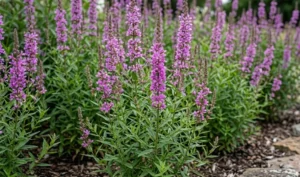
Red escallonia remains evergreen through winter, but its foliage and stems can be damaged by severe frost, cold winds, and waterlogged soil. The level of protection required depends on local climate, site exposure, plant age, and whether the shrub grows in open ground or a container. Preparation should begin before hard frost arrives, rather than after the leaves have already been scorched. A well-established plant in a sheltered, free-draining position usually survives winter far more successfully than a young shrub in an exposed site.
Preparing the shrub in autumn
Autumn care should encourage the current season’s stems to mature. Nitrogen-rich fertiliser must be avoided because it can stimulate soft growth late in the year. Such shoots have thin tissues and are easily damaged by freezing temperatures. Natural slowing of growth helps the plant enter winter in a stronger condition.
Watering should be adjusted as temperatures fall. The root zone should remain slightly moist, but constantly saturated soil is dangerous in cold weather. Autumn rainfall may provide all the moisture required in open ground. Containers still need checking because walls, roofs, or dense foliage may prevent rain from reaching the compost.
A moderate mulch layer protects surface roots from rapid temperature changes. Well-rotted compost, bark, or leaf mould can be spread over the root area. The material should not be heaped against the stems or crown. Excessively thick mulch can retain too much moisture and shelter pests.
Damaged, diseased, or broken branches may be removed before winter when necessary. Routine hard pruning should be postponed because it can encourage tender regrowth or expose inner stems. Long branches that whip violently in wind may be shortened selectively. Major shaping is safer after the coldest part of the year has passed.
More articles on this topic
Protecting plants in open ground
A sheltered microclimate greatly improves winter survival. Walls, fences, and evergreen windbreaks reduce the drying effect of cold air. The protection should not completely block ventilation, because stagnant damp conditions encourage disease. A position that receives winter sun may also help frozen foliage thaw gradually.
Young shrubs can be covered with breathable horticultural fleece during severe cold. The material should be supported so that it does not press heavily on the branches. Plastic sheeting is unsuitable because it traps condensation and restricts airflow. Covers should be removed or loosened during milder periods.
The root area can be protected further with a temporary layer of dry organic material during extreme weather. This is particularly useful for recently planted specimens with shallow roots. The layer should be checked after storms because wet, compacted material may hold excessive moisture. It can be reduced once the danger of severe frost has passed.
Snow may bend branches even though it provides some insulation. Heavy accumulations should be removed gently before stems split. Frozen branches are brittle, so they should not be shaken or forced. Supporting broad shrubs before forecast snowfall can reduce structural damage.
More articles on this topic
Overwintering container-grown shrubs
Container roots are more exposed to freezing because cold air surrounds the pot. A large frost-resistant container offers better protection than a small, thin-walled one. The pot can be wrapped with insulating material while the drainage holes remain open. Grouping containers near a sheltered wall also reduces temperature fluctuations.
The base of the container should be raised slightly from cold, wet paving. Pot feet or wooden supports improve drainage and prevent the drainage holes from becoming blocked. The container must remain stable in strong wind. Tall shrubs may need to be moved into a more protected corner before storms.
Watering should continue occasionally throughout winter. Evergreen leaves lose moisture on bright or windy days, even when growth has slowed. Compost should be allowed to approach dryness near the surface before more water is added. Watering immediately before a severe freeze should be avoided when the compost is already damp.
A bright, unheated greenhouse or sheltered veranda may protect container plants in very cold regions. The location should remain cool enough for natural winter rest. Warm indoor rooms are unsuitable because low light and high temperatures encourage weak growth. Ventilation is needed on mild days to prevent stagnant humidity.
Assessing and repairing winter damage
Frost-damaged leaves may turn brown, black, or dull olive-green. Outer shoots often show the most obvious symptoms because they receive the full force of cold wind. The shrub may look severely damaged while lower buds and inner stems remain alive. Immediate removal of every affected branch is therefore unnecessary.
Pruning should usually wait until spring growth reveals the extent of survival. Living wood is firm and often green beneath a lightly scratched bark surface. Dead stems become dry, brittle, and brown internally. Cuts should be made back to healthy buds or side shoots.
A damaged shrub should not receive a heavy fertiliser application in an attempt to force recovery. Moderate feeding after growth resumes is safer and produces firmer replacement shoots. Consistent moisture is also important because damaged roots and leaves cannot cope with additional drought. Mulch can be renewed once the soil begins to warm.
Severely affected plants may need several seasons to regain their former density. Gradual renovation maintains structure while new basal and side shoots develop. Empty spaces should not be filled immediately with competing plants. Patience and balanced care often allow a well-rooted red escallonia to recover surprisingly well.