Pruning and cutting back red lungwort correctly

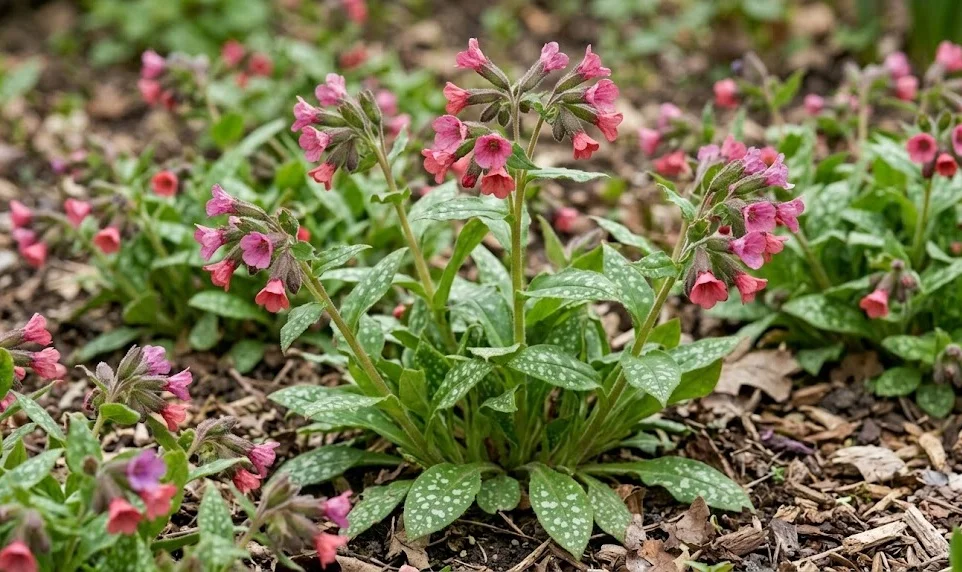
Pruning red lungwort is mainly a matter of removing spent flower stems, damaged foliage and congested growth rather than shaping the plant into a formal outline. The perennial grows from a low crown and renews itself through fresh basal leaves. Correct cutting improves appearance, airflow and plant hygiene without interfering with stored energy reserves. Timing is important because unnecessary removal of healthy leaves can weaken the following year’s flowering.
The plant does not require routine hard pruning several times a year. Most maintenance can be completed after flowering and again during seasonal cleanup. Individual damaged leaves may be removed whenever they become unsightly or diseased. A complete cutback is reserved for clumps with badly deteriorated foliage.
Sharp, clean secateurs or scissors are suitable for most work. Blunt tools crush the soft stems and create ragged wounds. Blades should be cleaned before moving between plants, especially when leaf spot or rot is suspected. Gloves may be useful because the hairy foliage can irritate sensitive skin.
Every cut should be made with awareness of the crown. New shoots often emerge close to old flower stems and can be hidden by broad leaves. Pulling stems by hand risks tearing tissue from the base. Controlled cuts are safer and produce a cleaner result.
Removing spent flower stems
Flower stems can be removed when the display has clearly finished. Cutting them early may eliminate unopened buds, while leaving them indefinitely can make the clump look untidy. The stem should be followed down to its base before cutting. New basal leaves must not be damaged.
More articles on this topic
Deadheading limits seed production and directs more energy toward foliage and root growth. This is useful when maintaining selected cultivars or a controlled planting design. It also reduces unwanted seedlings that may differ from the parent plant. Seed heads can be retained when natural self-seeding is desired.
Removing flower stems improves airflow through the center of the clump. This can reduce the humid conditions that favor mildew and spotting. It also allows fresh foliage to become more visible. The plant often looks significantly tidier immediately after this simple task.
The removed stems should be inspected before disposal. Healthy material can be composted, while diseased tissue should be handled separately. Mature seed stems may release seed during transport. A container or bag prevents accidental scattering through the garden.
Cutting back damaged foliage
Individual leaves with tears, scorch or isolated blemishes can be removed at their base. This selective approach preserves the maximum amount of healthy photosynthetic tissue. It is particularly useful early in the season when the plant still depends on active leaves. The crown should remain open but not stripped.
More articles on this topic
After flowering, older foliage may become heavily affected by mildew or leaf spots. When most leaves are unattractive, the entire clump can be cut back close to the ground. Cuts should remain above the crown and any visible new buds. Damaged material must be cleared away completely.
A full cutback should be followed by careful watering. The plant needs adequate moisture to produce a new flush of basal foliage. A thin layer of compost or leaf mould supports recovery without forcing soft growth. Strong fertilizer is unnecessary.
Hard cutting during severe drought or extreme heat can place the plant under additional stress. In such conditions, selective removal is safer until cooler weather returns. Shade and moisture should be stabilized before major pruning. Regrowth is strongest when roots are functioning actively.
Seasonal cleanup and long-term rejuvenation
Autumn cleanup can be light because healthy leaves may remain functional into winter. Only collapsed, diseased or badly damaged material needs immediate removal. Retained foliage offers some crown protection and continues to support the roots during mild periods. Complete autumn cutting is largely a matter of climate and plant condition.
Late winter or early spring is a suitable time to remove old leaves before new growth expands fully. The work should be done carefully because flower buds may already be developing at the center. Dead material can be lifted gently to reveal the crown. Clean cuts reduce accidental damage.
Pruning alone cannot correct a clump that has become severely congested. Mature plants with a weak center should be divided and replanted. Healthy outer sections provide the best replacement material. Division renews the plant more effectively than repeated hard cutting.
Regular, restrained maintenance keeps red lungwort compact and attractive. Removing the right tissue at the right time supports flowering, foliage renewal and disease prevention. The plant should never be cut simply because a calendar date has arrived. Its actual condition should guide every pruning decision.