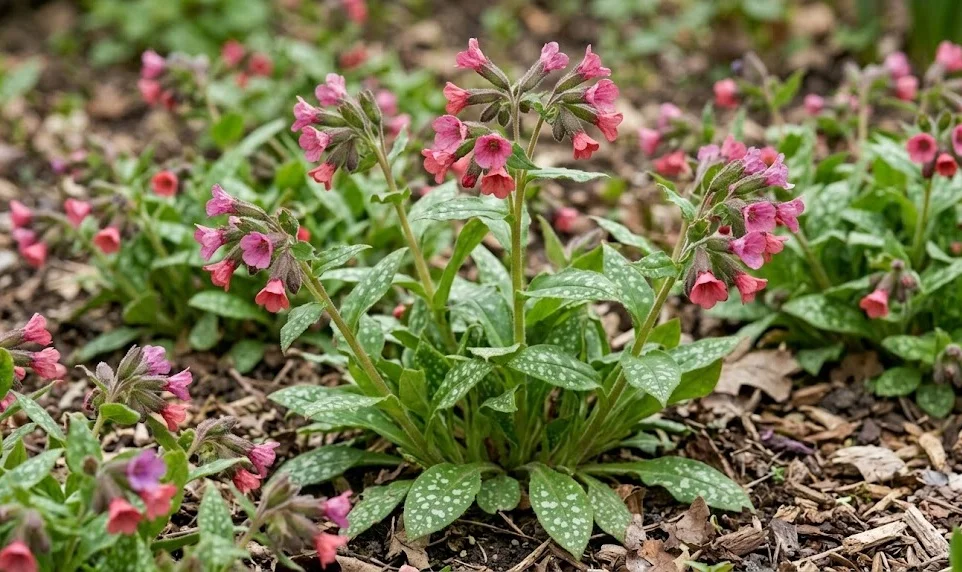

Red lungwort performs best in partial shade, where it receives gentle light without prolonged exposure to intense midday heat. Its natural preference is similar to the bright but filtered conditions found beneath deciduous woodland canopies. Spring sunlight encourages strong flowering, while summer shade protects the foliage from scorching and excessive water loss. The quality and timing of light matter more than a simple count of sunny hours.
The plant is often described as shade tolerant, but deep darkness does not produce the best results. In very low light, stems may stretch, flowering becomes sparse and foliage can remain damp for too long. Bright shade or dappled light provides a better balance. Some direct sun is acceptable when temperatures remain cool and the soil stays moist.
Regional climate changes the amount of light the plant can tolerate. Morning sun in a cool northern garden may be harmless, while the same duration in a hot continental climate can cause stress. Humidity, wind and soil moisture also influence leaf temperature. Positioning should therefore reflect local conditions rather than a universal formula.
Leaf symptoms can reveal whether the light level is suitable. Pale, bleached patches and crisp edges usually suggest excessive sun or heat. Weak growth and limited flowering may indicate too little light. Observing the plant across an entire season gives a more reliable assessment than judging it during a single week.
Partial shade and dappled woodland light
A position receiving morning sun followed by afternoon shade is often ideal. Morning light is less intense and dries dew from the foliage without overheating the root zone. Afternoon protection becomes increasingly valuable as summer temperatures rise. This exposure supports flowering while preserving leaf quality.
More articles on this topic
Dappled light beneath deciduous trees closely matches the plant’s natural needs. The canopy is relatively open when red lungwort flowers in early spring. As tree leaves expand, shade increases and protects the plant during summer. This seasonal change is one of the reasons the perennial succeeds so well in woodland gardens.
Tree competition must still be considered. A position may have perfect light but excessively dry soil because mature roots remove water rapidly. Organic matter and mulch can partly reduce this problem. Regular moisture checks remain necessary beneath large trees.
Shade cast by buildings can also be suitable. An east-facing wall usually provides cool morning light, while a north-facing position may offer bright indirect illumination. Deep spaces between tall structures can be too dark and stagnant. Good air movement should accompany shade.
Managing excessive sun exposure
Strong midday and afternoon sun can scorch the leaves. Damage often begins as pale patches that later become brown and brittle. The most exposed leaves are affected first, while shaded inner foliage remains greener. Heat reflected from walls, paving or gravel can intensify the problem.
More articles on this topic
A plant in excessive sun should be kept evenly moist while relocation is planned. Frequent shallow watering is not an effective long-term solution because it encourages weak rooting. A temporary shade screen may protect the foliage during a heat wave. Permanent improvement usually requires a more suitable position.
Transplanting is best done during cool weather in spring or autumn. The clump should be lifted with as much root as possible and moved into prepared, humus-rich soil. Damaged leaves may be removed, but healthy foliage should be retained. Regular watering helps the plant re-establish after the move.
In cool coastal climates, red lungwort may tolerate several hours of direct sunlight. Even there, the soil should not be allowed to dry severely. Wind can increase moisture loss despite moderate temperatures. The most successful sunny positions combine cool roots, reliable rainfall and shelter from reflected heat.
Recognizing insufficient light and improving placement
Very deep shade can reduce both flowering and leaf density. The plant may produce long petioles as it reaches toward brighter areas. Flowers can become fewer and stems may lean rather than remain upright. Persistently wet leaves may also develop fungal spotting.
Selective pruning of overhanging shrubs can increase filtered light. Tree work should be performed carefully and in accordance with good arboricultural practice. Removing a few small branches may be enough to brighten the site. Sudden exposure to full sun should be avoided.
Nearby perennials can also create excessive shade later in the season. Vigorous hostas, ferns or groundcovers may gradually cover the lungwort. Dividing or repositioning these companions restores space and light. Balanced planting allows each species to retain its natural form.
Container-grown plants can be moved as seasonal light changes. A bright spring position may become too hot by early summer. Shifting the pot into afternoon shade preserves foliage quality. The transition should be gradual to prevent abrupt light stress.