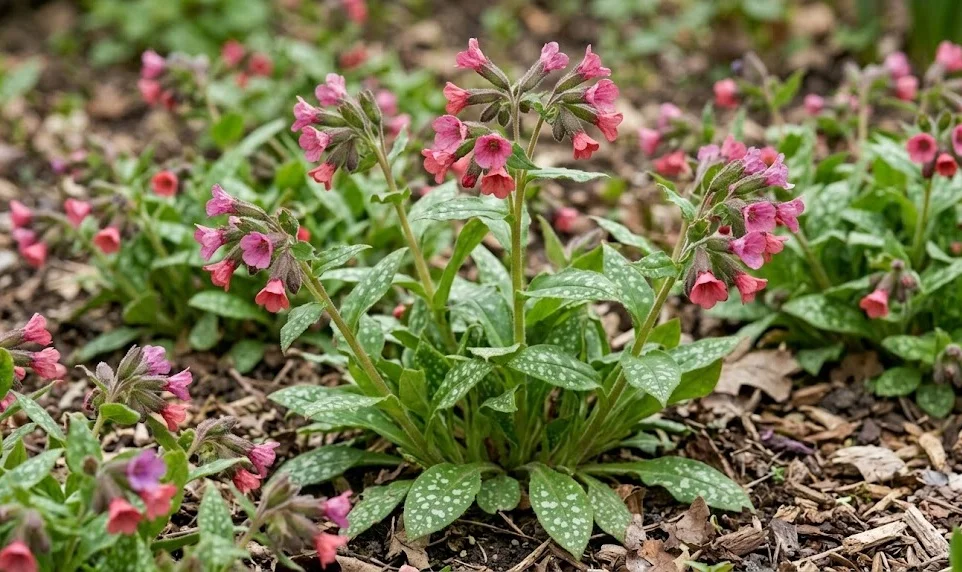

Red lungwort is generally a resilient perennial, but its shade-loving foliage can develop problems when air circulation is poor or the soil remains excessively wet. Powdery mildew, leaf spotting and crown decay are among the most common disease concerns. Slugs and snails may also damage young leaves, while sap-feeding insects occasionally colonize tender growth. Early diagnosis is important because environmental stress often resembles infection.
A healthy plant grown in suitable conditions can tolerate minor damage without treatment. The goal should not be to eliminate every blemish but to prevent problems from weakening the crown. Removing affected tissue, improving airflow and correcting watering practices are often more effective than routine chemical spraying. Intervention should be proportionate to the severity of the problem.
Sanitation has a significant role in prevention. Dead leaves, collapsed stems and infected debris can shelter pests or fungal spores. Regular cleaning is especially useful in dense woodland borders where moisture persists for long periods. Tools should also be kept clean to avoid transferring pathogens between plants.
Accurate observation begins with examining both sides of the leaves, the crown and the soil surface. The pattern of symptoms often reveals more than a single damaged leaf. Fungal disease usually develops across several leaves under similar conditions, while chewing pests leave holes or ragged edges. Root problems may cause general wilting without obvious foliar lesions.
Powdery mildew and surface fungal growth
Powdery mildew appears as pale, flour-like growth on leaf surfaces. It often develops when roots are dry but the surrounding air is humid, especially in crowded shade. Contrary to common assumptions, free water on the leaf is not always required for infection. Stressed plants are usually more vulnerable than well-hydrated ones.
More articles on this topic
The first response should be to remove the worst affected leaves. These should be discarded rather than placed in a cool compost heap where spores may survive. The plant should then be watered deeply at soil level if the root zone is dry. Improving spacing around the clump reduces future humidity.
Severely affected plants can be cut back after flowering. Fresh foliage often emerges cleanly when the soil is moist and temperatures are moderate. This method is less suitable during extreme heat or drought because regrowth would place additional demand on the roots. The crown should be left intact and unobstructed.
Fungicides may be considered only when cultural measures are insufficient and local regulations allow their use. Product labels must specify suitability for ornamental perennials and the target disease. Repeated treatment without correcting environmental causes rarely provides lasting control. Prevention through moisture management and air circulation is more sustainable.
Leaf spots and foliage decline
Leaf spot diseases cause brown, black or purple lesions that may enlarge or merge. Some spots develop pale centers or yellow margins as the affected tissue dies. Splashing water and prolonged leaf wetness often help spores spread. Damage is usually most visible on older foliage.
More articles on this topic
Affected leaves should be removed before lesions cover most of the plant. Cutting tools must be disinfected when moving between diseased clumps. Water should be directed beneath the foliage rather than sprayed over it. Mulch can reduce soil splash during heavy rain.
Not every spot is infectious. Sun scorch, frost injury, hail, nutrient imbalance and natural leaf aging can produce similar marks. Scorched tissue often appears on the most exposed side of the plant, while fungal lesions may occur in more random patterns. The timing of damage and recent weather conditions should be considered.
When most leaves deteriorate after flowering, a complete foliage cutback can restore the plant’s appearance. The removed material should be cleared away promptly. Adequate water and a light compost mulch encourage healthy regrowth. Heavy nitrogen fertilizer should not be used because it produces soft, disease-prone tissue.
Crown and root rots
Crown rot is a more serious problem because it attacks the plant’s central growing tissue. Symptoms may include sudden collapse, yellowing, soft stems and dark, foul-smelling tissue near soil level. The condition is strongly associated with prolonged waterlogging and deeply buried crowns. Once decay becomes extensive, recovery is unlikely.
Mildly affected plants can be lifted and examined. All soft or discolored tissue should be removed with a sterile blade until only firm material remains. Healthy sections may be replanted in fresh, well-drained soil. Reusing contaminated soil or planting at the same excessive depth should be avoided.
Drainage problems must be corrected before replacement plants are installed. Organic matter can improve structure, but extremely wet sites may require raised planting or a different species. Water from roofs, paths or slopes should not be allowed to collect around the crown. Irrigation schedules also need adjustment.
A rotted clump should never be divided and distributed through the garden. Even apparently healthy pieces may carry infection. Tools, pots and work surfaces must be cleaned after contact with diseased material. Careful hygiene limits the spread of soil-borne pathogens.
Slugs, snails and chewing damage
Slugs and snails are particularly attracted to soft new growth. They create irregular holes, shredded margins and silvery slime trails. Damage is usually greatest during cool, damp weather and in heavily mulched areas. Young divisions and newly emerging shoots can be stripped quickly.
Hand collection after dark or during wet weather can reduce small populations. Boards, overturned pots and dense debris should be checked because they provide daytime shelter. Keeping the immediate crown area relatively open makes the habitat less favorable. Mulch is still useful, but it should not form a wet mat against the plant.
Biological controls may be appropriate where they are legally available and correctly applied. Wildlife-friendly garden management also encourages beetles, frogs and other natural predators. Pellets should be selected and used carefully to minimize risks to pets and non-target organisms. Label directions must always be followed.
Established plants often recover from moderate chewing once conditions become drier. Severely damaged foliage may be trimmed away to encourage a cleaner flush. The plant should be watered and allowed to rebuild without heavy feeding. Protecting the next set of emerging leaves is more important than preserving every damaged leaf.
Sap-feeding pests and integrated management
Aphids may cluster on tender flower stems and young leaves. They remove sap, cause distortion and produce sticky honeydew. Natural predators often control small colonies without intervention. Ladybirds, lacewings and hoverfly larvae are especially valuable.
A strong but controlled stream of water can dislodge aphids from sturdy growth. Heavily infested stems may be removed after flowering. Insecticidal soap can be considered where permitted, but complete coverage is required and beneficial insects may also be affected. Treatment should be reserved for significant infestations.
Spider mites are uncommon in cool, shaded ground but may appear on container plants kept too warm and dry. Fine stippling, bronzed foliage and delicate webbing are typical signs. Increasing moisture around the root zone and moving the plant away from reflected heat can slow their development. Severely infested leaves should be removed.
Integrated management combines plant health, observation and targeted action. Suitable shade, correct watering, good spacing and clean cultivation prevent most serious outbreaks. Chemical treatments should never replace correction of the underlying growing conditions. A resilient red lungwort clump usually regains its appearance when stress is reduced promptly.