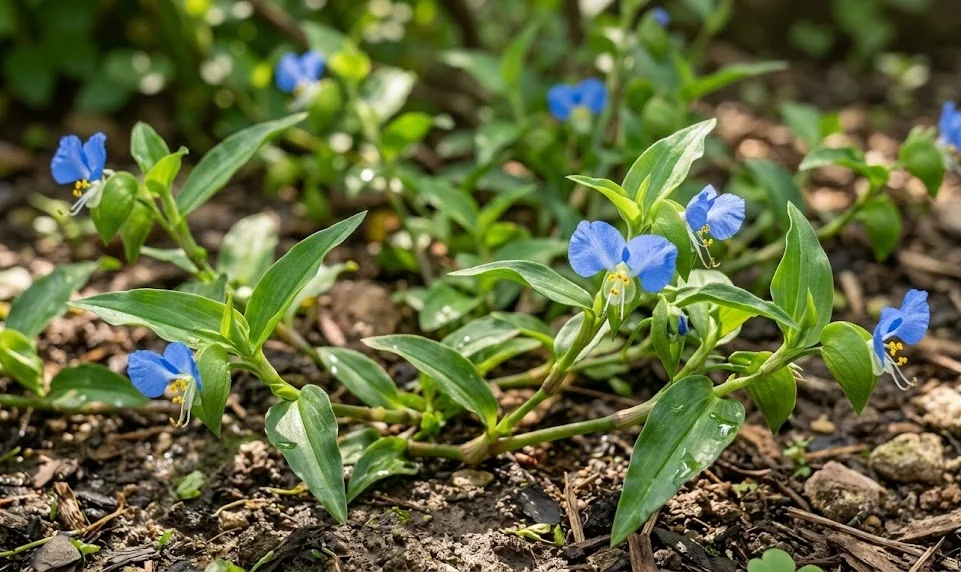

Light requirements of the asiatic dayflower are a fundamental aspect of its care that directly influences its growth rate and flowering potential. This species is remarkably versatile, but it has specific preferences that must be met for it to produce its most vibrant blue blossoms. Understanding how light interacts with the plant’s physiology allows you to choose the perfect spot in your garden for a professional-quality display. By mastering the nuances of light exposure, you can ensure your plants remain healthy, compact, and prolific throughout the entire summer season.
Finding the balance between sun and shade
The most important thing to remember about this plant is its preference for a “goldilocks” level of light—not too much, and not too little. In an ideal world, you should provide your dayflowers with plenty of bright, indirect light or a spot that receives direct morning sun followed by afternoon shade. The morning sun provides the energy needed for the day’s blooms to open fully and exhibit their true, deep blue color. Conversely, the afternoon shade protects the delicate foliage and flowers from the intense heat of the mid-day sun, which can cause wilting and fading.
If the plant is grown in full, direct sun all day long, it may become stressed, especially in hotter climates or during periods of drought. You might notice the leaves taking on a yellowish tint or the edges becoming scorched and brown as the plant struggles to keep up with the water loss. In these high-light conditions, you must be extra vigilant about watering and perhaps consider providing some artificial shade during the hottest part of the summer. A professional gardener always watches for these signs of light stress and adjusts the environment accordingly.
On the other end of the spectrum, the dayflower is surprisingly tolerant of shade compared to many other flowering species. However, if the area is too dark, the plant will likely become “leggy,” with long, weak stems reaching out in search of more light. You will also see a significant decrease in the number of flowers produced, as the plant lacks the energy required for reproductive success. Finding that sweet spot where the plant is both lush and floriferous is the key to a successful gardening project.
You can use the surrounding plants in your garden to create a natural dappled light environment that mimics the plant’s native habitat. For example, planting dayflowers under the light canopy of a tall shrub or a small tree can provide the perfect balance of light and protection. This layered approach not only meets the needs of the plant but also adds depth and complexity to your garden design. Observation over several days will help you determine if a particular location truly meets the requirements of this beautiful species.
More articles on this topic
The impact of light on flowering and foliage
The quantity and quality of light the plant receives have a profound effect on the intensity of the blue pigment in its flowers. You will notice that the blooms are often at their most brilliant on clear mornings when they receive a healthy dose of direct sunlight. In cloudy weather or deep shade, the blue can appear somewhat muted or less vibrant than you might expect. As an expert, you can use light placement to maximize the visual impact of your floral display for anyone visiting your garden.
Light also plays a crucial role in determining the growth habit and overall structure of the plant’s foliage. In a well-lit environment, the stems will remain relatively short and the leaves will be densely packed, creating a thick and attractive ground cover. This compact growth is much more resilient to wind and rain and looks much more professional in a managed border. If you notice your plants becoming thin and sparse, it is usually a sign that they are not getting enough light to support their full growth potential.
The timing of the light exposure is also important, as the flowers of this species are famously short-lived and usually close by mid-day. If the plant only receives light late in the afternoon, you might miss the best part of the display entirely. Ensuring that the site is illuminated early in the morning allows the flowers to open as soon as the day begins, providing you with several hours of beauty. This alignment with the plant’s natural daily rhythm is a sophisticated touch in any gardening plan.
Finally, you should be aware that the light levels in your garden will change throughout the season as the sun moves across the sky and neighboring plants grow. A spot that is perfectly lit in May might become too shaded by July as the trees fill out their leaves. You should be prepared to prune back any overhanging branches or even move your dayflowers if the light conditions shift too dramatically. Being responsive to these seasonal changes is what keeps your garden looking its best all year round.
More articles on this topic
Adapting light management for different environments
If you are growing asiatic dayflowers in containers, you have the unique advantage of being able to move them to optimize their light exposure. You can start them in a sunny spot in the spring to encourage rapid growth and then shift them to a more sheltered location as the heat of summer intensifies. This flexibility allows you to provide the perfect conditions for the plant at every stage of its lifecycle. It is a professional technique that ensures your potted specimens always look their absolute best.
Urban gardeners with balconies or small courtyards may face challenges with “light canyons” or highly reflected light from windows and walls. In these situations, the light can be much more intense than expected, or it may come from unusual angles that cause the plant to grow unevenly. You should monitor your plants closely and perhaps use light-colored pots or reflective surfaces to help bounce light into the shadier corners. Adapting your strategy to your specific architectural environment is a sign of a truly skilled gardener.
In regions with very long summer days and intense UV levels, you might find that even partial sun is too much for the delicate tissues of the dayflower. Using a light-weight shade cloth can be an effective way to filter the sun’s rays without completely blocking the light the plant needs for photosynthesis. This temporary intervention can protect your display during the peak of a heatwave and prevent unsightly leaf burn. It shows a level of dedication and expertise that ensures the longevity of your garden beds.
Ultimately, mastering the light requirements of the asiatic dayflower is about observing and responding to the needs of the living organism in your care. By providing the right balance of sun and shade, you create a foundation for a healthy, vibrant, and beautiful plant. The unique blue of the flowers is your reward for this careful attention to the environment. Your garden will reflect your professional expertise and your commitment to the art and science of horticulture.