
Establishing a vibrant display of poppies requires a strategic approach to timing and soil preparation to ensure maximum germination. These plants are known for their prolific seed production, but they have specific requirements for light and temperature to trigger growth. Professional gardeners understand that the key to success lies in mimicking the natural disturbance of the soil that occurs in the wild. This article explores the most effective methods for planting and propagating these iconic wildflowers in a controlled environment.
Timing and site selection
The most successful poppy displays are often the result of autumn sowing, which allows the seeds to undergo a natural chilling process. This period of cold, known as stratification, helps break the seed’s dormancy and leads to more uniform germination in the spring. However, spring sowing is also a viable option if performed early enough to catch the cool, moist conditions of the season. Selecting the right window for planting is the first and most crucial step in the propagation process.
Location is equally important, as poppies require a site that receives a minimum of six to eight hours of direct sunlight. They are not shade-tolerant plants and will become leggy and weak if they are forced to grow in low-light conditions. The chosen area should also have excellent drainage to prevent the seeds from rotting in the ground during wet winters. Avoiding areas with heavy foot traffic ensures that the delicate seedlings are not trampled before they can establish themselves.
Soil preparation involves clearing the site of all existing vegetation and raking the surface to create a fine tilth. Poppies prefer a firm seedbed, so it is often helpful to walk over the prepared ground to compress it slightly before sowing. The seeds are exceptionally small, so they do not need to be buried deep within the earth to grow. In fact, burying them too deep is a common mistake that often leads to a complete failure of the crop.
Consider the history of the site, as poppies often emerge from “seed banks” that have been dormant in the soil for decades. If you are planting in an area that was previously a meadow, you may find that local varieties emerge alongside your sown seeds. This natural diversity can add character to your garden but may require some management to prevent overcrowding. Understanding the existing conditions of your land allows for a more integrated and successful planting strategy.
More articles on this topic
Sowing techniques for maximum coverage
Broadcasting the seeds by hand is the most common and effective method for creating a naturalistic poppy meadow. To ensure even distribution, it is highly recommended to mix the tiny seeds with a carrier like fine sand or dry sawdust. This mixture makes the seeds easier to see as they land on the dark soil, preventing the formation of overly dense clusters. A steady, sweeping motion of the hand will help cover the entire area with a uniform layer of seeds.
Once the seeds have been scattered, they should be pressed into the soil surface rather than covered with a thick layer of earth. Using a garden roller or simply treading the area with flat-soled shoes ensures good seed-to-soil contact. This contact is essential for the seeds to absorb the moisture they need to begin the germination process. Because poppy seeds are light-activated, they must remain near the surface where the sun can reach them.
Watering the newly sown area should be done with a very fine mist to avoid washing the small seeds away. The soil should be kept consistently moist but not saturated during the initial stages of germination, which usually takes two to three weeks. If the weather is particularly dry, a light daily misting may be necessary to support the emerging seedlings. Once the plants have developed their first true leaves, the frequency of watering can be gradually reduced.
In smaller garden borders, you might prefer a more organized approach by sowing the seeds in shallow drifts. This creates a more intentional look while still maintaining the informal charm that poppies are known for. Marking the sown areas with small stakes can help you distinguish the poppy seedlings from emerging weeds. As the plants grow, they will naturally fill in the gaps, creating a dense and colorful carpet of blooms.
More articles on this topic
Germination and early seedling care
The emergence of poppy seedlings is a delicate time that requires careful observation to ensure the young plants survive. They initially appear as tiny, inconspicuous green specks that can easily be mistaken for common garden weeds. It is vital to learn to recognize the characteristic shape of the poppy’s first leaves to avoid accidental removal. During this phase, the competition for light and space is at its most intense for the developing plants.
Thinning the seedlings is a necessary task if the initial sowing was particularly dense or successful. If left too close together, the plants will compete for nutrients and water, resulting in smaller flowers and weaker stems. Aim to leave a gap of about fifteen to twenty centimeters between the strongest individuals for the best results. While it can be difficult to pull up healthy plants, this process is essential for the long-term health of the display.
Protection from birds and small mammals may be necessary in some gardens, as the seeds and young shoots are attractive to wildlife. A fine mesh or temporary netting can be placed over the site until the seedlings are well-established. Once the plants reach a few inches in height, they generally become less vulnerable to foraging animals. This early protection can make the difference between a sparse patch and a lush, thriving meadow.
Environmental factors like sudden frosts or heavy downpours can also pose a threat to the young poppy population. Fortunately, the common poppy is quite hardy and can usually recover from a light frost without significant damage. If a severe storm is predicted, a temporary cover might be used to prevent the delicate seedlings from being flattened. Consistent care during these first few weeks ensures that the plants develop the strong root systems they need for the summer.
Naturalizing and long-term propagation
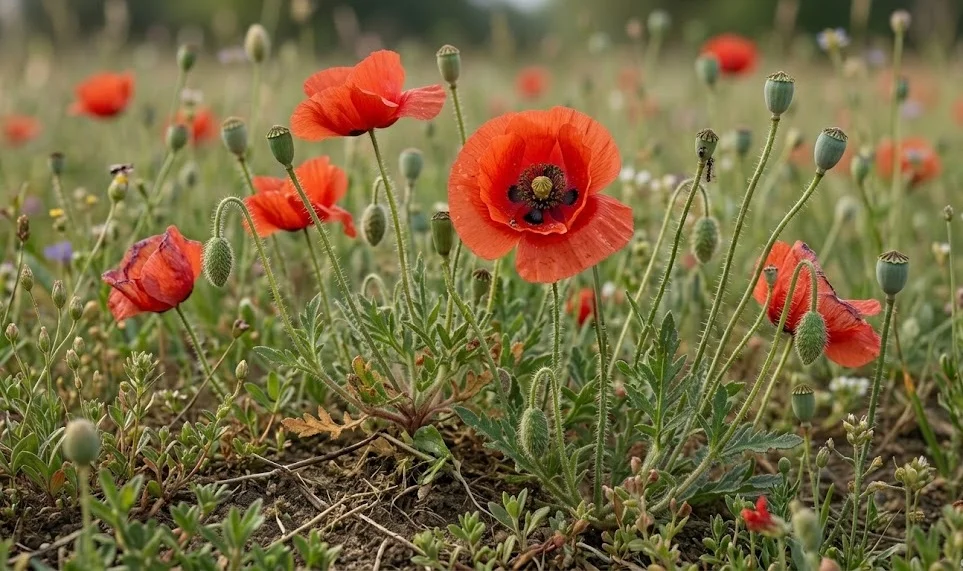
One of the greatest appeals of the common poppy is its ability to naturalize and reappear in the garden year after year. This is achieved through the massive production of seeds, with a single plant capable of producing tens of thousands of offspring. To encourage this, the gardener must allow the seed heads to fully mature and dry on the stalk. The distinctive “pepper-pot” pods will eventually open, allowing the wind to scatter the seeds across the garden.
The timing of soil disturbance is a key factor in successful naturalization for future growing seasons. Poppies require open ground to germinate, so lightly raking the area in the autumn can help create the necessary conditions. This mimics the historical role of the plough in agricultural fields, which famously brought poppy seeds to the surface. Without some form of disturbance, more aggressive grasses may eventually crowd out the poppy population.
Collectors often harvest seeds from their most beautiful or unusual plants to ensure those traits are carried forward. Selecting seeds from plants with particularly vibrant colors or unique markings allows for a degree of “gardeners’ selection” over time. These collected seeds can be shared with neighbors or used to expand the poppy display into new areas of the property. This cycle of collection and redistribution is a rewarding part of the poppy-growing experience.
Ultimately, the goal of propagation is to create a self-sustaining ecosystem where the poppies thrive with minimal human intervention. By understanding the plant’s natural life cycle and providing the right starting conditions, you can enjoy their beauty for many years. A successful poppy meadow is a dynamic feature that changes slightly every season, reflecting the natural rhythms of the earth. The effortless beauty of a field of red poppies is a testament to the power of simple, effective propagation techniques.