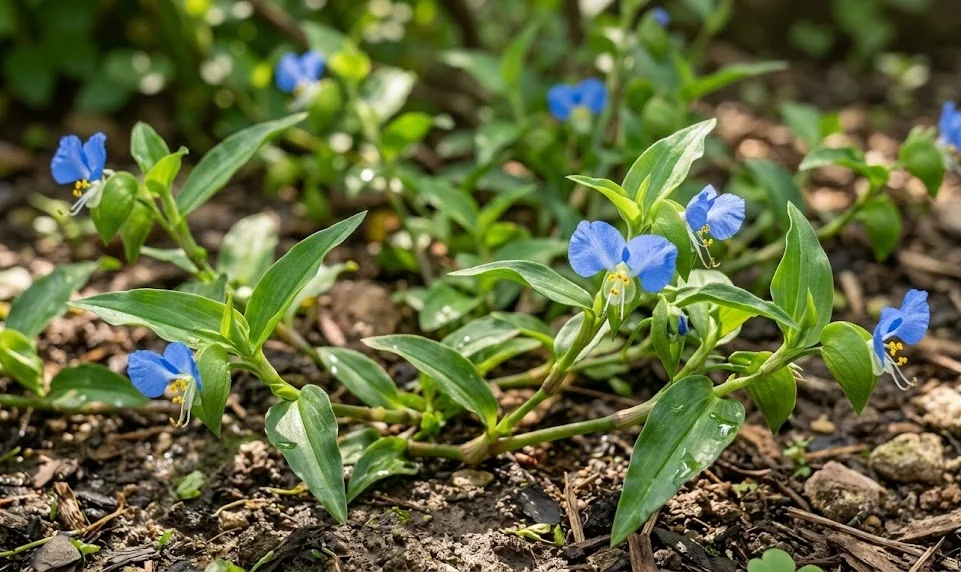

Pruning and cutting back the asiatic dayflower is a vital maintenance task that helps control its spread and encourages a more prolific flowering display. While the plant is naturally vigorous, left to its own devices, it can become unruly and may even start to overwhelm neighboring species in your garden. By applying professional pruning techniques, you can maintain a tidy appearance and ensure that the plant’s energy is focused on healthy growth and vibrant blooms. Mastering this aspect of care is essential for anyone looking to manage this species with expert precision.
Controlling spread and maintaining shape
The most common reason for pruning this species is to keep its aggressive, creeping growth habit in check throughout the summer. As the stems grow along the ground, they will root at every node that touches the soil, which can lead to a rapid and unwanted expansion of the plant’s footprint. You should regularly inspect the edges of your dayflower patch and trim back any stems that are venturing into areas where they don’t belong. This proactive approach prevents the plant from becoming a nuisance and keeps your garden beds looking neatly defined.
When you are trimming back the spreading stems, it is important to make your cuts just above a leaf node to encourage neat regrowth. Using sharp, clean bypass pruners will ensure a clean cut that heals quickly and reduces the risk of introducing diseases to the plant. You should always remove the trimmed pieces from the garden immediately, as any small fragment left on the soil has the potential to grow into a new plant. A professional level of cleanliness during pruning is the best way to prevent accidental propagation.
In addition to controlling the edges, you might also find it necessary to thin out the center of the plant if it becomes overly dense. Removing some of the older or more crowded stems improves air circulation within the foliage, which is a key factor in preventing fungal issues like powdery mildew. A more open structure also allows light to reach the lower leaves, keeping the entire plant green and healthy from top to bottom. This type of selective pruning is a sophisticated technique that enhances both the health and the beauty of your display.
If the plant starts to look a bit “leggy” or sparse in mid-summer, you can perform a more significant cut-back to rejuvenate the growth. Reducing the length of the stems by about a third will stimulate the plant to produce new, bushy side shoots and a fresh set of leaves. This can breathe new life into a tired-looking display and often results in a second flush of flowers later in the season. Being brave enough to prune when needed is one of the signs of an experienced and confident gardener.
More articles on this topic
The art of deadheading and aesthetic grooming
Deadheading, or the removal of spent flowers, is a great way to keep your dayflowers looking their best on a daily basis. Since each bloom only lasts for a single day, a large patch can quickly accumulate a lot of wilted material that can detract from the overall look. While the flowers of this species tend to dissolve rather than leave dry husks, removing the developing seed pods can also help the plant stay focused on flowering. A few minutes of grooming each morning can make a world of difference in the professional appearance of your garden.
Aesthetic grooming also involves removing any leaves that have become yellowed, torn, or damaged by pests or weather. This simple task keeps the plant looking lush and vibrant and also removes potential breeding grounds for insects and disease. You should get into the habit of looking closely at your plants as you walk through your garden, performing minor “triage” as you go. This constant attention to detail is what separates a truly expert garden from one that is merely functional.
If you are growing the dayflower as a border plant, you can use pruning to create a more formal, mounded shape that contrasts well with more structural plants. By consistently tipping back the new growth, you encourage the plant to stay compact rather than trailing across the ground. This allows you to use the species in a wider variety of garden designs, from wilder naturalistic areas to more controlled and manicured beds. Pruning is a powerful tool for shaping the visual narrative of your outdoor space.
You should always be mindful of the timing of your aesthetic pruning, as you don’t want to remove the buds that are about to open. Focus your efforts on the stems that have already flowered or those that are purely vegetative to avoid a gap in the floral display. Understanding the growth and flowering cycle of the plant allows you to prune with precision and purpose. Your goal is always to enhance the natural beauty of the species while maintaining the order of the garden.
More articles on this topic
Seasonal pruning and end-of-year cleanup
As the growing season draws to a close and the first frosts of autumn arrive, your pruning tasks will shift toward preparing the garden for winter. In many regions, the top growth of the dayflower will turn brown and collapse once the temperatures drop significantly. You should wait until the foliage has fully died back before cutting it all down to ground level to ensure the roots (or seeds) are ready for dormancy. Clearing away this dead material is an essential part of your fall garden sanitation routine.
If you are managing the plant as a perennial in a warmer zone, you might want to leave a few inches of the old stems in place to mark the location of the dormant crowns. This prevents you from accidentally digging them up or stepping on them during early spring garden prep. You can then perform a final, clean cut-back in the early spring just before the new growth starts to emerge. This two-stage approach to seasonal pruning provides both winter protection and a fresh start for the new year.
For those in colder climates where the plant survives as an annual, the fall cleanup is your opportunity to manage the seed bank for next year. If you want fewer plants in the spring, you should be very thorough in removing the dead foliage and any visible seed pods before they have a chance to drop. Conversely, if you want a larger display, you can shake the dried stems over the soil as you remove them to help scatter the seeds. This strategic approach to cleanup allows you to influence the future of your garden with very little effort.
Ultimately, pruning and cutting back are about more than just keeping things tidy; they are about active stewardship of your garden environment. By taking control of the plant’s growth, you ensure that it remains a welcome and beautiful part of your landscape. The asiatic dayflower is a resilient and forgiving species, making it an excellent subject for practicing and refining your professional pruning skills. Your dedication to expert care will be reflected in a garden that is both healthy and aesthetically stunning.