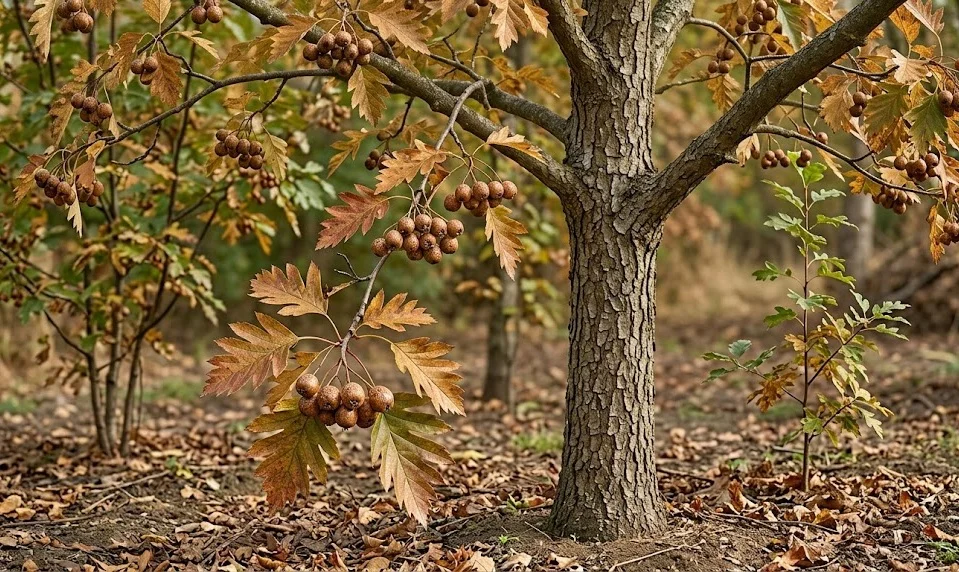

Pruning is a critical intervention that shapes the life of a wild service tree, balancing its natural beauty with structural safety and health. This species has a tendency to develop a broad, complex crown that can become overcrowded without professional guidance. Strategic cutting allows for better light penetration and air circulation, which are the cornerstones of disease prevention. Understanding when and how to remove wood is an art that requires both horticultural knowledge and a long-term vision for the tree’s development.
Principles of structural pruning
The primary goal of pruning a young wild service tree is to establish a strong and healthy architectural framework. This begins with identifying a single, strong central leader that will become the main trunk of the mature tree. Any competing secondary leaders should be shortened or removed entirely to prevent the formation of weak “V-shaped” crotches. These structural weaknesses are the most common points of failure during high winds or heavy snow events later in the tree’s life.
As the tree grows, selective removal of branches that are growing inward or crossing each other is necessary to maintain a clear internal structure. Crossing branches rub against one another, creating wounds that serve as entry points for pests and fungal pathogens. By removing these problematic limbs early, you allow the remaining branches to develop more thickness and strength. This proactive thinning also ensures that light can reach the inner parts of the canopy, maintaining healthy foliage throughout the entire crown.
Maintaining a proper balance between the height of the trunk and the spread of the crown is essential for both aesthetics and stability. In a garden setting, you may wish to “raise the canopy” by removing the lowest branches to allow for easier movement beneath the tree. This should be done gradually over several years to avoid shocking the tree or leaving large, unhealed wounds on the main trunk. A professional arborist always aims to remove no more than twenty-five percent of the living canopy in any single growing season.
The angles at which branches attach to the trunk are a key indicator of their future strength and durability. Branches with a wide, “U-shaped” attachment angle are generally much stronger and less likely to break than those with narrow angles. If a branch with a poor attachment angle is identified early, it can be pruned out or trained to grow in a safer direction. This attention to detail during the formative years of the tree’s life saves significant time and expense in the long run.
More articles on this topic
Timing and techniques for effective cutting
The timing of pruning is just as important as the technique itself to ensure the tree heals quickly and experiences minimal stress. For the wild service tree, the best time for major structural pruning is during the dormant season in late winter or very early spring. At this time, the sap is not flowing heavily, and the tree’s energy is stored in the roots and trunk rather than the leaves. This allows the tree to focus its resources on sealing the pruning wounds as soon as it wakes up in the spring.
Avoid pruning during the late spring and early summer when the leaves are expanding and the tree is most active. During this period, the bark is soft and easily damaged, and the tree is more susceptible to infection from various airborne fungi. Furthermore, heavy pruning during the growing season can stimulate an excessive amount of weak “water sprouts” or suckers. These thin, vertical shoots grow rapidly but add no structural value to the tree and must eventually be removed.
Using the correct tools and making precise cuts is the hallmark of a professional horticulturalist. Pruning shears, loppers, and handsaws should always be sharp and clean to ensure smooth cuts that the tree can easily compartmentalize. When removing a branch, the cut should be made just outside the “branch bark ridge” and the “branch collar,” the swollen area where the branch meets the trunk. Cutting too close to the trunk can damage the tree’s natural healing tissue, while leaving a long stub can lead to rot and disease.
Large branches should be removed using the “three-cut method” to prevent the weight of the branch from tearing the bark down the trunk. The first cut is an undercut several inches from the trunk, followed by a second cut from the top slightly further out to remove the bulk of the weight. The final cut is then made cleanly at the branch collar to leave a small, manageable wound. This technique ensures that the main trunk remains undamaged and the tree can heal as efficiently as possible.
More articles on this topic
Maintenance and rejuvenation pruning
In mature wild service trees, the focus of pruning shifts from structural formation to maintenance and the removal of declining wood. Dead, diseased, or damaged branches should be removed as soon as they are identified, regardless of the time of year. These “D-elements” can sap the tree’s energy and become a hazard to people or property if they fall during a storm. Regular inspections of the upper canopy using binoculars or a professional climber can reveal hidden issues before they become dangerous.
Thinning the canopy of an older tree can help revitalize a specimen that has become overly dense or stagnant in its growth. By removing some of the smaller, peripheral branches, you reduce the weight on the main limbs and improve air movement through the tree. This can be especially beneficial in preventing the buildup of moisture that leads to leaf spot diseases and powdery mildew. A well-thinned tree often looks more elegant and has a more transparent, airy quality in the landscape.
Rejuvenation pruning is a more intensive technique used on old or neglected trees to stimulate new, healthy growth. This may involve cutting back larger limbs to a strong lateral branch to reduce the overall size of the tree and encourage a more compact form. This should only be done by experienced professionals, as improper rejuvenation can lead to the death of a mature specimen. If done correctly, it can extend the life of a historic tree and restore its beauty for many years to come.
Ultimately, the goal of all pruning is to work with the tree’s natural growth habit rather than fighting against it. The wild service tree has a beautiful, natural silhouette that should be respected and enhanced through careful, minimalist intervention. A professional approach involves making as few cuts as possible to achieve the desired result, allowing the tree’s own biology to do the rest. With proper pruning and care, the wild service tree will stand as a strong and magnificent feature of the landscape for centuries.