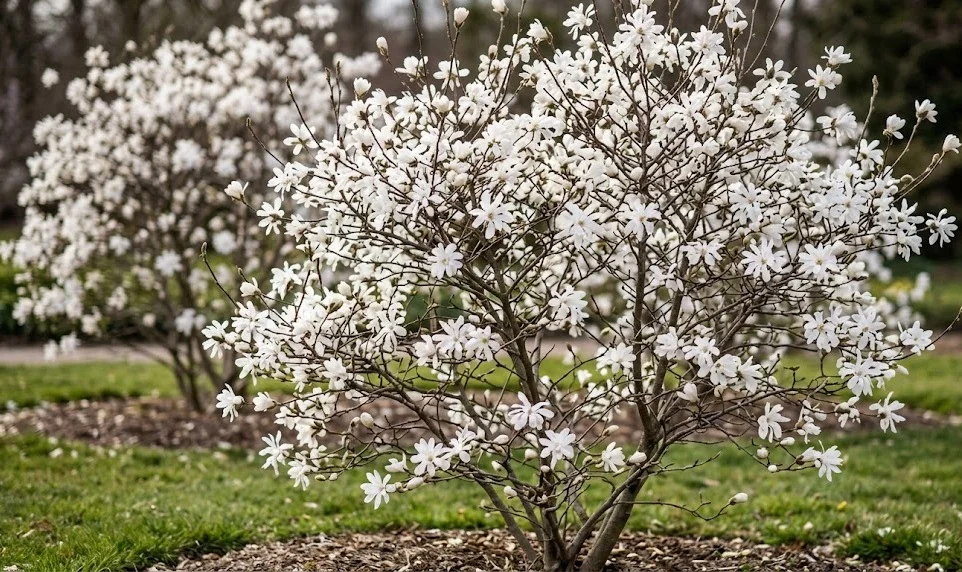

Light has a powerful effect on the shape, flowering, and overall health of star magnolia. This shrub is adaptable, but it performs best when it receives enough sun to form strong flower buds while being protected from harsh exposure. Too much shade can reduce bloom and create loose growth, while intense heat and drying light can stress the foliage. The best position balances brightness, shelter, and soil moisture.
Full sun, partial shade, and flowering quality
In many temperate gardens, star magnolia flowers best in full sun. Direct light supports bud formation and keeps the crown compact. A sunny position also helps shoots ripen properly before winter. This can improve both flowering and general resilience.
Partial shade can also be suitable, especially where summers are hot. Morning sun with light afternoon shade often gives excellent results. This exposure protects leaves from the most intense heat while still providing enough energy for bloom. It can also reduce drought stress when soil moisture is managed well.
Deep shade is not recommended. In low light, star magnolia may produce fewer flowers and longer, weaker shoots. The plant may lean toward available light and lose its balanced form. Over time, poor light can make the shrub less dense and less ornamental.
Light quality changes through the year. A site that is sunny in early spring may become shaded after nearby trees leaf out. This can still work if the magnolia receives strong light before and during its main growth phase. Observing the site across seasons helps prevent planting mistakes.
More articles on this topic
Microclimate and exposure
Light should always be considered together with wind and temperature. An open sunny site may look ideal but can expose flower buds to cold wind. Drying wind increases water loss and can damage petals. A sheltered sunny location is usually better than a harsh exposed one.
East-facing sites can be both useful and risky. They provide morning sun, but rapid thawing after frost may sometimes damage flowers. West-facing sites may be warmer but can bring strong afternoon heat. The best choice depends on local climate, soil moisture, and surrounding structures.
South-facing positions often encourage abundant flowering in cooler regions. In warmer regions, they may become too hot and dry unless soil conditions are excellent. Mulch and irrigation become more important in these situations. Leaf scorch can occur when heat, drought, and reflected light combine.
Nearby walls, paving, and buildings can intensify light and heat. This may be helpful in cold climates but stressful in hot summers. Reflected heat can dry the root zone faster than expected. A planting bed with organic mulch and companion plants can soften these effects.
More articles on this topic
Adjusting care to available light
A star magnolia in full sun usually needs closer attention to watering. The soil dries faster, especially during summer heat. Mulch helps, but it does not replace deep irrigation during drought. A sunny plant can flower beautifully if its roots remain evenly moist.
A plant in partial shade may need less frequent watering but should still be monitored. Shade from large trees can create strong root competition. The magnolia may receive less light and less moisture at the same time. In such cases, irrigation and mulch become essential.
Pruning can sometimes improve light distribution, but it must be done carefully. Removing a few crowded or crossing branches after flowering can open the crown slightly. Heavy pruning should not be used to compensate for a poorly chosen site. If surrounding shrubs create shade, pruning those competitors may be more effective.
Flowering performance should be evaluated over several seasons. A young plant may need time to mature before blooming heavily. If an established shrub consistently produces few flowers, light may be one of the main causes. Improving exposure, reducing competition, and maintaining soil moisture can gradually restore performance.