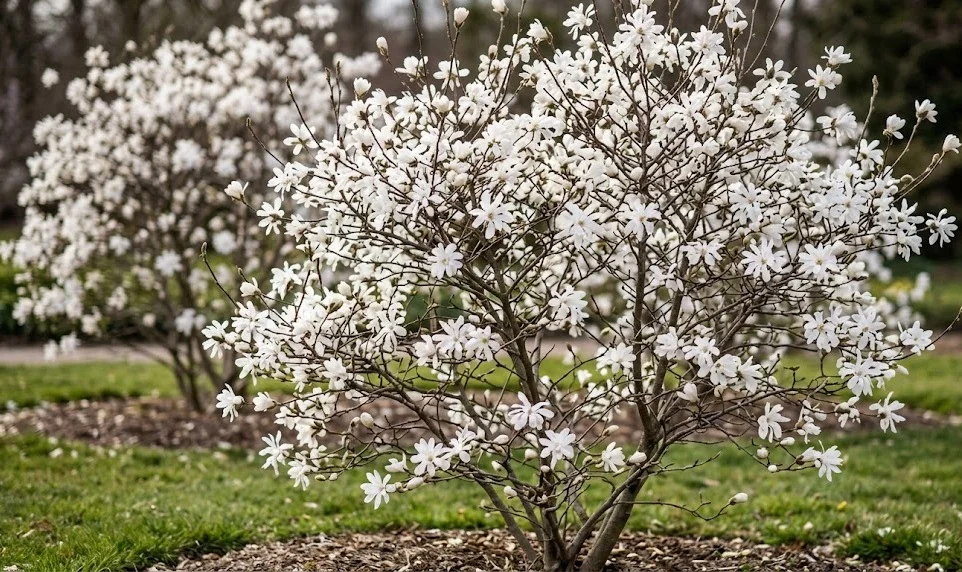

Star magnolia is generally a reliable and resilient ornamental shrub, but it is not completely free from disease and pest problems. Most issues appear when the plant is stressed by poor drainage, drought, compaction, overcrowding, or unsuitable exposure. Early recognition is important because minor symptoms are easier to correct than long-term decline. Good cultural care remains the strongest form of plant protection.
Common leaf and fungal problems
Leaf spots can appear during damp seasons, especially where airflow is poor. They may show as brown, black, or purplish marks on the leaves. In many cases, light spotting is more cosmetic than dangerous. However, repeated severe infections can weaken the plant over time.
Fungal problems are encouraged by wet foliage and dense growth. Overhead watering late in the day can keep leaves damp overnight. Crowded plantings also slow drying after rain. Improving air movement is often more effective than relying on sprays.
Powdery mildew may occasionally appear as a pale, dusty coating on leaves. It is more common in warm, humid conditions and on plants under stress. Although it rarely kills star magnolia, it can reduce leaf function and visual quality. Consistent watering and good spacing help reduce susceptibility.
Fallen infected leaves should be removed when disease has been noticeable. This lowers the amount of disease material that can overwinter near the plant. The cleanup should be combined with better cultural conditions, not treated as a complete solution on its own. Healthy, unstressed shrubs usually tolerate minor leaf disease well.
More articles on this topic
Root and stem disorders
Root problems are among the most serious threats to star magnolia. They are often linked to waterlogged soil, deep planting, or compacted ground. Symptoms may include weak growth, yellowing leaves, sparse flowering, and branch dieback. By the time the canopy shows clear decline, root stress may already be advanced.
Poor drainage deprives roots of oxygen. Roots need air spaces in the soil as much as they need moisture. When soil remains saturated, fine roots die and decay organisms become more active. This is why planting in a permanently wet site is risky.
Stem base problems may occur when mulch is piled against the trunk. Constant moisture against the bark can encourage decay and pest entry. The trunk flare should remain visible and dry. Mulch should form a broad ring rather than a mound.
Once serious root rot is established, recovery can be difficult. Improving drainage, reducing irrigation, and removing excess mulch may help in early cases. Severely affected plants may not recover if the root system is extensively damaged. Prevention through correct planting is far more reliable than treatment after decline begins.
More articles on this topic
Insect pests and their signs
Scale insects can sometimes infest magnolias. They may appear as small bumps on stems or leaves and can produce sticky honeydew. This honeydew may lead to sooty mold, a black surface growth that makes leaves and branches look dirty. Heavy infestations weaken shoots by feeding on plant sap.
Aphids may occur on soft new growth. They also produce honeydew and can cause slight curling or distortion of young leaves. Natural predators often keep aphids under control in a balanced garden. Strong chemical intervention is rarely necessary for minor infestations.
Spider mites may become a problem in hot, dry conditions. Their feeding can cause fine speckling, dull foliage, and sometimes delicate webbing. Plants stressed by drought are more vulnerable. Improving moisture conditions and occasionally washing foliage in the morning can reduce mite pressure.
Caterpillars or leaf-chewing insects may feed on leaves occasionally. Light feeding is usually tolerable and does not require action. Severe defoliation should be investigated to identify the pest accurately. Treatment should be targeted and proportionate rather than automatic.
Prevention through good cultivation
The healthiest star magnolias are usually those planted in the right place and maintained with restraint. Good light, shelter, moisture, and soil structure reduce most disease and pest risks. A stressed plant sends signals through weak growth, poor flowering, and abnormal leaves. Responding early to these signals prevents many problems.
Air circulation is important but should not come at the cost of wind exposure. The goal is a site where foliage can dry after rain without the plant being battered. Selective pruning of neighboring shrubs may help. Heavy pruning of the magnolia itself is rarely the answer.
Balanced watering is a major part of prevention. Drought-stressed plants attract certain pests and recover more slowly from disease. Overwatered plants, on the other hand, may develop root problems. The soil should be moist, open, and biologically active.
Garden hygiene also matters. Diseased leaves, dead twigs, and heavily infested material should be removed responsibly. Tools should be cleaned after cutting diseased branches. These simple practices reduce the spread of problems without disturbing the plant unnecessarily.
Managing problems responsibly
Before treating any pest or disease, accurate identification is essential. Similar symptoms can have different causes, and the wrong response may harm the plant further. Yellow leaves, for example, may result from drought, poor drainage, nutrient imbalance, or root injury. Observation should come before intervention.
Mechanical and cultural controls should be used first whenever possible. Pruning out a dead twig, washing off aphids, improving mulch, or adjusting irrigation can solve many problems. These measures are gentle and support the plant’s long-term health. They also protect beneficial insects in the garden.
If a plant protection product is needed, it should be chosen carefully and used according to the label. Broad-spectrum treatments can kill natural predators and create recurring pest problems. Timing is also important, especially for pests like scale insects. Treating at the wrong stage may have little effect.
A recovering star magnolia needs patience. Damaged leaves may not improve, but new growth can show whether conditions are better. Flowering may take a season or two to return fully after stress. With thoughtful care, many affected plants regain strength and continue as valuable garden specimens.