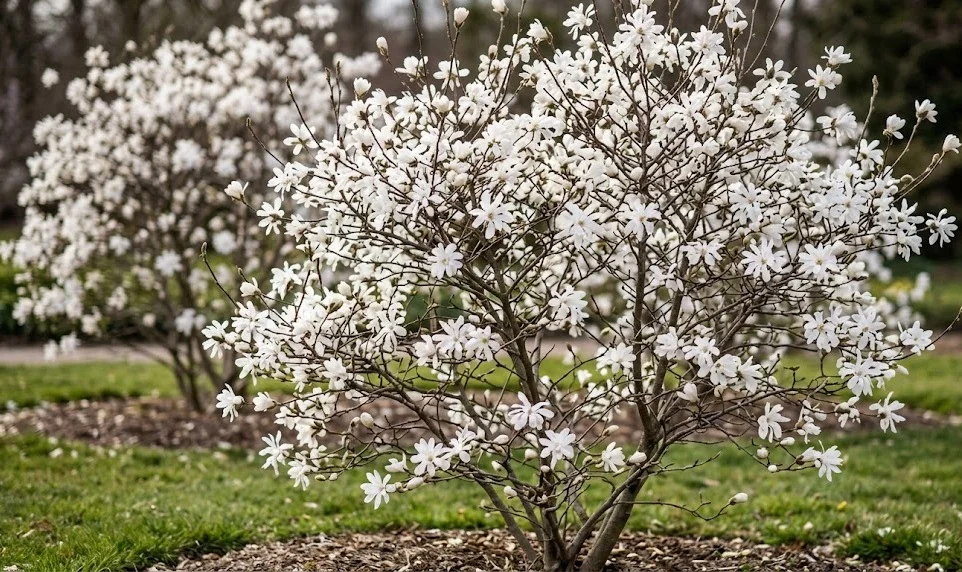

Star magnolia is one of the most refined spring-flowering shrubs for temperate gardens, valued for its early bloom, elegant branching, and compact habit. Its white or softly pink, star-shaped flowers open before the leaves, often turning even a modest garden corner into a seasonal focal point. Good care begins with understanding that this plant dislikes extremes, especially compacted soil, drought stress, harsh pruning, and exposed windy sites. When its basic needs are met, star magnolia can live for many decades and become more beautiful with age.
Choosing the right place for healthy growth
Star magnolia performs best in a sheltered position where it receives generous light without being exposed to severe drying winds. A site with morning sun and some protection from the strongest afternoon heat is often ideal, especially in warmer regions. In cooler climates, full sun encourages abundant flowering and compact growth. The key is to avoid frost pockets, because late winter and early spring temperature swings can damage flower buds.
The planting site should allow enough space for the shrub to spread naturally. Although star magnolia is not a large tree, it develops a broad, graceful crown over time. Crowding it between walls, fences, or vigorous neighboring shrubs usually leads to poor air circulation and awkward growth. A mature specimen needs room around it so its naturally layered form can be appreciated.
Soil conditions matter as much as light exposure. Star magnolia prefers loose, humus-rich, moderately moist soil with good drainage. Heavy clay can be improved with compost and leaf mold, but waterlogged ground should be avoided. If roots remain saturated for long periods, the plant becomes vulnerable to decline and root-related diseases.
A sheltered courtyard, mixed shrub border, front garden, or lawn edge can all suit star magnolia well. It looks particularly effective near paths, terraces, or entrances where its early flowers can be enjoyed close up. However, it should not be planted where snow, road salt, or compacted foot traffic will disturb the root zone. The best location is one where the plant can grow slowly, steadily, and without repeated disturbance.
More articles on this topic
Soil preparation and root-zone care
Before planting or improving the area around an established star magnolia, the soil should be prepared deeply but gently. The roots are relatively shallow and sensitive, so aggressive digging near existing plants should be avoided. In a new planting area, loosen the soil over a wide zone rather than only in a narrow planting hole. This encourages young roots to move outward into the surrounding ground.
Organic matter is one of the most valuable additions for star magnolia. Mature compost, well-rotted leaf mold, and fine bark humus improve soil structure and moisture retention. These materials also support beneficial soil life, which helps roots function efficiently. Fresh manure or overly strong amendments should be avoided because they may burn delicate roots.
Mulching is especially useful for this species. A layer of bark mulch, shredded leaves, or composted wood fiber helps keep the soil evenly moist and cool. The mulch should be spread broadly but kept a few centimeters away from the trunk. Piling mulch directly against the stem can trap moisture and encourage bark problems.
The root zone should be protected from compaction. Repeated walking, mowing too close, or storing materials under the canopy can reduce oxygen in the soil. Star magnolia roots need air as well as water, and compacted soil can quietly weaken the plant over several seasons. A mulched planting circle is often better than grass growing right up to the trunk.
More articles on this topic
Watering through the seasons
Young star magnolias need consistent moisture while they establish. During the first two or three growing seasons, watering should be deep enough to moisten the root zone rather than only the surface. Frequent light watering encourages shallow rooting and makes the plant more vulnerable to drought. A slow soak once or twice a week in dry weather is usually more effective.
Established plants are more resilient but still appreciate irrigation during prolonged dry spells. Star magnolia is not a drought-loving shrub, and water stress can reduce next year’s flower bud formation. Leaves may curl, droop, or scorch at the edges when the soil becomes too dry. These symptoms are often more noticeable during hot, windy weather.
Watering should be adjusted according to soil texture. Sandy soil dries quickly and may require more frequent attention. Clay soil holds moisture longer but can become poorly aerated if overwatered. The safest approach is to check the soil below the mulch and water only when the upper root zone begins to dry.
Autumn moisture is also important. Flower buds for the following spring develop before winter, so drought in late summer and autumn can affect the next display. A thorough watering before the ground freezes can help plants enter winter in better condition. This is especially valuable for young shrubs or plants growing in exposed sites.
Feeding and nutrient balance
Star magnolia does not need heavy fertilization. In fact, excessive feeding can produce soft growth that is more vulnerable to frost and pests. A moderate annual application of compost is usually enough in fertile garden soil. The goal is steady growth, not rapid extension.
If fertilizer is needed, a balanced slow-release product for ornamental shrubs can be applied in early spring. It should be used according to label directions and spread over the root zone rather than concentrated near the trunk. Overdosing can damage roots and disrupt the natural growth rhythm. A light hand is usually safer than an ambitious feeding program.
Soil pH influences nutrient availability. Star magnolia generally prefers slightly acidic to neutral soil, though it can tolerate mildly alkaline conditions if the soil is rich and well structured. In very alkaline soil, leaves may show chlorosis, appearing pale with darker green veins. Adding organic matter and avoiding lime can help maintain a more favorable root environment.
Nutrient problems are often caused by water stress or soil compaction rather than true deficiency. Before applying more fertilizer, it is worth checking drainage, mulch depth, irrigation habits, and root competition. A weak-looking plant may not be hungry; it may be struggling to breathe or absorb water. Good soil management usually solves more problems than fertilizer alone.
Protecting flower buds and young shoots
The main ornamental value of star magnolia lies in its early flowers, but this early bloom also makes it vulnerable to late frost. Flower buds may begin swelling when the weather is still unstable. A sudden freeze can brown the petals before they fully open. This is one reason why site selection is so important.
Plants placed in an east-facing position may warm quickly at sunrise after a cold night. Rapid thawing can sometimes worsen frost injury on open flowers. A site with gentle morning light and some wind protection often reduces stress. In exposed gardens, planting near a hedge or building can create a slightly kinder microclimate.
Young shoots may also suffer from late cold spells. Damaged tips can be trimmed lightly after the risk of frost has passed. It is better not to rush pruning immediately after a cold night because some tissues may recover. Waiting allows the real extent of injury to become clear.
For small young plants, temporary frost protection can be useful during critical nights. Breathable fleece placed loosely over the shrub can reduce damage to buds and flowers. Plastic sheeting should not touch the plant directly and is generally less suitable because it traps moisture. Any cover should be removed during the day to prevent overheating and poor air circulation.
Pruning and shaping with restraint
Star magnolia naturally forms an attractive rounded or spreading shape. Heavy pruning is rarely needed and often spoils the plant’s character. The best pruning approach is selective, light, and occasional. Removing dead, crossing, damaged, or badly placed branches is usually enough.
The best time to prune is shortly after flowering. At this stage, the plant has finished its spring display but still has the growing season ahead to recover. Pruning later in summer or autumn can remove flower buds for the following year. Winter pruning is also undesirable because it sacrifices bloom and exposes cuts to harsh conditions.
Cuts should be clean and made just above a suitable branch junction. Stubs should not be left, because they die back and can invite decay. Large branches should only be removed when truly necessary. Star magnolia does not respond well to drastic renovation pruning.
A young plant can be guided gently in its first years. Competing leaders, weak inner shoots, or awkwardly crossing stems may be corrected early. This is much easier than trying to reshape a mature shrub later. The aim is not to force a rigid form but to support a strong, graceful framework.
Long-term care and seasonal observation
Long-term success with star magnolia depends on steady observation. Changes in leaf color, flowering intensity, shoot growth, and bark condition can reveal early signs of stress. A healthy plant produces firm buds in late summer and holds a balanced canopy through the season. Weak growth should prompt a review of soil moisture, drainage, light, and root competition.
Weed control around the base is important but should be done gently. Deep hoeing can damage shallow roots, so hand weeding or mulching is safer. Grass competition can be surprisingly strong, especially around young shrubs. Keeping the root zone open and mulched reduces stress significantly.
Seasonal cleanup also helps maintain plant health. Fallen leaves can be removed if disease has been present, while healthy leaf litter may be composted separately or left in informal garden areas. Good airflow around the shrub lowers the risk of foliar disease. Dense neighboring plants should be managed so they do not crowd the magnolia.
A well-cared-for star magnolia becomes more valuable with time. Its slow growth, early flowers, and sculptural winter outline make it a dependable garden feature. It asks for patience rather than constant intervention. With suitable soil, moisture, shelter, and restrained pruning, it rewards the gardener with one of spring’s most memorable displays.