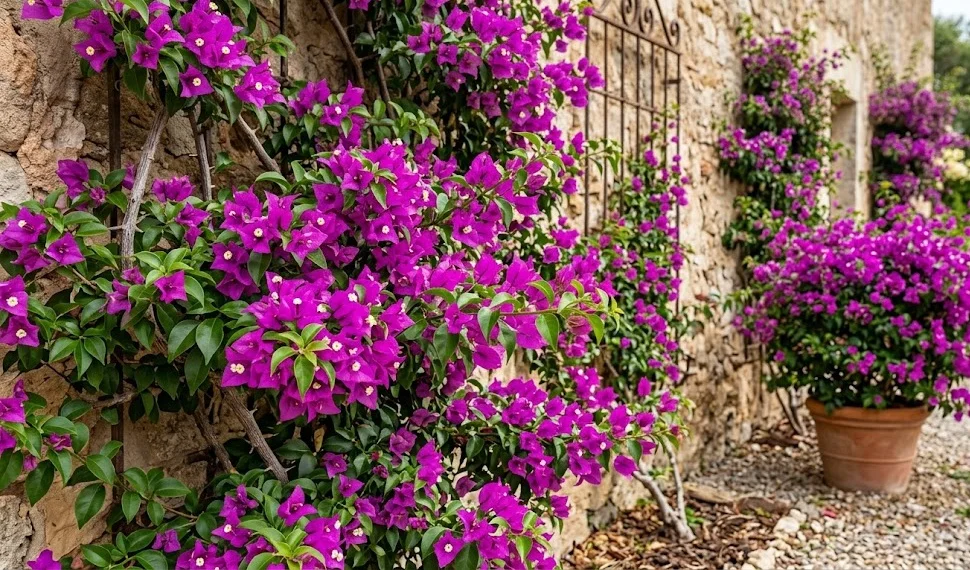

Maintaining the health of a bougainvillea requires constant vigilance against a variety of fungal pathogens that thrive in warm, humid microclimates. Fungal leaf spot diseases, primarily caused by species like Cercospora and Alternaria, are common issues that tarnish the beauty of the foliage. These infections start as tiny, dark brown or black spots on the older, lower leaves where airflow is often restricted. If left unchecked, the spots expand rapidly, develop a yellowish halo, and cause the infected leaves to drop prematurely.
Fungal Leaf Spot Progression:
[Tiny dark spot on lower leaf] │ ▼
[Spot expands with yellow halo] │ ▼
[Premature leaf drop & bare stems]
The primary driver behind fungal outbreaks is overhead irrigation that keeps the foliage wet for extended periods, especially during humid evenings. Water droplets acting on the leaf surface provide the perfect environment for fungal spores to germinate and penetrate the plant tissue. Switching to drip irrigation or directing water exclusively to the soil line is an effective preventive strategy. Ensuring that the plant receives maximum daily sunlight also helps dry the leaves quickly after natural morning dew or rainfall.
Pruning away the dense, cluttered interior branches significantly improves structural airflow, reducing the ambient humidity within the canopy. Sanitizing your cutting tools with rubbing alcohol between every single cut prevents the accidental transfer of spores to clean branches. Gather all dropped, infected leaves from the soil surface immediately and destroy them rather than composting them. This cleanup removes the primary source of winter spores, breaking the infection cycle for the following spring season.
For severe infestations where cultural practices alone cannot halt the spread, organic copper-based fungicides offer a reliable solution. Apply the fungicide thoroughly to both the upper and lower surfaces of the leaves at the first sign of spot development. Repeating the application every ten to fourteen days during exceptionally rainy spells keeps the new growth protected from floating spores. This proactive, integrated pest management strategy keeps the foliage pristine and preserves the plant’s overall photosynthetic efficiency.
Combating bacterial and root rot conditions
Bacterial blight, caused by the pathogen Pseudomonas, is a more aggressive condition that can cause rapid decline in susceptible varieties. It manifests as water-soaked, dark lesions on the leaves and tender young stems, often accompanied by wilting shoots. Unlike fungal spots, bacterial infections can cause the stems to turn black, shrivel, and exude a sticky bacterial slime during highly humid periods. There are no highly effective chemical cures for bacterial blight, making strict sanitation and the immediate removal of infected wood absolutely paramount.
More articles on this topic
Root rot, brought on by destructive soil-borne water molds like Phytophthora and Pythium, is a direct consequence of prolonged soil saturation. Because these pathogens attack beneath the surface, the initial symptoms above ground are often mistaken for underwatering or nutrient deficiency. The plant will look wilted and lose its vibrant color, and leaves will turn pale yellow despite the soil being completely wet to the touch. Excavating a portion of the root ball will reveal slimy, foul-smelling, brown or black roots instead of healthy, firm, white ones.
Saving a specimen suffering from advanced root rot requires immediate emergency intervention and a complete overhaul of the growing environment. Remove the plant from the saturated soil and carefully wash away the contaminated medium to inspect the extent of the damage. Prune back all decayed, mushy root sections using sterilized shears, and treat the remaining healthy roots with a systemic fungicide. Replant the specimen into fresh, highly porous potting mix and cut back the upper foliage significantly to reduce stress on the diminished root system.
Preventing these subterranean disasters relies entirely on proactive soil management and disciplined irrigation practices. Always choose containers with excellent drainage capabilities and use a potting medium rich in coarse sand or perlite. Avoid using heavy garden soils that compact over time and trap stagnant water around the delicate root architecture. Allowing the soil to dry out thoroughly between watering sessions naturally suppresses the development of water-mold populations, keeping the root system safe.
Controlling common sap-sucking insect pests
Aphids and mealybugs are the most frequent sap-sucking intruders that target the tender, nutrient-rich new growth of these vines. Aphids are small, soft-bodied insects that cluster on the undersides of leaves and around developing flower buds, draining the plant’s vital fluids. Their feeding causes the new leaves to curl, distort, and become stunted, which can ruin an upcoming bloom cycle. They also excrete a sweet, sticky fluid called honeydew, which serves as a breeding ground for unsightly black sooty mold.
More articles on this topic
Mealybugs look like tiny, slow-moving cotton balls nestled in the junctions of stems and along the protective veins of the leaves. They spin a white, waxy coating around themselves that protects them from drying out and shields them from many contact insecticides. A minor infestation can be managed effectively by dabbing individual bugs with a cotton swab dipped in rubbing alcohol. For larger populations, spraying the plant with a strong stream of water can physically dislodge the pests without damaging the sturdy wood.
Scale insects are another insidious threat, appearing as flat, immobile, brown bumps attached firmly to the woody branches and leaf stems. They blend in perfectly with the natural bark texture, allowing them to build up massive colonies before being noticed by the grower. Scale insects feed on the internal vascular system, gradually weakening the branch until it experiences total dieback. Horticultural oils applied during the dormant season are highly effective at smothering these armored pests without leaving toxic residues.
Whiteflies are tiny, moth-like insects that flutter up in a cloud from the undersides of the leaves whenever the vine is disturbed. Both the adults and their microscopic nymphs suck sap continuously, causing the foliage to become speckled, yellow, and drop prematurely. Utilizing yellow sticky traps placed around the canopy helps monitor fly activity and catch breeding adults early. Introducing beneficial predatory insects like ladybugs and lacewings into your garden provides natural, long-term biological control over these pest populations.
Managing leaf-eating caterpillars and spider mites
Caterpillars, particularly the larvae of various moths, can cause rapid, severe defoliation if they go unnoticed for even a few days. They chew large, ragged holes in the leaves and can consume entire tender young shoots during their nights of active feeding. Hand-picking these pests off the branches during early morning inspections is the safest and most direct management method. For widespread caterpillar issues, applying a biological insecticide containing Bacillus thuringiensis targets the larvae specifically without harming beneficial pollinators.
Spider mites are microscopic arachnids that thrive in hot, dry, dusty environments, making them a common summer headache for growers. They feed by puncturing individual plant cells, creating a fine, silvery stippling pattern across the upper surface of the leaves. As the infestation advances, they spin delicate, intricate webs between the stems and leaves to protect their expanding colonies. Severe mite damage causes the foliage to take on a bronzed appearance before drying up and dropping off completely.
Signs of Spider Mite Infestation:
1. Fine, silvery stippling spots on leaves
2. Bronzed or dusty foliage appearance
3. Microscopic webs between stems and leaf joints
Combating spider mites requires altering the dry microclimate that allows them to multiply so rapidly. Regularly misting the foliage with clean water and washing down dusty pathways around the plant disrupts their nesting habits significantly. Insecticidal soaps or neem oil sprays applied thoroughly to the undersides of the leaves work well to knock down active mite populations. Ensure you apply these treatments during the cool evening hours to prevent the sun from burning the treated leaf tissues.
Leaf miners are another specialized pest whose larvae burrow directly between the upper and lower layers of the leaf tissue. They leave winding, serpentine white trails inside the leaf as they feed, which ruins the aesthetic value of the foliage. While leaf miner damage is rarely fatal, a heavy infestation can reduce the overall photosynthetic capacity of the vine. Simply plucking off and destroying individual leaves that show these characteristic trails is usually enough to keep populations under control.
Designing an integrated pest management strategy
An effective pest and disease strategy relies on a combination of cultural, biological, and target chemical interventions. Relying solely on heavy chemical sprays can backfire by wiping out beneficial predatory insects, leading to even larger pest resurgences. Maintaining excellent garden sanitation by clearing debris, sanitizing tools, and inspecting new plants before introduction forms your first line of defense. A healthy, properly fertilized, and correctly watered vine is naturally resilient and can easily withstand minor pest pressures.
Regular, close inspections of the plant’s growing tips, leaf undersides, and structural joints allow you to catch problems at their inception. Catching a handful of aphids early is vastly easier to resolve than treating a massive infestation that has taken over the entire canopy. Train your eye to look for subtle changes in leaf color, unusual sticky textures, or the presence of ants, which often farm sap-sucking pests. Early intervention saves time, reduces plant stress, and minimizes the need for aggressive chemical treatments.
When chemical intervention becomes necessary, always start with the mildest, most eco-friendly options available, such as insecticidal soaps, neem oil, or horticultural oils. These products break down quickly in the environment and carry minimal risk of causing chemical burns to the plant or harming non-target wildlife. Read and follow all manufacturer labels precisely, paying close attention to recommended application temperatures and safety gear requirements. Consistency in application timing is key to breaking the reproductive cycles of persistent pests.
By fostering a diverse, balanced ecosystem in your garden, you encourage nature to do much of the heavy lifting for you. Birds, lizards, and predatory insects will naturally migrate to your plants to feast on aphids, mealybugs, and caterpillars. Providing a clean water source and avoiding broad-spectrum toxins helps sustain these natural allies year-round. This professional, holistic approach ensures your tropical climbers remain vibrant, healthy, and beautifully productive for decades to come.