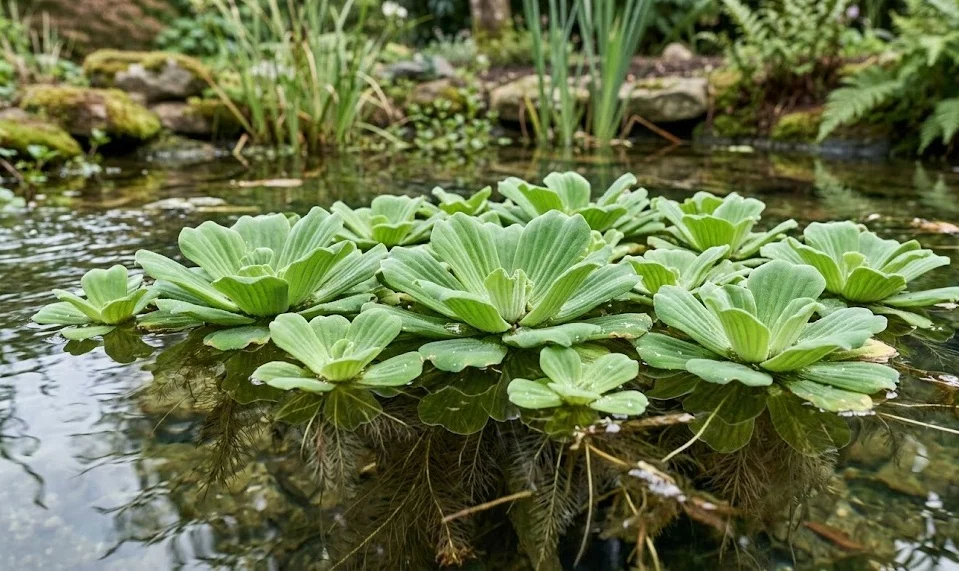

Water lettuce cannot tolerate frost and usually declines when water and air temperatures remain low. In cold climates, outdoor colonies must either be replaced each spring or moved indoors before autumn conditions become damaging. Successful overwintering requires warmth, bright light, clean water, and enough air circulation to keep the leaves dry. The aim is not necessarily rapid growth, but the preservation of several healthy rosettes until outdoor conditions become suitable again.
Timing is critical because chilled plants are difficult to restore. Selected specimens should be brought indoors before night temperatures fall sharply. Compact rosettes with firm crowns and healthy roots are the best candidates. Weak, damaged, or pest-infested plants rarely improve during winter.
Only a small number of plants is usually needed. Water lettuce can multiply quickly once returned to warm summer conditions. Keeping an entire outdoor colony indoors creates unnecessary crowding and maintenance. Selecting a few vigorous specimens reduces the risk of disease.
Indoor overwintering also provides an opportunity to quarantine the plants. They should be inspected closely for aphids, snails, eggs, and decaying leaves. Damaged tissue can be removed before the plants enter the main growing area. A separate container is preferable to immediate placement in an established aquarium.
Preparing plants for indoor conditions
Lift each rosette gently so the roots are not torn. Rinse away loose debris with clean, temperature-matched water. Avoid spraying the upper leaf surfaces or filling the crown. The plant should remain upright throughout the process.
More articles on this topic
Long roots may be shortened moderately if they are difficult to manage. Severe root trimming should be avoided because winter conditions already reduce recovery speed. Dead or slimy sections can be removed completely. Healthy roots should remain abundant enough to support nutrient uptake.
Choose a clean, wide container with sufficient surface area. A shallow aquarium, plastic tub, or indoor water garden can work well. The water should be deep enough to remain stable but not so deep that maintenance becomes difficult. A lid is unnecessary unless it is well ventilated and does not drip condensation.
The indoor water should be similar in temperature and chemistry to the outdoor source. Sudden transfer from cold pond water into very warm tap water may cause shock. Gradual adjustment over several hours is safer. Treated or conditioned water should be used where chlorine or chloramine is present.
Providing winter light and warmth
Bright light is essential because weak winter illumination causes small, pale, elongated growth. A sunny window may be sufficient in some locations, but short days often require supplemental lighting. Artificial lights should provide even coverage without overheating the leaves. The distance should be adjusted according to plant response.
More articles on this topic
Water lettuce should not be pressed directly against cold window glass. Night-time temperatures near a window can fall much lower than the rest of the room. A sudden chill may damage the crown even when daytime sunlight is strong. Moving the container slightly inward can create a more stable environment.
Warm water encourages root activity and helps the plant maintain healthy foliage. The surrounding air should also remain reasonably warm. Large differences between water and air temperature may promote condensation and stress. Consistency is more important than maintaining an unusually high temperature.
Humidity should be moderate rather than excessive. Very dry air can brown leaf edges, but saturated air encourages fungal and bacterial decay. Gentle room ventilation is beneficial as long as it does not create a cold draft. Leaves should never remain continuously wet.
Winter water and nutrient care
Indoor containers require regular water checks because evaporation concentrates dissolved minerals. Small amounts of treated, temperature-matched water can be added as needed. Occasional partial water changes prevent the gradual accumulation of salts and organic waste. Complete replacement should be avoided unless contamination occurs.
Nutrient demand is lower when growth slows. Heavy fertilisation encourages algae and weak, soft leaves. A small amount of aquatic plant fertiliser may be used only when clear deficiency symptoms appear. Healthy green plants do not need routine feeding simply because they are indoors.
Dead leaves and detached roots should be removed promptly. Decomposition occurs quickly in warm indoor water and may reduce oxygen levels. Clean maintenance also discourages fungus gnats and unpleasant odours. The container should be inspected at least once each week.
Gentle aeration may help water quality, but bubbles and splashes must not wet the rosettes. An air stone can be positioned away from the plants. Strong filter outlets are unsuitable. Calm surface conditions remain a priority throughout winter.
Returning plants outdoors in spring
Water lettuce should not be returned outdoors immediately after the first mild day. Night temperatures and pond water must be reliably warm. A late cold spell can destroy plants that survived the entire winter indoors. Waiting for stable conditions is safer than rushing the transition.
The plants also need gradual exposure to stronger sunlight. Indoor-grown leaves are often tender and can scorch quickly. Begin with bright shade or gentle morning sun. Increase exposure over one or two weeks while monitoring the newest leaves.
Water chemistry may differ between the indoor container and the pond. Floating the plants in a separate bowl of mixed water can ease the transition. The roots should remain submerged while the water is gradually exchanged. This acclimatisation reduces shock.
Once established outdoors, growth may accelerate rapidly. New daughter plants can appear within a short period under warm conditions. Winter-damaged leaves can be removed as fresh growth develops. The indoor container should be cleaned and dried before storage.