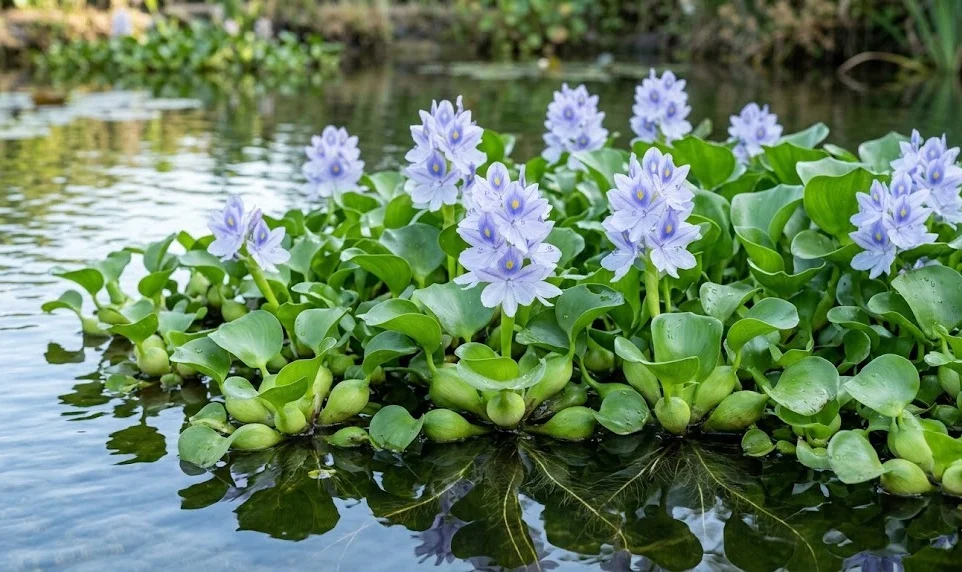

Pruning water hyacinth is less about shaping the plant and more about controlling growth, removing declining tissue, and protecting water quality. The plant does not need formal pruning like a shrub, but it benefits greatly from regular thinning and cleanup. Because it multiplies rapidly through daughter rosettes, cutting back usually means reducing plant numbers rather than trimming individual leaves heavily. Done well, this routine keeps the display fresh, the pond balanced, and the plant safely contained.
Why water hyacinth needs regular thinning
Water hyacinth can cover a pond surface quickly in warm, nutrient-rich conditions. This rapid spread is one of its most attractive qualities in a new water garden. It is also the reason maintenance cannot be ignored. Without thinning, the plant can form dense mats that interfere with pond health.
Dense coverage reduces light penetration into the water. Submerged plants may weaken when they receive too little light. Oxygen exchange at the water surface can also decline, especially in hot weather. Fish and beneficial aquatic organisms may suffer if the surface remains completely covered.
Thinning improves the appearance of the planting. Individual rosettes develop better form when they are not compressed by neighboring plants. Leaves remain more visible, and flowering spikes are easier to appreciate. A controlled group of healthy plants looks more intentional than a tangled mass.
Regular removal is better than drastic correction. Taking out small amounts frequently prevents sudden changes in shade, nutrient uptake, and pond structure. It also makes disposal easier because removed material is lighter and fresher. A simple weekly check during summer can prevent most overgrowth problems.
More articles on this topic
Removing old leaves, flowers, and damaged growth
Old leaves should be removed when they turn yellow, brown, torn, or soft. These leaves no longer contribute much to the plant and can decay quickly in water. Removing them before they sink helps maintain better water quality. Clean plants are also easier to inspect for pests and root problems.
Spent flower spikes can be trimmed after they fade. Flowering is usually brief, and the old stalks may bend or collapse into the water. Removing faded blooms keeps the planting tidy. It also reduces decaying organic matter in small containers.
Damaged crowns require closer attention. If only the outer leaves are injured, the plant may recover through new central growth. If the crown itself becomes soft or rotten, the entire rosette should be removed. Keeping a decaying crown in the pond can pollute the water and encourage further problems.
Use clean hands or simple cutting tools for maintenance. Water hyacinth tissue is soft, so most trimming is easy. Tools should be rinsed after use, especially if plants show rot or pest problems. Clean handling reduces the chance of spreading decay between specimens.
More articles on this topic
Safe disposal and containment after cutting back
Removed water hyacinth should be handled responsibly. It must never be dumped into natural waterways, drainage channels, wetlands, or roadside ditches. Even fragments can be a concern in climates where the plant survives outdoors. Safe disposal is part of proper pruning.
Composting may be acceptable in some regions if plant material cannot escape. The material should be placed where rainwater will not wash it into a drain or stream. Drying removed plants thoroughly before composting adds another layer of safety. Local rules should always be respected where the plant is regulated.
In ornamental ponds, pruning should be paired with containment. Floating barriers, pond sections, and container culture make growth easier to manage. After cutting back, check that remaining plants cannot drift into overflow areas. Storms can move floating plants surprisingly quickly.
The best cutting-back routine is simple, consistent, and cautious. Remove yellowing tissue, thin excess rosettes, and dispose of all material safely. Keep enough plants for beauty and shade, but never allow total surface coverage to persist. With regular maintenance, water hyacinth remains an impressive aquatic ornamental rather than a pond-management problem.