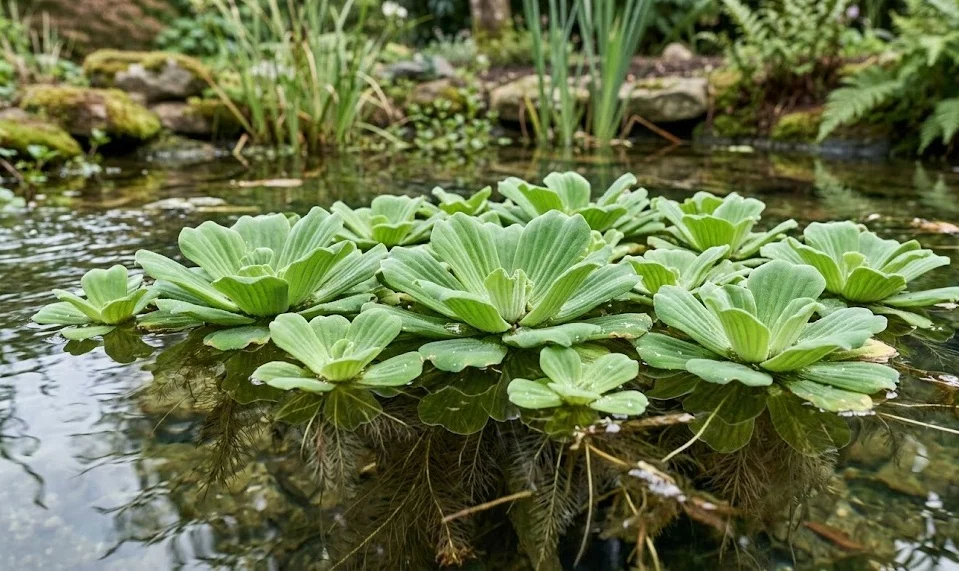

Water lettuce needs bright light to maintain compact rosettes, strong roots, and healthy green foliage. Insufficient light produces weak growth, while sudden exposure to intense sun can bleach or scorch leaves that were previously shaded. The ideal position usually combines several hours of good light with protection from extreme afternoon heat. Light management should always be considered together with water temperature, nutrient supply, and air circulation.
Outdoor plants often perform well in morning sun and light afternoon shade. Morning light supports photosynthesis without producing the highest daily temperatures. Shade during the hottest part of the day can reduce heat stress in small containers. Larger ponds usually buffer temperature changes more effectively.
Full sun may be suitable where summers are moderate and the plants have been acclimatised gradually. In very hot climates, uninterrupted midday exposure can overheat both leaves and water. Pale patches, curled margins, or stalled growth may follow. Partial shade is especially useful for newly purchased or recently overwintered plants.
Dense shade is equally unsuitable. The rosettes may remain small, flatten excessively, or become pale. Roots may shorten and daughter-plant production may slow. Moving the plants to brighter conditions should be done gradually to avoid scorch.
Managing light in ponds and containers
Pond position determines how sunlight changes through the day. Nearby trees, walls, fences, and buildings may provide useful seasonal shade. Their effect should be observed during both spring and midsummer. A location that is bright in April may become deeply shaded after trees develop full foliage.
More articles on this topic
Floating plants shade the water beneath them as they multiply. This can help limit algae and provide shelter for fish, but excessive coverage reduces light for submerged vegetation. Open water should remain between colonies. Regular thinning allows light to reach different levels of the pond.
Container water gardens heat more quickly than in-ground ponds. Bright sun on a small dark vessel may raise water temperature sharply within hours. The container can be moved, shaded, or surrounded with insulating material. A larger volume of water also provides greater temperature stability.
Leaves should not be positioned where reflected light creates intense local heating. Pale walls, glass surfaces, and metal structures can increase exposure. Wind may also push plants repeatedly into the hottest part of the container. Floating rings help maintain a more suitable position.
Providing artificial light indoors
Indoor water lettuce usually needs a bright window or a suitable grow light. Ordinary room lighting is rarely strong enough for compact growth. Plants under inadequate light often produce soft, open rosettes and gradually lose their lower leaves. Supplemental lighting becomes especially important during short winter days.
More articles on this topic
The light source should cover the entire growing area evenly. Plants crowded at the edge of the illuminated zone may lean or develop unevenly. Reflective surfaces can improve distribution without increasing power. The fixture should remain safely separated from water.
Lights placed too close may bleach the upper leaves or create excessive heat. Those positioned too far away provide little useful intensity. The correct distance depends on the type and output of the lamp. Plant response should guide small adjustments over time.
A consistent daily light period supports stable growth. Extremely long illumination does not compensate for weak intensity and may encourage algae. Plants also benefit from a regular dark period. A timer simplifies the routine and prevents irregular exposure.
Reading the plant’s light response
Healthy plants in suitable light develop firm leaves and a balanced rosette shape. New growth should remain green without becoming excessively vertical or widely stretched. Roots should continue extending beneath the plant. Daughter rosettes often appear once light, warmth, and nutrition are all adequate.
Sun scorch produces dry pale or brown areas on the most exposed surfaces. These marks do not spread like an infection unless additional tissue is damaged. Moving the plants to gentler light prevents new injury. Existing scars can be removed when the affected leaves decline.
Low-light stress develops more gradually. The plant becomes smaller, paler, and less productive over time. Outer leaves may yellow because the rosette cannot support them. Increasing light carefully usually improves the next generation of leaves.
Light problems should not be diagnosed in isolation. Nutrient deficiency, cold water, and root damage can produce similar symptoms. The recent growing history provides essential context. Healthy new leaves after an adjustment confirm that the correction is working.