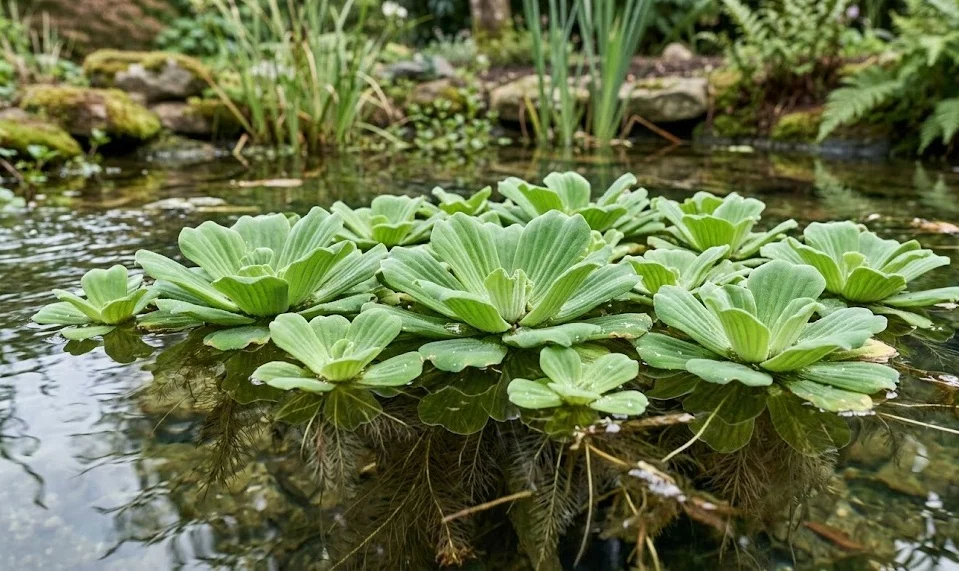

Water lettuce does not need shaping in the same way as shrubs or herbaceous garden plants, but regular trimming keeps colonies healthy and manageable. Pruning mainly involves removing damaged leaves, shortening excessively long roots, separating daughter plants, and reducing overcrowding. Every cut should protect the central crown because this is the point from which new leaves develop. Clean tools and gentle handling minimise stress and reduce the risk of decay.
Old outer leaves naturally yellow as the rosette renews itself. These leaves can be removed once they soften or lose most of their green colour. Leaving them in the water allows organic matter to decompose around the roots. Early removal supports cleaner water and a tidier appearance.
Damaged leaves should be assessed before cutting. A small dry mark does not necessarily justify removing an otherwise functional leaf. Soft, rotting, or heavily torn tissue should be removed promptly. The cut should be made near the base without slicing into the crown.
Scissors should be sharp and clean. Crushed tissue heals poorly and is more likely to decay. Tools used on diseased plants should be disinfected before they touch healthy specimens. The rosette should be supported gently while each cut is made.
Trimming roots and runners
Long roots are natural and do not need trimming in most ponds. They provide a large surface area for nutrient absorption and shelter small aquatic organisms. Root pruning is mainly useful in aquariums, nursery tubs, or systems where roots interfere with equipment. Cosmetic trimming alone is rarely necessary.
More articles on this topic
When shortening roots, remove only part of the total length. Cutting the entire root system close to the crown can severely weaken the plant. Dead, slimy, or broken roots may be removed more thoroughly. Healthy root tissue should be preserved whenever possible.
Runners connecting parent and daughter plants can be cut once the young rosette has several leaves and its own roots. The cut should be made between the plants with minimal disturbance. Early separation may leave the daughter too weak to establish. Mature offspring usually recover quickly.
Runner pruning can also slow the spread of a colony. Removing young plants before they fill open water reduces later thinning work. Strong daughter rosettes may be retained as replacements. Surplus material must be disposed of responsibly.
Thinning dense colonies
Thinning is the most important form of pruning for water lettuce. Dense surface mats block light, trap debris, and restrict gas exchange. They also force individual rosettes into distorted upright shapes. Removing entire plants is more effective than repeatedly cutting leaves from crowded specimens.
More articles on this topic
Select the healthiest, best-spaced rosettes to remain. Plants with soft crowns, severe pest damage, or poor shape should be removed first. Enough open water should remain for light and air exchange. The correct density depends on the size of the pond and the needs of other aquatic life.
Lift unwanted plants slowly so their roots do not entangle or tear neighbouring specimens. Allow pond water to drain back into the system. Inspect the removed plants for pests before deciding whether to retain them elsewhere. Unwanted material should never be placed in natural waterways.
Thinning should be repeated throughout warm weather. Small, frequent adjustments are easier than clearing a fully covered pond. Regular control also protects pumps, skimmers, and filter intakes. A floating barrier can help confine the colony to one section.
Aftercare following pruning
Freshly trimmed plants should be returned to calm water. Strong currents can pull at shortened roots and damaged runners. The upper leaves should remain dry during recovery. Stable warmth supports faster regrowth.
Heavy fertilisation immediately after pruning is unnecessary. A plant with reduced foliage and roots cannot use a sudden nutrient increase efficiently. Normal balanced water is usually sufficient. Feeding can be adjusted later if new growth appears pale.
The plants should be checked after several days. A firm crown and emerging central leaves indicate successful recovery. Softness or spreading brown tissue suggests that damage or rot is continuing. Affected rosettes should be isolated or removed.
Pruning is most effective when combined with good general care. Suitable light, stable water, moderate nutrition, and regular thinning reduce the amount of corrective cutting required. Healthy water lettuce naturally replaces older foliage and produces new plants. Careful trimming simply guides that growth and keeps the aquatic environment balanced.