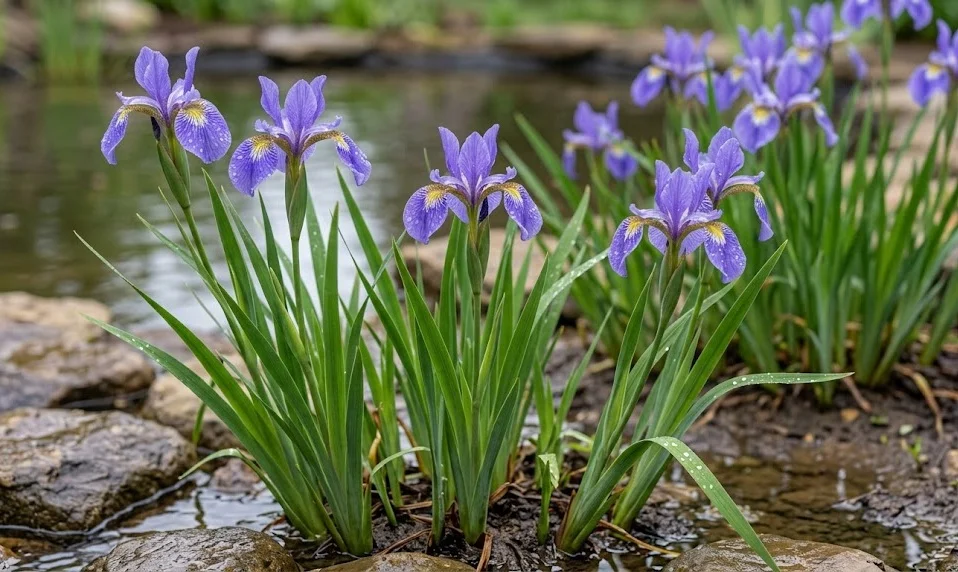

Virginia iris is a moisture-loving perennial that brings refined color, structure, and ecological value to rain gardens, pond margins, wet meadows, and consistently damp borders. It naturally belongs in wetland-edge conditions, where its rhizomes can settle into saturated soil without the stress that would harm many conventional garden perennials. Its best performance comes from matching cultivation to its native habits rather than treating it like a dry-border iris. In practical horticulture, that means steady moisture, generous light, careful spacing, and regular observation through the growing season. plants.ces.ncsu.edu+1
Virginia iris is valued for its elegant sword-shaped foliage as much as for its spring to early summer flowers. The leaves create a vertical, architectural texture that remains useful after the bloom period has passed. In naturalistic plantings, this foliage helps bridge the visual gap between early-flowering perennials and later summer grasses. A well-grown clump can look composed and intentional even in a planting that is designed to feel wild.
Unlike bearded irises, Virginia iris should not be managed as a dry, sun-baked rhizome plant. It prefers moisture-retentive soils and can tolerate very wet sites, including shallow standing water under suitable conditions. This makes it especially useful in places where ordinary border plants struggle with poor drainage. Its resilience, however, depends on water quality, oxygen movement, and avoiding stagnant, polluted conditions.
Care is easiest when the plant is positioned correctly from the beginning. A site that stays evenly moist reduces the need for emergency watering and lowers stress during hot weather. A site with good light encourages firmer growth and more reliable flowering. When moisture and light are balanced, Virginia iris becomes a durable, long-lived feature rather than a plant that needs constant correction.
Understanding its natural growth habit
Virginia iris grows from rhizomes, which are thickened underground stems that store energy and produce new shoots. These rhizomes gradually expand outward, forming clumps that can be divided when they become crowded. The spread is usually manageable rather than aggressively invasive in ordinary garden settings. That makes the plant suitable for designed wetland plantings where controlled naturalizing is desirable.
More articles on this topic
Its native association with marshes, wet meadows, stream banks, lake edges, and other open moist habitats explains much of its garden behavior. It is adapted to soils that remain damp for long periods, especially where sunlight is strong and competition from woody plants is limited. In a shaded, dry border, the same plant may survive but often loses vigor and flower quality. Culture should therefore imitate an open wetland edge whenever possible. missouribotanicalgarden.org+1
The foliage emerges strongly in spring as temperatures rise and soil moisture remains high. Flowering follows when the plant has stored enough energy and receives adequate light. After bloom, the leaves continue to photosynthesize and rebuild the rhizome for the next season. Cutting or stressing the foliage too early weakens this cycle and may reduce future flowering.
A healthy clump shows firm, upright leaves, clean green growth, and steady expansion from the crown. Weak growth often points to a mismatch in site conditions rather than an inherently difficult plant. Too little moisture can lead to shortened foliage and reduced bloom. Too little sun can produce loose, leaning growth and sparse flowering.
Choosing the right site
The ideal location for Virginia iris is a consistently moist to wet area with open exposure. Pond margins, rain garden basins, swale edges, and low garden beds are especially suitable. The plant can be used where periodic flooding occurs, provided the water is fresh and not contaminated by salts or chemicals. In designed landscapes, it often performs best where water naturally collects after rainfall.
More articles on this topic
Full sun generally produces the strongest flowering and the most compact, sturdy growth. In hot regions, light afternoon shade can be useful if the soil remains warm and moist. Too much shade reduces flower production because the rhizomes receive less energy through the leaves. A useful rule is to prioritize morning and midday sun while allowing some protection from harsh late-day heat in warmer climates. plants.ces.ncsu.edu+2
Ask IFAS – Powered by EDIS+2
Soil texture can vary more than many gardeners expect. Virginia iris can adapt to clay, loam, sandy, acidic, and even slightly alkaline soils if moisture is adequate. Organic matter improves water retention in sandy soils and helps heavy soils maintain biological activity. The most important requirement is not perfect garden loam, but a root zone that does not dry out during active growth. Ask IFAS – Powered by EDIS
Avoid planting it in dry raised beds, hot gravel margins, or exposed slopes unless irrigation is dependable. These positions often suit bearded irises but not wetland irises. If a site dries hard in summer, Virginia iris may persist without showing its best ornamental character. In that case, a rain garden depression or pond-edge pocket is a better long-term choice.
Soil preparation and planting depth
Before planting, remove perennial weeds thoroughly because rhizomatous wetland plants are harder to weed once established. Loosen the soil enough to allow rhizomes and roots to settle without air pockets. Incorporate compost if the soil is poor, sandy, compacted, or biologically inactive. The goal is a moisture-holding bed that remains open enough for root development.
Virginia iris rhizomes should be planted so they are secure but not buried excessively deep. In moist soil, the crown should sit close to the soil surface while the roots are well covered. If planted too deeply, the crown may struggle to produce strong shoots, especially in heavy soil. If planted too shallowly in loose soil, the rhizome may dry or shift before rooting.
Spacing matters because mature clumps need room for air movement and outward expansion. A practical spacing range is about 24 to 36 inches in garden plantings, especially where the plant is expected to broaden over time. Closer spacing can work for quick coverage in rain gardens, but it increases the need for future division. Wider spacing gives each clump a stronger architectural presence. Ask IFAS – Powered by EDIS
After planting, water deeply even if the soil already seems damp. This settles soil around the roots and removes dry pockets that can delay establishment. Mulch can be used lightly around the planting area to conserve moisture, but it should not be piled thickly over the crown. Fine organic mulch, leaf mold, or shredded bark works best when kept open around emerging shoots.
Water management through the season
Water is the central factor in Virginia iris care. During the growing season, the plant should not be allowed to dry out severely. Moist to wet soil supports strong leaves, full bud development, and steady rhizome growth. Repeated drying, especially during spring and early summer, can reduce flowering and weaken the plant for the following year. plants.ces.ncsu.edu
In pond-edge settings, the rhizomes may tolerate shallow fresh water. Some references note that it can grow in several inches of standing water when conditions are suitable. Even so, the plant should not be placed where water becomes foul, anaerobic, or heavily loaded with runoff pollutants. Fresh, oxygenated wetness is very different from stagnant, contaminated saturation. plants.ces.ncsu.edu+1
In ordinary garden beds, irrigation should be deep and consistent rather than light and frequent. A shallow sprinkle wets the surface but may leave the rhizome zone under stress. Deep watering encourages roots to explore the soil and stabilizes the plant through warm periods. In dry spells, check the soil by hand rather than relying only on the surface appearance.
Rain gardens require a slightly different approach because moisture fluctuates after storms. Virginia iris can handle periodic wetting and draining, which makes it valuable in these systems. However, new plantings may still need supplemental watering between rain events during the first growing season. Once established, the plant is more forgiving, but flowering remains best where moisture is dependable.
Fertility and nutrient balance
Virginia iris does not need heavy feeding when grown in naturally fertile, moist soil. Excessive nitrogen can push soft foliage that is more prone to lodging and may be less floriferous. A moderate, balanced approach is better than aggressive fertilization. Compost, leaf mold, and slow-release organic nutrients are usually enough for healthy clumps.
In lean sandy soil, a light spring feeding can improve vigor. Use a balanced, low-to-moderate nitrogen fertilizer and apply it around the root zone rather than directly against the crown. Water it in well so nutrients move into the soil without burning tender roots. Avoid repeated high-nitrogen applications during the season.
In wet soils, nutrients can move differently than in well-drained beds. Some elements may leach away, while others may become less available under saturated conditions. Organic matter helps buffer these changes and supports microbial processes around the roots. This is another reason compost-based soil improvement is often more effective than simply adding synthetic fertilizer.
Watch the plant’s response rather than feeding by habit. Strong green foliage, regular flowering, and gradual clump expansion indicate that fertility is adequate. Pale leaves, weak growth, and poor bloom may suggest nutrient limitations, but they can also indicate shade, drought, or overcrowding. Correct the growing condition first before assuming fertilizer is the answer.
Seasonal maintenance
Spring care begins with removing winter-damaged foliage and debris from around the crown. This improves air movement and makes room for new shoots. Work carefully because the young leaf fans can be brittle when emerging. A clean crown also makes it easier to inspect for rot, pests, or overcrowding.
After flowering, spent blooms can be removed if the planting is formal or if seed production is not desired. Deadheading keeps the clump tidy and directs energy back into the rhizomes. In naturalistic plantings, some seed capsules may be left for visual interest and ecological value. The decision depends on the design goal and how much self-seeding is acceptable.
Do not cut all foliage down immediately after bloom. The leaves are still feeding the rhizome and preparing the plant for the following year. Removing only damaged, yellowing, or collapsed leaves is a better practice during summer. A full cutback is best reserved for late fall or early spring, depending on the climate and garden style.
Division becomes useful when clumps are crowded, flowering declines, or the center begins to weaken. This usually happens after several years rather than every season. Divide after flowering or in early fall, when the plant has time to re-root before winter. Replant firm, healthy rhizome sections and discard soft, hollow, or diseased pieces.
Long-term performance in designed plantings
Virginia iris is especially effective when combined with plants that enjoy similar moisture. Sedges, rushes, swamp milkweed, cardinal flower, soft rush, and moisture-tolerant grasses can create a layered wetland composition. These companions help cover soil, support pollinators, and extend seasonal interest. The iris contributes vertical structure and a strong bloom moment within that community.
In formal landscapes, it can be used as a repeating element along water edges or drainage lines. Repetition gives the plant a deliberate presence rather than making it look accidental. Its upright foliage can frame lower plants and soften the transition between water and land. This is valuable where hard pond edges or engineered basins need a more natural appearance.
Long-term care is mostly about preventing extremes. Do not let the plant dry hard during active growth, do not bury the crowns under heavy mulch, and do not allow clumps to become congested indefinitely. Watch for changes in flowering, leaf quality, and crown density. These signals reveal when water, light, division, or sanitation needs attention.
When well sited, Virginia iris is not a fussy plant. It rewards ecological thinking more than intensive maintenance. Give it moisture, light, space, and periodic renewal, and it will remain handsome for many years. Its best care is not complicated, but it is specific to the wetland character that makes the plant distinctive.